Hello. I am Dr. Dongkyu Lee, an orthopedic specialist. "I was told I have calcific tendinitis. Will an injection fix it?" "They say a few rounds of shockwave therapy will make it disappear?" "What makes calcific deposit aspiration different?" These are the most common questions patients ask during consultations. Let me get straight to the point: The treatment depends on the stage and size of the calcification. Some calcifications can be resolved with injections or shockwave therapy, while others must be directly removed. Today, I will compare three treatment methods for calcific tendinitis and explain which treatment is appropriate for each situation. ---------------------------------------------- What Causes Calcific Tendinitis? Calcific tendinitis is a condition where calcium deposits form in the rotator cuff tendons, causing extreme pain.
Illustration of calcific tendinitis - calcium deposits in the rotator cuff tendon The calcification process occurs in 3 stages:

The problem is resting-phase calcifications. Hardened calcifications are rarely absorbed naturally and are difficult to remove with injections or shockwave therapy alone. ---------------------------------------------- Complete Comparison of 3 Treatment Methods 1. Steroid Injection Mechanism: - Reduces inflammation around the calcification - Aimed at pain reduction Advantages: - Rapid pain relief (1-3 days) - Non-invasive - Can be performed immediately in the office Disadvantages: - Does not remove the calcification itself - Temporary effect (2-4 weeks) - High recurrence rate - Risk of tendon weakening with repeated injections Appropriate For: - Resorptive-phase calcifications (soft calcifications) - Pain is not severe - Small calcification size (0.5cm or less)
Steroid injection - aimed at reducing inflammation around the calcification ---------------------------------------------- 2. Extracorporeal Shockwave Therapy (ESWT) Mechanism: - High-energy shockwaves promote calcification breakdown - Increased blood flow promotes natural absorption Treatment Protocol: - Once weekly, 4-6 sessions total - Energy: 0.35 mJ/mm2, 2000 pulses - Total treatment period: 4-6 weeks Advantages: - Non-invasive (no skin incision) - Excellent safety profile - Outpatient treatment (no hospitalization) Disadvantages: - Requires multiple visits (4-6 sessions) - Slow onset of effect (weeks to months) - Limited effectiveness for resting-phase calcifications - Difficult to remove large calcifications (1cm or more) Appropriate For: - Formative or early resorptive-phase calcifications - Calcification size 0.5-1cm - When the patient has time flexibility
Extracorporeal Shockwave Therapy (ESWT) - requires 4-6 repeated sessions Reference: Arthroscopy. 2020 - High-energy ESWT: 0.35 mJ/mm2, 2000 pulses, weekly, 4 sessions total - Good results in patients who failed conservative treatment ---------------------------------------------- 3. Calcific Deposit Aspiration (Needle Aspiration) Mechanism: - Ultrasound-guided direct entry into the calcification - Specialized needle crushes the calcification - Immediate removal through irrigation and aspiration Treatment Protocol: - Completed in a single procedure - Procedure time: 15-30 minutes - Same-day admission and discharge Advantages: - Immediate effect in one session - Removes calcifications at all stages (formative/resting/resorptive) - Can remove large calcifications (1.5cm or more) - Low recurrence rate Disadvantages: - Invasive (needle insertion) - Possible pain for 1-2 weeks after the procedure - Requires a skilled physician Appropriate For: - Resting-phase calcifications (hard calcifications) - Calcification size 1cm or more - Cases where injections and shockwave were ineffective - Those wanting quick return to daily life
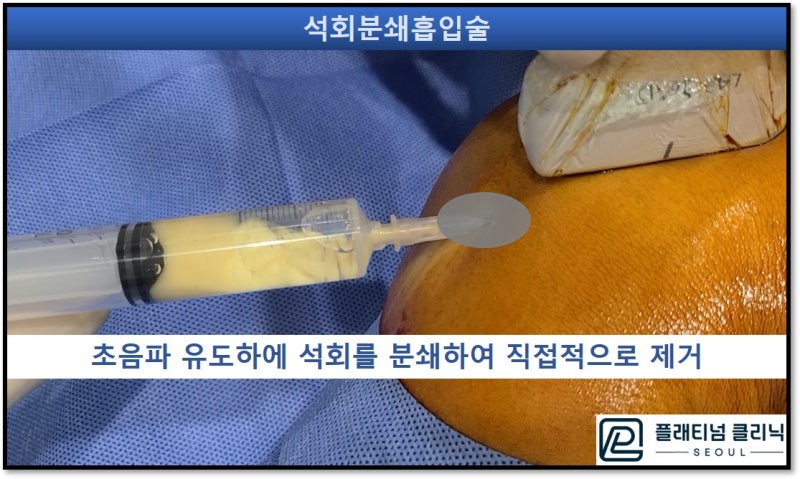
Calcific deposit aspiration - direct removal under ultrasound guidance Reference: BMC Musculoskeletal Disorders. 2022 - Both needle aspiration (NACD) and ESWT are effective - Recommended as minimally invasive treatments when conservative therapy fails ---------------------------------------------- Treatment Comparison at a Glance
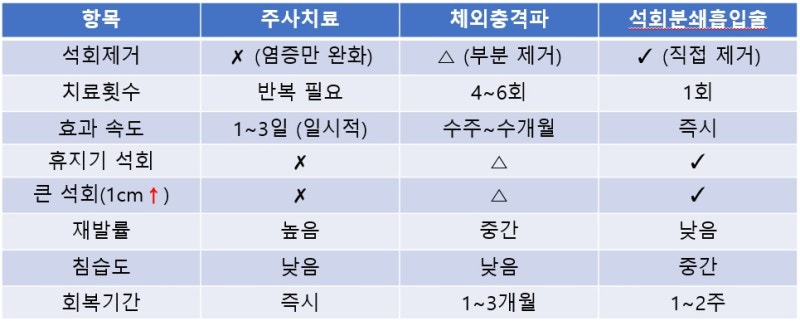
---------------------------------------------- Optimal Treatment by Calcification Stage Formative Phase - 1st line: Steroid injection + physical therapy - 2nd line: ESWT 4-6 sessions - 3rd line (if failed): Calcific deposit aspiration Resting Phase - The Most Common Stage - 1st line: Calcific deposit aspiration (recommended) - 2nd line: ESWT (limited effectiveness) - Injection therapy not recommended (only temporary effect) Resorptive Phase - 1st line: Steroid injection (pain relief) - 2nd line (severe pain): Calcific deposit aspiration (immediate removal) - Waiting for natural absorption is possible (but requires pain tolerance) ---------------------------------------------- Research-Backed Treatment Outcomes Study 1: Needle Aspiration vs. ESWT Source: BMC Musculoskeletal Disorders. 2022 Study Details: - Patients with calcific tendinitis who failed conservative treatment - Needle aspiration (NACD) vs. ESWT comparison Results: - Both methods showed good clinical outcomes - Effective as minimally invasive treatments

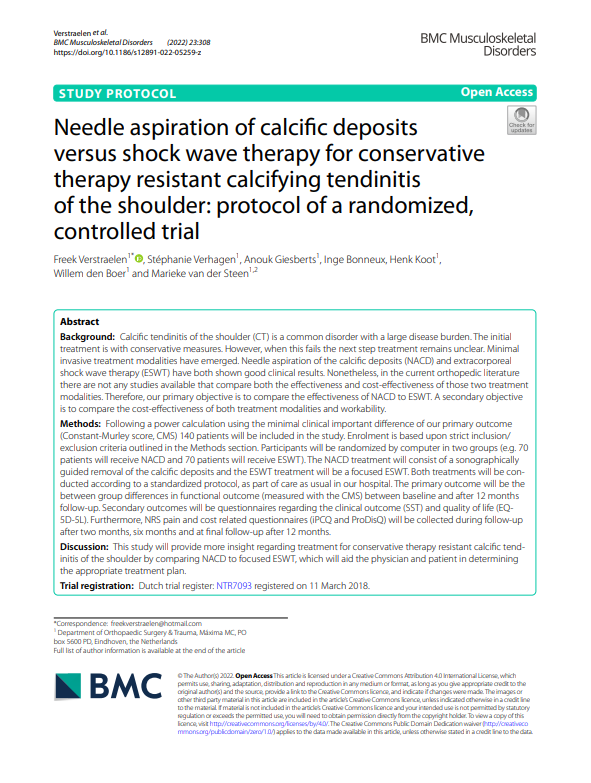
BMC Musculoskelet Disord 2022 - Comparison of needle aspiration vs. shockwave outcomes ---------------------------------------------- Study 2: Ultrasound-Guided Needle Treatment vs. High-Energy Shockwave Source: Arthroscopy. 2020 Study Protocol: - Ultrasound-guided needle treatment (UGN): 1 session + steroid injection - High-energy ESWT: 4 sessions (weekly, 0.35 mJ/mm2, 2000 pulses) Results: - UGN: Completed in 1 session, rapid pain relief - ESWT: Takes 4 weeks, gradual improvement
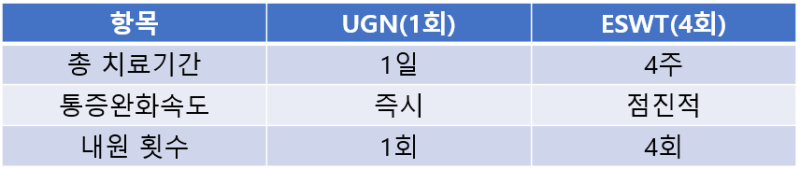
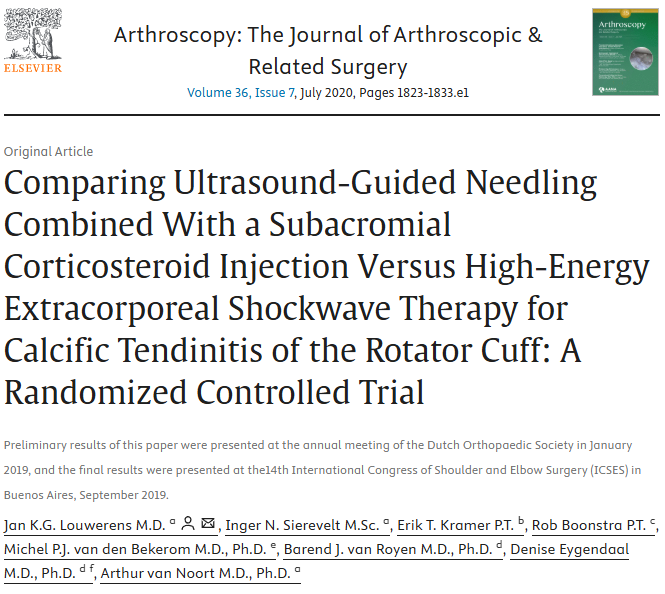
Arthroscopy 2020 - Ultrasound-guided needle treatment (UGN) 1 session vs. shockwave 4 sessions comparison ---------------------------------------------- Study 3: Safety of ESWT Source: Annals of the Rheumatic Diseases. 2003 Results: - ESWT demonstrates excellent tolerability, safety, and clinical/radiological response - Recommended as an alternative treatment for chronic calcific tendinitis - However, requires multiple treatment sessions
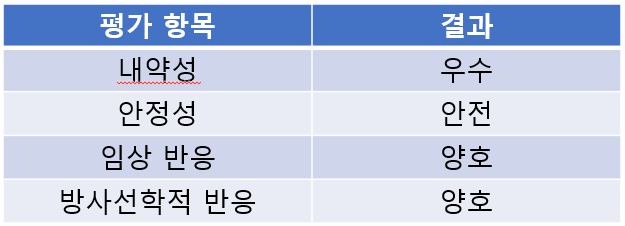
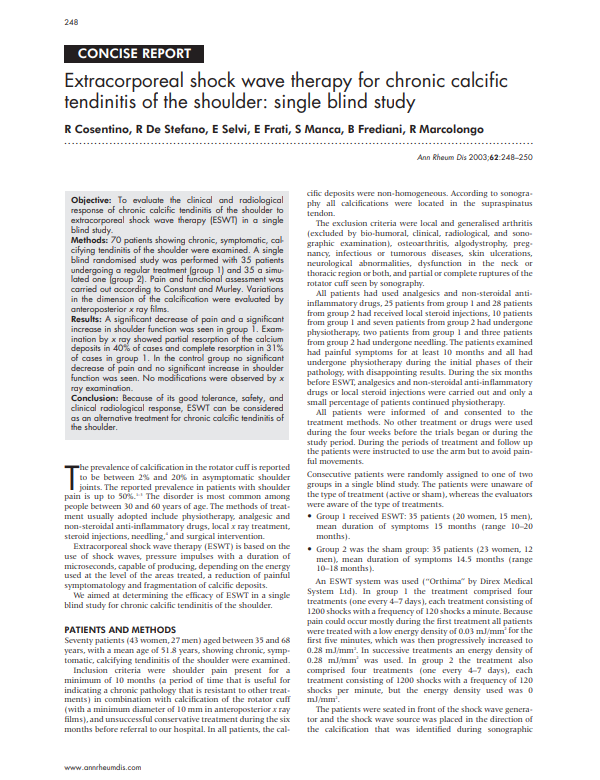
Ann Rheum Dis 2003 - ESWT safety and efficacy ---------------------------------------------- Study 4: Arthroscopic Surgery vs. ESWT Source: PMC. 2009 Study Details: - Comparison of ESWT and arthroscopic surgery for chronic calcific tendinitis - Many studies show good results with ESWT Conclusion: - ESWT or needle treatment should be attempted before arthroscopic surgery - Surgery is a last resort
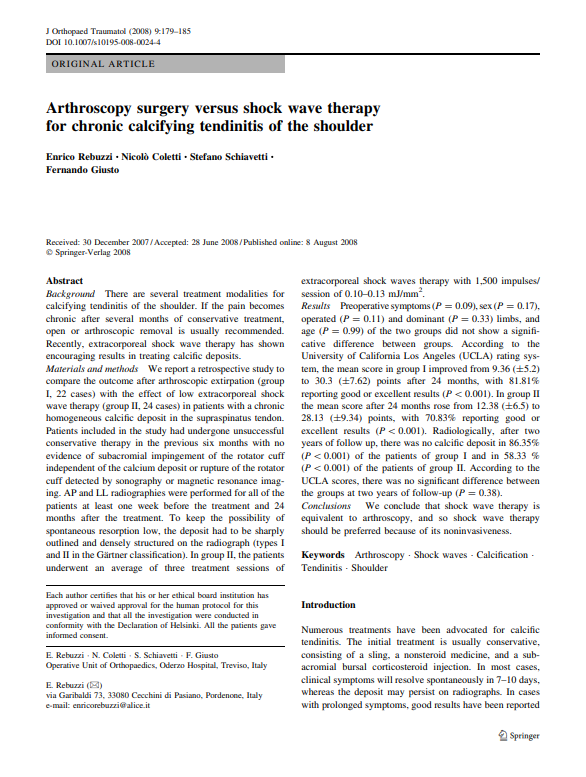
PMC 2009 - Arthroscopic surgery vs. shockwave comparison ---------------------------------------------- Real Patient Cases Case 1: Worsening after repeated injections only Patient Information - 45-year-old female, office worker - Main Symptoms: Night pain, sharp stinging pain when raising the arm - Duration: 8 months Prior Treatment History Diagnosed with calcific tendinitis at another hospital, received 3 steroid injections over 3 months. Pain initially improved but recurred after 2-3 weeks each time. Was told to "wait for the calcification to be absorbed." Findings at Platinum Clinic - Ultrasound: 1.2cm calcific deposit in the supraspinatus tendon - Stage: Resting phase - hard with clear borders - X-ray: High-density calcification confirmed
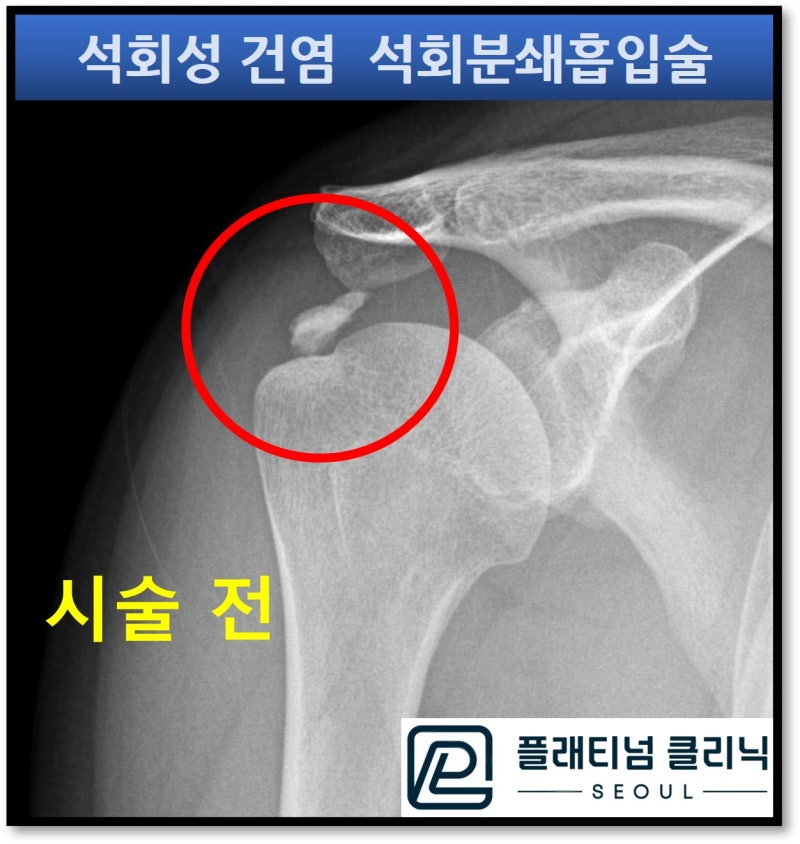
Pre-procedure X-ray - Hard calcific deposit measuring 1.2cm in the supraspinatus (resting phase) Treatment at Platinum Clinic Calcific deposit aspiration was performed. A specially manufactured 18G needle entered the calcification, crushed it, and irrigated and aspirated. Procedure time was approximately 15 minutes.
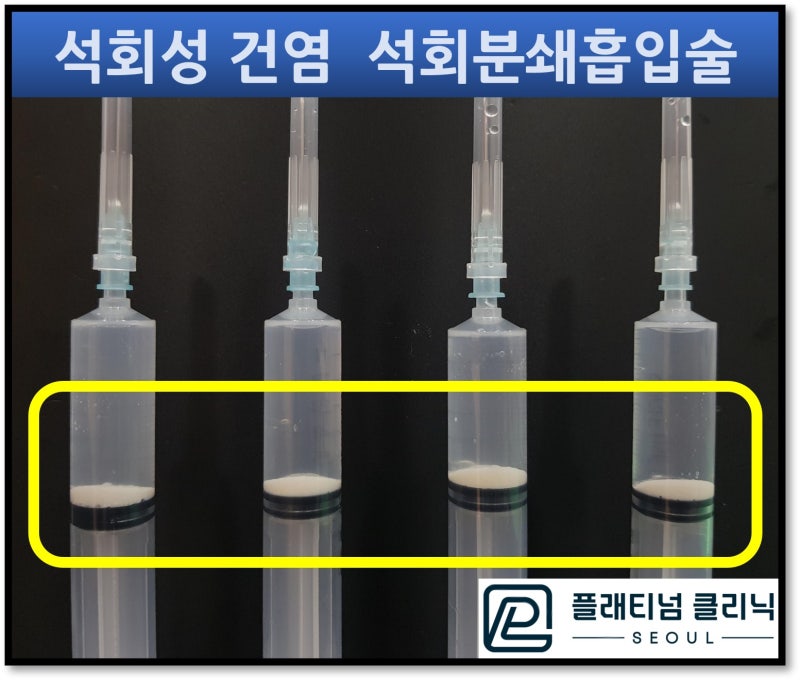
Syringe after calcific deposit aspiration - Hard calcification crushed and aspirated using the specialized needle Post-Procedure Results - Immediately after: Pain reduced by over 70% - 1 week later: Night pain nearly gone, improved arm movement - 1 month later: Full return to daily life
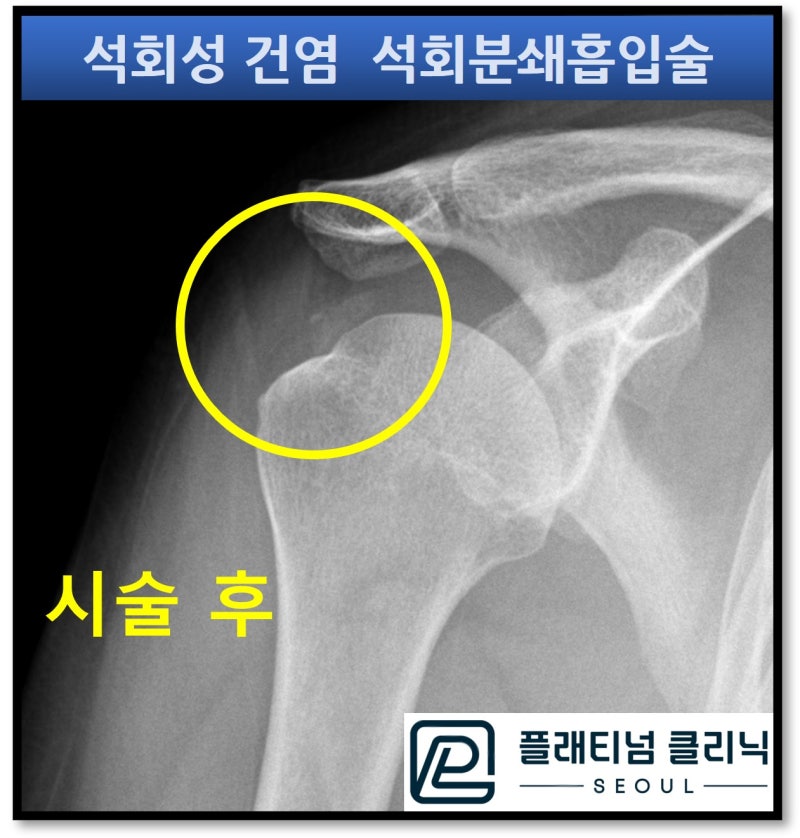
X-ray 1 month post-procedure - Calcification nearly completely removed ---------------------------------------------- Case 2: No improvement after 4 sessions of shockwave therapy Patient Information - 52-year-old male, golf enthusiast - Main Symptoms: Anterior shoulder pain, stinging when raising the arm - Duration: 5 months Prior Treatment History Diagnosed with calcific tendinitis at another hospital and received 4 sessions of ESWT (weekly). Was told "the calcification will soften and be naturally absorbed," but pain persisted after 4 treatments. Calcification size barely changed. Findings at Platinum Clinic - Ultrasound: 0.9cm calcification in supraspinatus, still hard - Stage: Resting phase - not broken down by shockwave - X-ray: High-density calcification persists
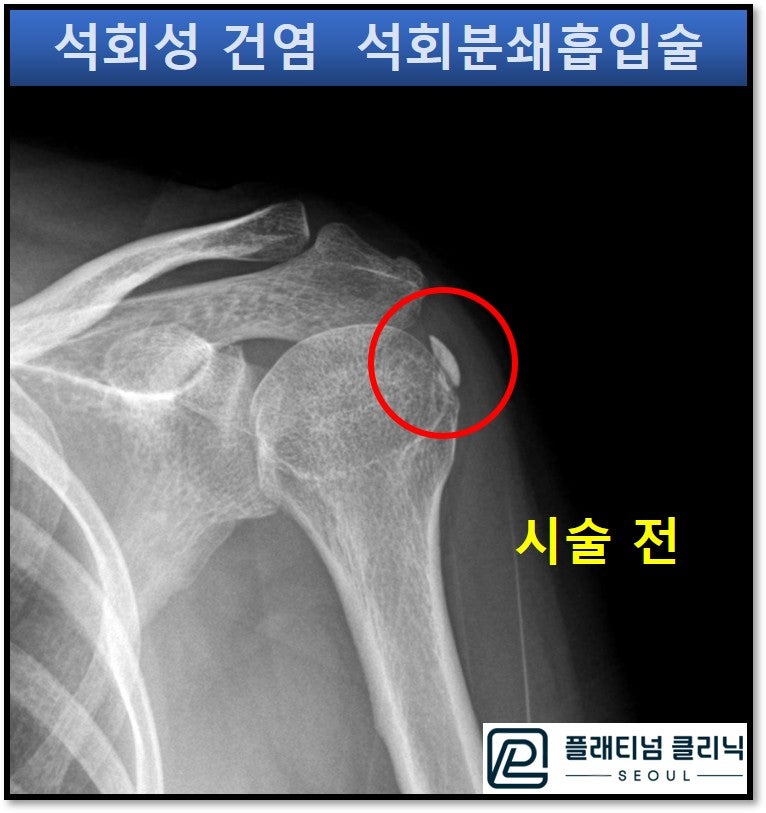
Pre-procedure X-ray - High-density calcification clearly visible in the upper shoulder Treatment at Platinum Clinic Calcific deposit aspiration was performed. Precise ultrasound-guided entry into the calcification, followed by crushing and aspiration.
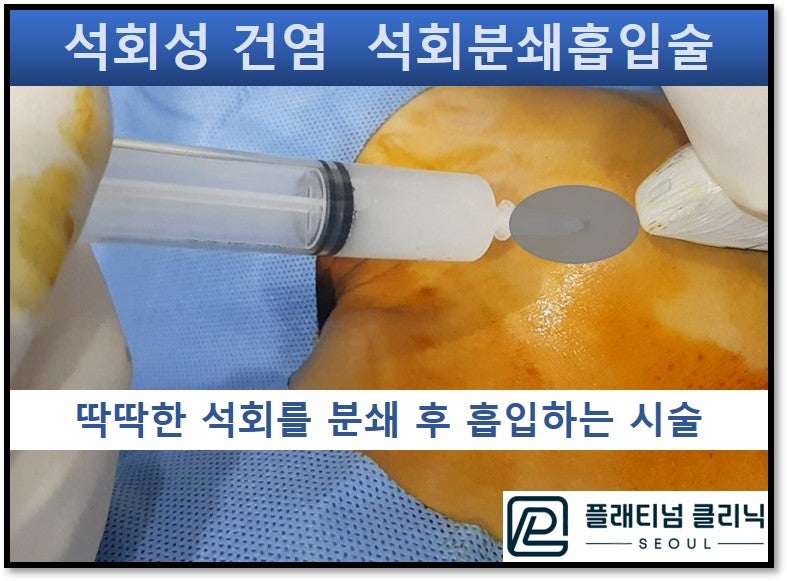
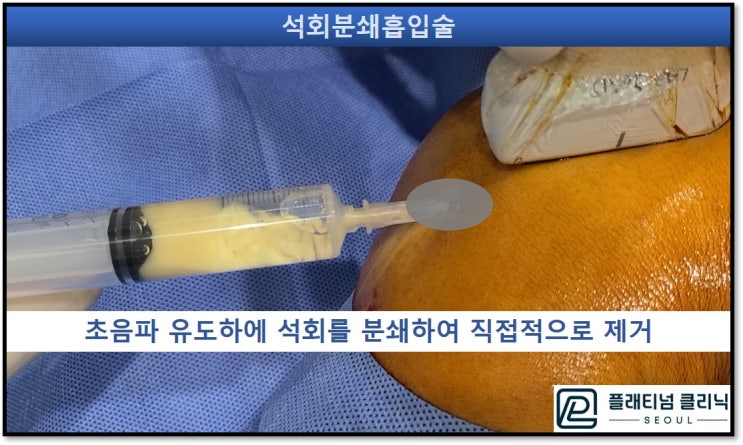
During the procedure - Toothpaste-like calcification being aspirated into the syringe Post-Procedure Results - Immediately after: Pain reduced by 80%, patient's reaction: "What was all that suffering for?" - 2 weeks later: Able to golf swing - 6 weeks later: Returned to the golf course
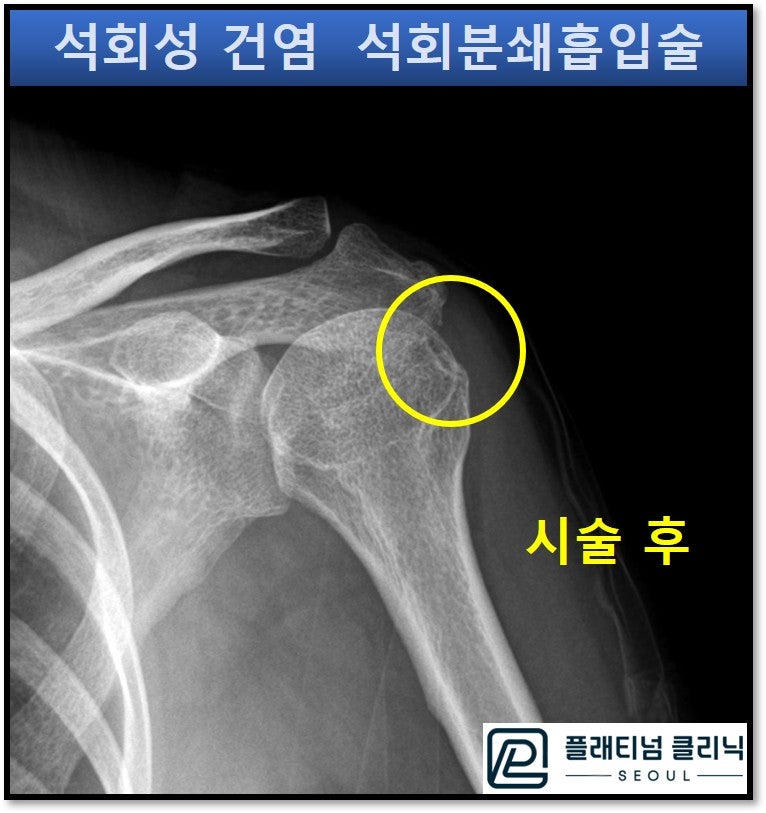
X-ray 2 weeks post-procedure - Calcification nearly completely removed, normal shoulder shape restored ---------------------------------------------- Case 3: Large, hard calcification unresponsive to both injection and shockwave Patient Information - 38-year-old female, yoga instructor - Main Symptoms: Severe night pain, pain when spreading the arm sideways - Duration: 1 year Prior Treatment History Treatment attempted at 2 hospitals: - Hospital A: 4 steroid injections - temporary relief then recurrence - Hospital B: 6 ESWT sessions - almost no effect Was told "the calcification is too hard and large; surgery may be necessary." Findings at Platinum Clinic - Ultrasound: 1.5cm calcification in supraspinatus - one of the largest cases seen - Stage: Resting phase - extremely hard and dense - X-ray: High-density calcification, white as bone
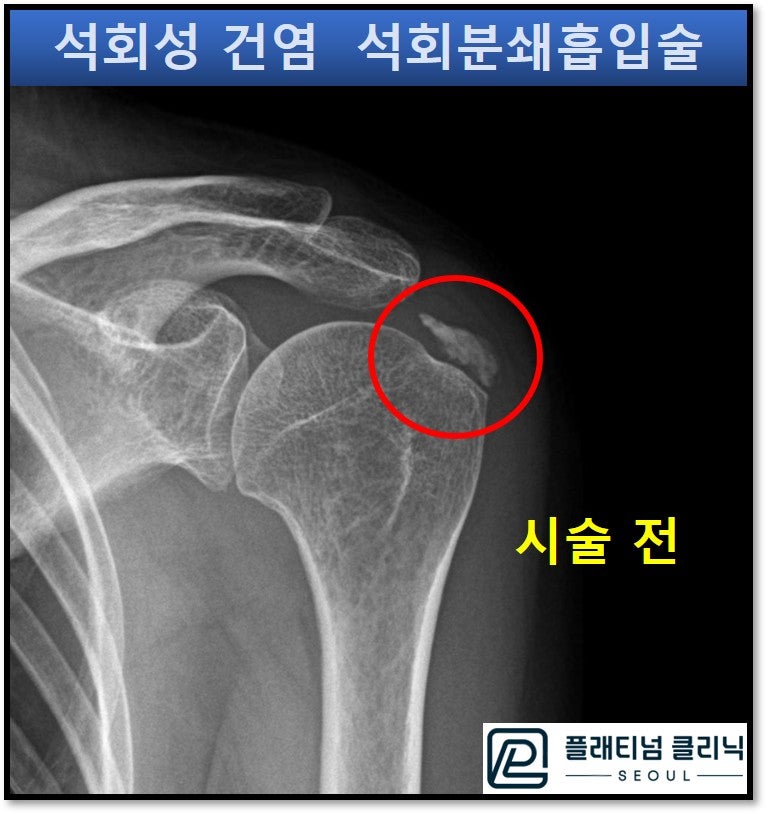
Pre-procedure X-ray - Extremely hard calcific deposit measuring 1.5cm (resting phase) Treatment at Platinum Clinic Calcific deposit aspiration was performed. Due to the large, hard calcification, the procedure took approximately 25 minutes. The interior was thoroughly crushed with the patented specialized instrument, followed by repeated irrigation and aspiration.
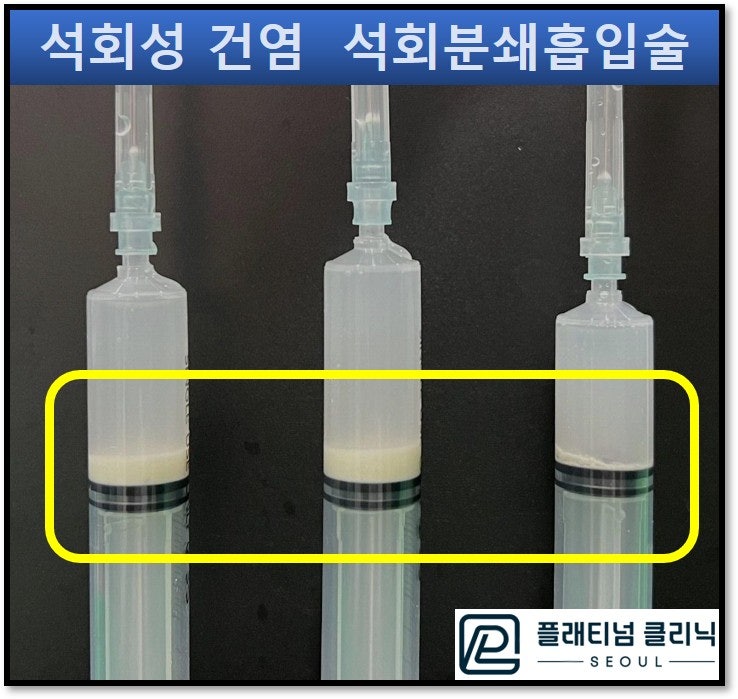
Post-procedure syringe - Calcification crushed to powder and aspirated into the syringe Post-Procedure Results - Immediately after: "First time in a year my shoulder feels comfortable" - 90% pain reduction - 1 week later: Night pain completely gone - 1 month later: Returned to yoga classes - 3 months later: Full range of shoulder motion recovered
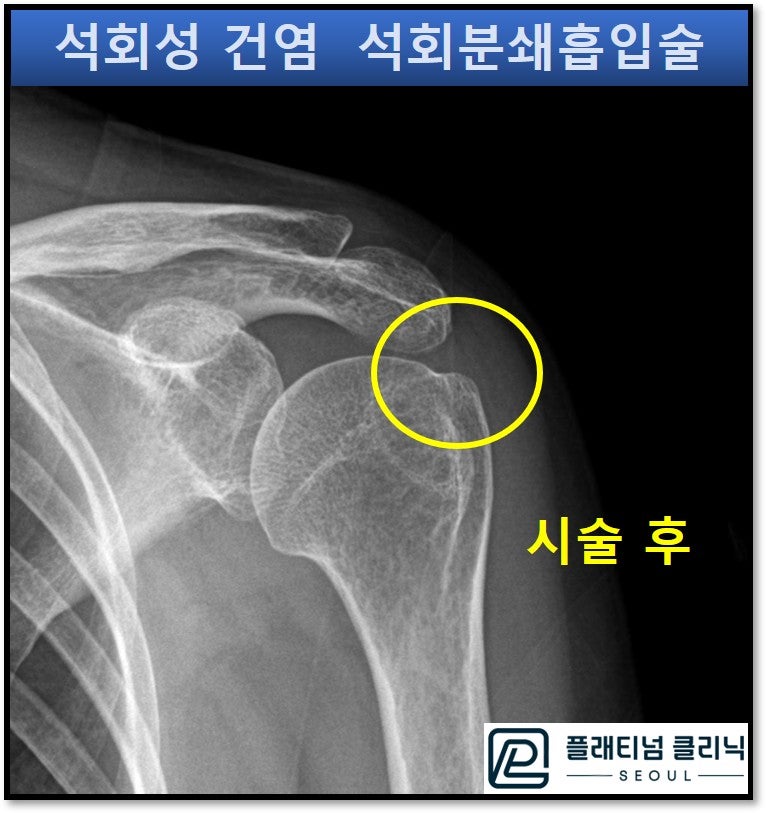
X-ray 3 months post-procedure - Calcification completely removed ---------------------------------------------- Case Comparison Summary
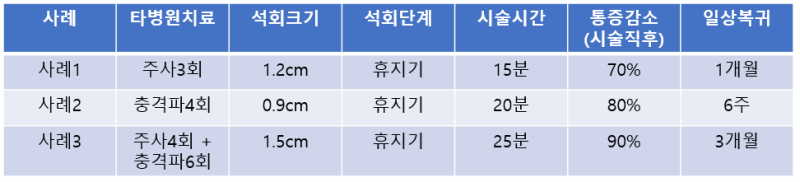
Common Points: - All were resting-phase calcifications - difficult to resolve with injections or shockwave - Immediate effect with a single calcific deposit aspiration procedure - No recurrence ---------------------------------------------- What Makes Platinum Clinic's Calcific Deposit Aspiration Different 1. Patented Specialized Instruments Unlike standard needles used at typical hospitals, Platinum Clinic uses patented specialized instruments. - Effectively crushes even hard resting-phase calcifications - Can completely remove large calcifications (1.5cm or more) - Shorter procedure time (average 15-25 minutes) ---------------------------------------------- 2. Removes Calcifications at All Stages Platinum Clinic's calcific deposit aspiration can remove calcifications at all stages: formative, resting, and resorptive. Even patients told at other hospitals that "the calcification is too hard to remove" often have their calcification successfully removed in a single procedure at Platinum Clinic. ---------------------------------------------- 3. Over 5,000 Procedures Performed Dr. Dongkyu Lee has performed over 5,000 calcific deposit aspiration procedures. With skilled ultrasound-guided technique: - Precise calcification localization - Minimal surrounding tissue damage - Shorter procedure time - Complication prevention ---------------------------------------------- 4. Same-Day Admission and Discharge - Morning procedure, afternoon discharge - Overnight stay if needed - Quick return to daily life ---------------------------------------------- We Recommend Calcific Deposit Aspiration For Those who have had 3 or more injection treatments with recurring pain Those who completed 4-6 shockwave sessions with no effect Those with calcification size of 1cm or more Those with severe night pain preventing sleep Those with stinging pain every time they raise their arm Those who need a quick return to daily life (work, childcare, etc.) Those told at another hospital that "surgery should be considered" If 2 or more apply to you, we recommend a consultation for calcific deposit aspiration. ---------------------------------------------- Platinum Clinic's 12-Week Rehabilitation Program Rehabilitation is just as important as the procedure itself. If the procedure resolves the structural problem, rehabilitation resolves the functional recovery. Rehabilitation must be performed systematically, under expert guidance, safely and consistently, for the full benefit of the procedure to be realized. At Platinum Clinic, we provide all procedure patients with a personalized 1:1 twelve-week rehabilitation exercise program. - Sports rehabilitation specialist designs the program directly - Considers pre-procedure condition, type of procedure, occupation, and more - Personalized rehabilitation exercise videos sent via KakaoTalk - Home rehabilitation possible from anywhere in the country ---------------------------------------------- Key Summary Key Takeaways: 1. Treatment differs by calcification stage - Formative/resorptive: Consider injection or shockwave - Resting (hard calcification): Calcific deposit aspiration recommended 2. If injection and shockwave are ineffective, choose calcific deposit aspiration - Immediate removal in a single procedure - Removes calcifications at all stages - Even large calcifications (1.5cm+) treatable 3. Platinum Clinic's Advantages - Patented specialized instruments - Over 10,000 procedures performed - Same-day admission and discharge - 12-week customized rehabilitation program ---------------------------------------------- FAQ Q1. Does the calcification recur after calcific deposit aspiration? A. The recurrence rate is very low, under 5%. When the calcification is completely removed, recurrence is unlikely. However, new calcification may form at a different location due to shoulder usage habits or metabolic issues. Q2. How long does the procedure take? A. It varies by calcification size and stage, but averages 15-30 minutes. Small calcifications take about 15 minutes, and large ones (1.5cm or more) about 25 minutes. Q3. Is there pain after the procedure? A. There may be pain for 1-3 days immediately after the procedure. This is a natural response of the tendon after calcification removal. It can be managed with pain medication, and pain decreases significantly after 1 week. Q4. Is hospitalization necessary? A. Same-day admission and discharge is available. Morning procedures allow afternoon discharge; afternoon procedures allow next-morning discharge. Q5. Do I need to wear a brace? A. No brace is needed after calcific deposit aspiration. Because tendon damage is minimal, you can return to daily activities right away. Q6. When can I resume daily activities? A. Light daily activities are possible after 1-2 weeks. Heavy lifting and exercise are recommended from 4-6 weeks. Q7. I had 4 shockwave sessions with no effect. Can I still get calcific deposit aspiration? A. Yes, absolutely. Calcifications unresponsive to shockwave are typically large or hard. In such cases, calcific deposit aspiration is more effective. Q8. My calcification is 1.5cm. Can it be removed in one session? A. Yes, it can. Platinum Clinic's patented specialized instruments can effectively crush and remove even large calcifications. The procedure takes about 25 minutes. Q9. Can patients from outside Seoul come for treatment? A. Yes. With the same-day admission and discharge system, a 1-night, 2-day schedule is sufficient. Additionally, the 12-week rehabilitation program is supported remotely via KakaoTalk, making it accessible from anywhere in the country. ----------------------------------------------