Hello. I am Dr. Dongkyu Lee, an orthopedic specialist at Platinum Clinic in Sinsa Station. Many people have had shoulder examinations and been told they have a partial rotator cuff tear. But when it comes to starting treatment, concerns arise. - "Do I need arthroscopic surgery?" - "If I have to wear a brace for several weeks, my work/childcare/schedule won't allow it." - "I have tried plenty of injections, shockwave, and medications, but nothing worked." For those whose examination results are appropriate, we can discuss a treatment strategy that combines non-surgical repair (reduction repair) with a Regeneren procedure. Today, I will outline the advantages of this combined treatment and who it may be suitable for. --- 1) Why is treating a partial rotator cuff tear so tricky? Unlike a full-thickness tear where the tendon is completely severed, a partial tear can appear manageable on the surface, often leading to delayed treatment. But in reality: - Pain easily recurs with repeated use - It leads to night pain (worse at night) and sleep disturbance - The area of damage may enlarge over time Therefore, a partial tear requires an accurate diagnosis (ultrasound/X-ray/MRI) combined with a customized treatment plan that considers your lifestyle and shoulder usage patterns. [Photo placement]
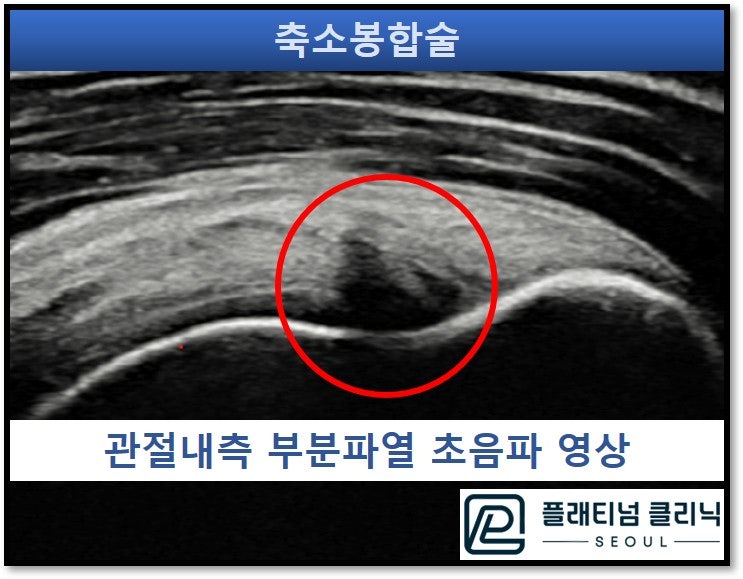
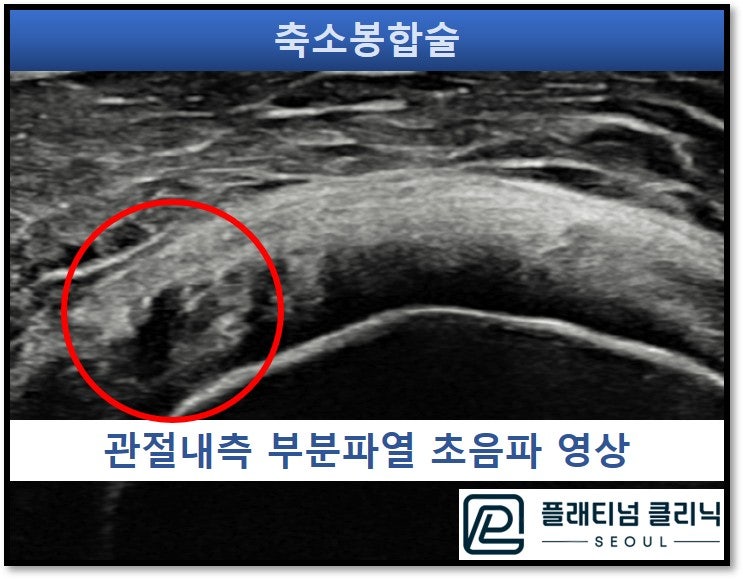
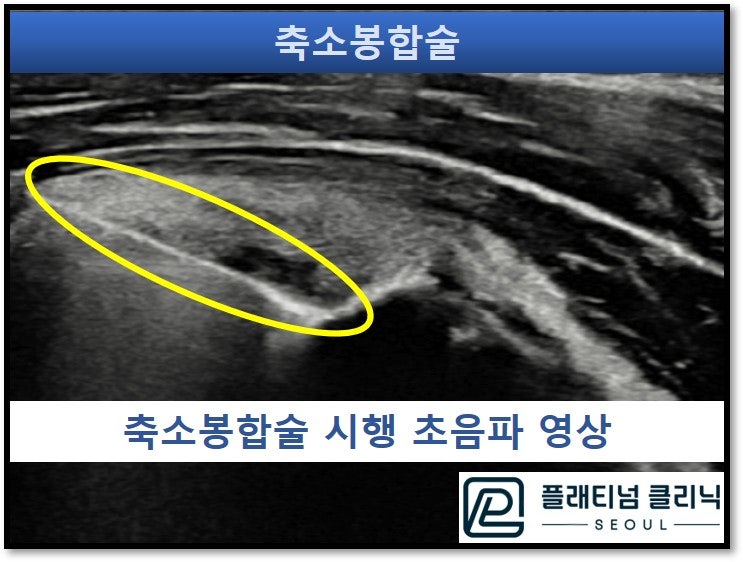
--- 2) What is Reduction Repair? (Non-Surgical, No-Incision 'Physical Repair') Platinum Clinic's shoulder ligament (rotator cuff) reduction repair: - Targets **articular-side partial tears of the inner shoulder ligament** - Uses **patented collagen sutures** to **physically repair** the damaged area - Is performed through a **needle-sized specialized guide** as a **no-incision, non-surgical procedure** Depending on the case, being able to return to daily life the next day without a brace - including showering - is a significant advantage for patients with busy schedules. [Video/photo placement]
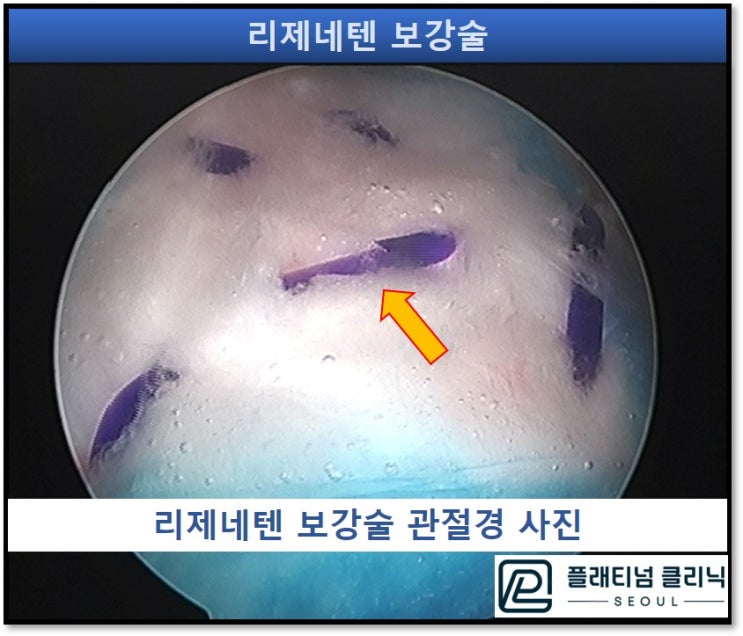
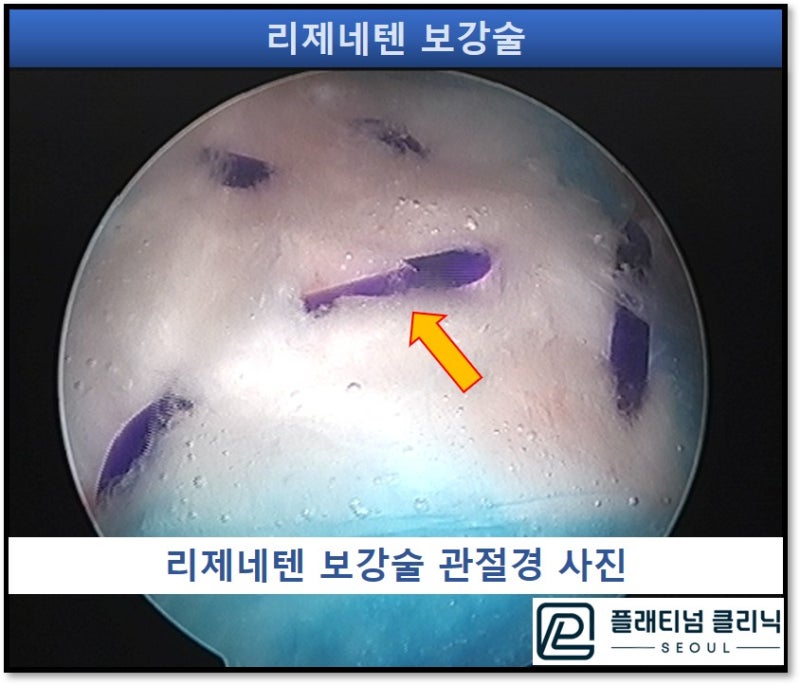
--- 3) What is the Regeneren Procedure? (Reinforcement Concept for Outer-Side Tears) The Regeneren procedure adds a collagen patch to the outer side of the rotator cuff tear, helping rebuild the torn tendon and reinforcing the tissue to make it thicker. In other words, it is not simply "pain relief treatment" - it also creates a more favorable environment for damaged tissue recovery, aiding structural reinforcement and reconstruction. When Regeneren is performed as a standalone procedure, a shoulder brace may be needed for approximately 2-4 weeks depending on the case. Note: Whether and how it is applied depends on the tear type (inner/outer), tissue condition, accompanying conditions, and the patient's activity level. [Photo/video placement]
--- 4) Advantages of Combined 'Reduction Repair + Regeneren' Treatment The purpose of combined treatment is simply put: - **Reduction repair uses collagen sutures to securely repair the articular-side and intra-substance tears of the shoulder ligament (mechanical stability)** - **Regeneren adds a collagen patch to the outer tear/weakened area to aid tissue reinforcement and reconstruction** This addresses pain reduction + functional recovery + reduced recurrence risk for partial rotator cuff tears all at once. Importantly, while standalone Regeneren may require 2-4 weeks of brace wear, when combined with reduction repair, the treatment strategy can aim for quick return to daily life without a brace depending on the case - this is the key advantage. Advantage 1) You can target both "repair" and "recovery environment" simultaneously Partial tears sometimes recur with simple inflammation treatment alone. Combined treatment considers both structural stability (repair) and tissue recovery support together. Advantage 2) A tighter "recovery strategy" for those who use their shoulder heavily For those with shoulder-intensive jobs, exercise, or childcare, pain relief alone often leads right back to overuse. Combined treatment can help design a tighter recovery strategy that includes post-treatment management (use regulation + rehabilitation). Advantage 3) Expands options for those facing "the reality that surgery is difficult" - Those who cannot wear a brace after arthroscopic surgery - Those who cannot take time off for surgery - Those who have exhausted non-surgical treatments with limited results For appropriate cases among these patients, combined treatment can be a treatment option discussed before the surgical stage. --- 5) Who should consider combined treatment? Assuming examination results (partial tear type/tissue condition) are appropriate: 1) Those with confirmed articular-side partial rotator cuff tear 2) Those for whom brace wear/long recovery is realistically impossible 3) Those for whom "quick return to daily life" is important due to heavy shoulder use 4) Those with limited response to existing non-surgical treatments (injections/shockwave/medication) 5) Those looking for a last non-surgical treatment option before surgery These are the patients who most often discuss combined treatment. --- 6) Post-Treatment Management: 'Performance Recovery' Is Key, Not Just a 'Separate Rehab Period' In partial tear cases, braces are often unnecessary, so there may not be a mandatory extended rehabilitation period. However, to recover the shoulder performance that had weakened due to pre-procedure pain, rehabilitation exercises are helpful. Platinum Clinic operates a 12-week online rehabilitation program after reduction repair, providing step-by-step exercise education and management. Precautions Checklist - Do not suddenly overuse the shoulder just because pain has decreased. - Avoid repeating pain-triggering movements (specific angles/repetitive motions) for a while. - Reduce rounded-shoulder posture and focus on scapular stabilization. - "Safely and consistently" matters more than "quickly" for exercise. --- 7) Frequently Asked Questions (FAQ) - 10 Questions Q1. Does a partial rotator cuff tear always require surgery? A. No. Treatment options vary depending on the tear type, tissue condition, activity level, and accompanying conditions. Q2. Is reduction repair just an injection treatment? A. It is not a simple injection. It is a non-surgical procedure that uses patented collagen sutures to physically repair specific partial tears. Q3. Can anyone get Regeneren? A. Suitability varies depending on tear type, tissue condition, and activity level. It is decided after diagnosis. Q4. Does combined treatment lead to faster recovery? A. Rather than "unconditionally faster," it is about designing a recovery strategy that considers both repair and recovery support together. Q5. Can I shower and go to work the next day? A. It may be possible depending on the case, but guidance varies based on individual condition and accompanying issues. Q6. Do I have to wear a brace? A. In partial tear cases, a brace is often unnecessary. Q7. When can I return to exercise (weight training/golf/tennis)? A. You progress step by step according to your pain and functional recovery stages. Rushing back too early can increase recurrence risk. Q8. Why did my previous injections and shockwave not work? A. The core cause of pain may not just be inflammation but the partial tear itself, or calcification/impingement/adhesion may be involved. Q9. Are there cases where combined treatment is not appropriate? A. If it is a full-thickness tear, the tear is extensive, or the tissue condition is poor, other treatments may be more suitable. Q10. What should I prepare before a consultation? A. It helps to organize information about when your pain started, which movements worsen it, whether you have night pain, your treatment history, and your occupation/exercise habits. --- Conclusion Partial rotator cuff tears are often not problems that "just enduring and waiting" will resolve. Especially for those who cannot wear a brace or whose heavy shoulder use makes scheduling difficult, a treatment strategy that reflects reality is needed. If examination results are appropriate, combined reduction repair + Regeneren treatment can be a non-surgical option discussed before the surgical stage. We recommend getting an accurate examination to confirm your current condition, then treating with the least burdensome and most effective method first.