Hello, I'm Dr. Dongkyu Lee, a board-certified orthopedic surgeon. Many patients have been researching non-surgical treatment for shoulder calcific tendinitis and come to visit us. Patients who come in often have several questions... First: Why don't other orthopedic clinics or university hospitals commonly perform this procedure? Second: Other orthopedic clinics claim they can also remove calcification with a syringe. What makes your procedure different? Third: Does it really remove the calcification? Other places say it's too large, too hard, or too sticky to remove and that I need surgery. Let me address each question. First: Why don't other orthopedic clinics or university hospitals commonly perform this procedure? Primarily because it's technically very challenging. Depending on the calcification's characteristics and size, simple syringe aspiration is impossible. The crushing technique must be adapted based on the calcification type. I've tried teaching my calcification crushing and aspiration technique to other physicians and working alongside them, but what takes me 10 to 15 minutes would often take them 30 to 40 minutes without success. Additionally, depending on the calcification's size, multiple portals may be needed to effectively crush and aspirate it — this requires extensive experience. The less experience one has, the longer it takes and the more difficult it becomes, which is why many physicians opt for conservative treatment only or go straight to surgical treatment. Second: Other orthopedic clinics claim they can also remove calcification with a syringe. What makes your procedure different? Simple syringe aspiration alone cannot remove all types of calcification. That's why I use specially designed custom guides and drills that can crush calcification regardless of whether it's hard or paste-like, and I've been successfully treating the vast majority of calcific tendinitis cases. I initially tried to manage everything with just a syringe, but there were limitations. To overcome this, I designed and manufactured custom guides and drills, developed the calcification crushing and aspiration procedure (a name I created myself), and the success rate speaks for itself through my patients' experiences. Third: Does it really remove the calcification? Other places say it's too large, too hard, or too sticky to remove and that I need surgery. A single procedure can remove the vast majority of calcification. Since the crushing technique is adapted to the specific characteristics of each calcification, both hard and paste-like calcifications can be crushed and removed. Surgery is simply not necessary. I truly hope patients suffering from calcification can find complete recovery without surgery. A patient from Hongcheon in Gangwon Province came to me, saying they were absolutely miserable from shoulder calcific tendinitis. For over a year, they had received multiple rounds of injection therapy, extracorporeal shockwave therapy, and manual therapy at their local hospital. Yet their symptoms never improved — they would feel briefly better after an injection, only for the pain to come roaring back. The cycle kept repeating until the pain became completely unbearable. That's when they came to see me. (This is the story for most of the patients who visit.) The patient said their local hospital had told them there was nothing more they could do and recommended surgery. With work obligations preventing surgery — which would require a brace, hospitalization, and significant downtime — the patient searched online in desperation and found me. They pleaded with me to free them from this pain. Let's take a look at their condition.
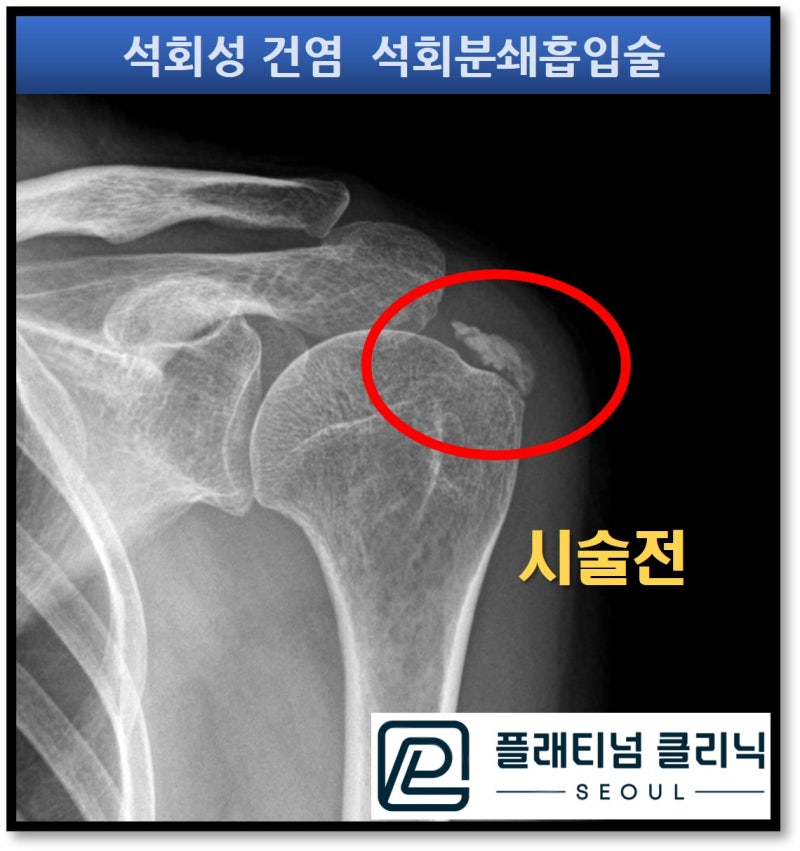
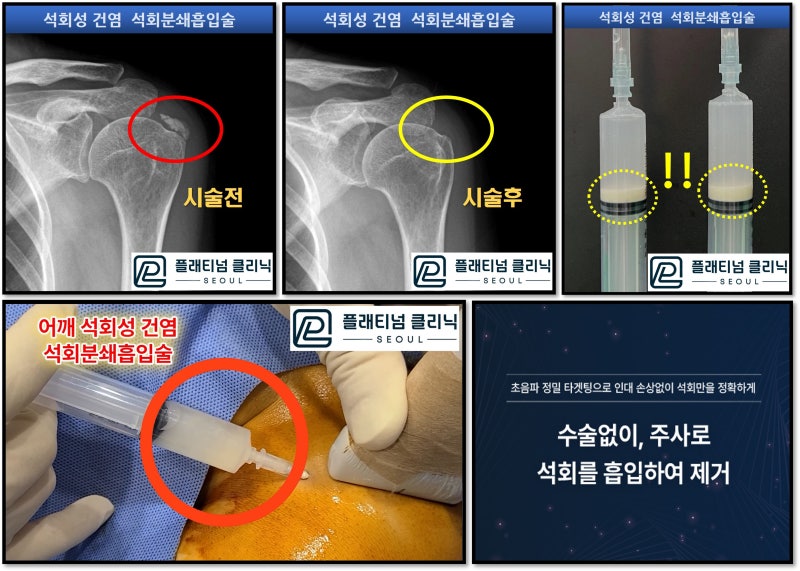
On the X-ray, a large, bright white calcification is visible inside the red circle. I used ultrasound to examine the precise size and characteristics of the calcification.
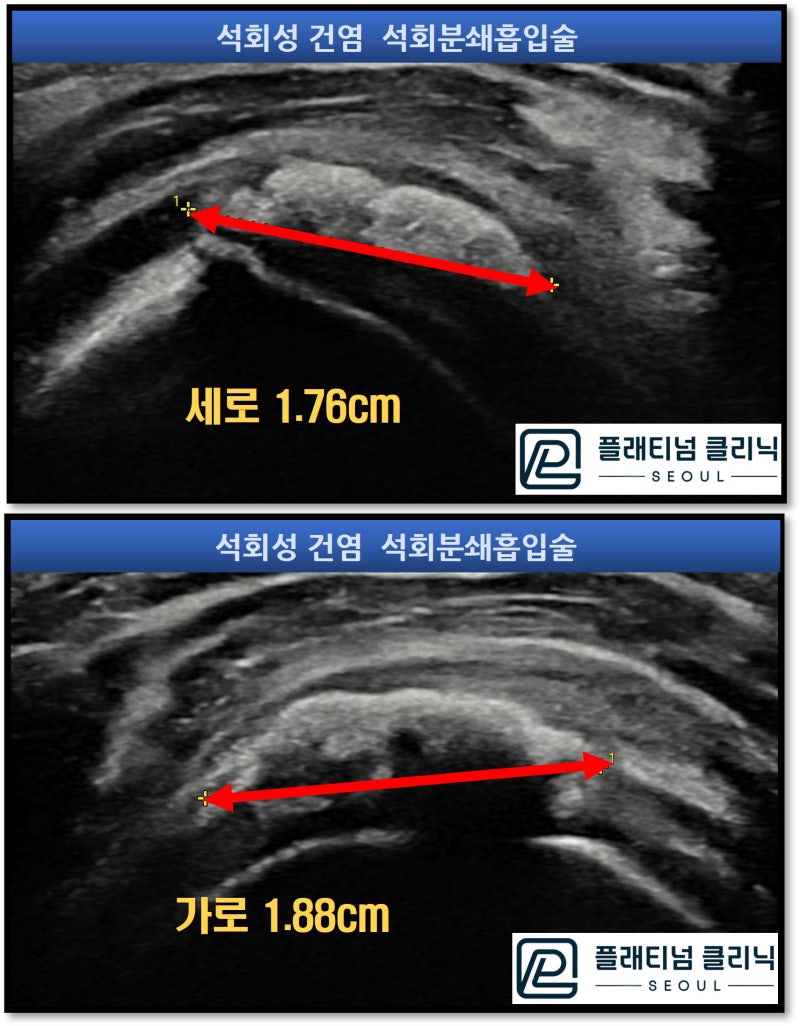
On ultrasound, the outline of the calcification was visible, indicating a paste-like consistency. A large calcification measuring 1.88 x 1.76 cm was observed. We decided to proceed with calcification crushing and aspiration. First, regional anesthesia was administered via a brachial plexus nerve block, numbing only the shoulder area. With the anesthesia alone, the patient said their shoulder pain had disappeared and half-jokingly wished they could stay that way forever. Sedation was then administered to keep the patient calm and anxiety-free. After sterile preparation, I used ultrasound guidance to precisely insert the guide into the calcification and began the crushing process. The crushed calcification was then aspirated out using saline solution.
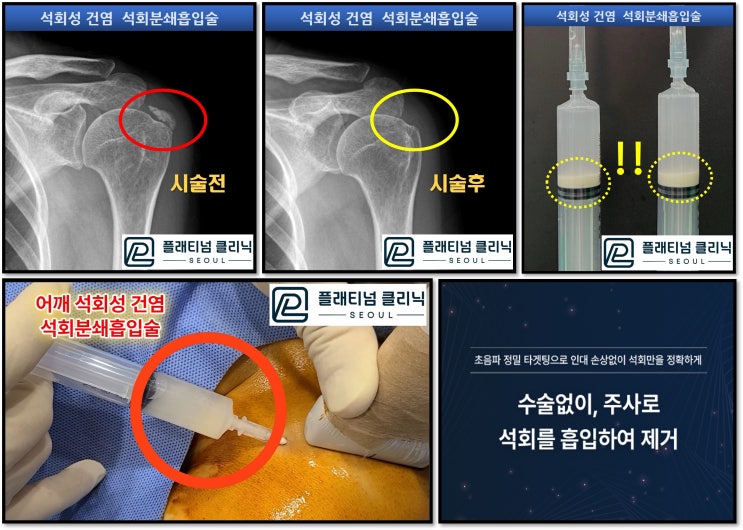
In the video, you can see the aspiration process after crushing, where the initially clear saline solution gradually turns cloudy from the crushed calcification being extracted. This process is repeated multiple times until the vast majority of the calcification has been removed. Looking at the post-procedure syringe photo:
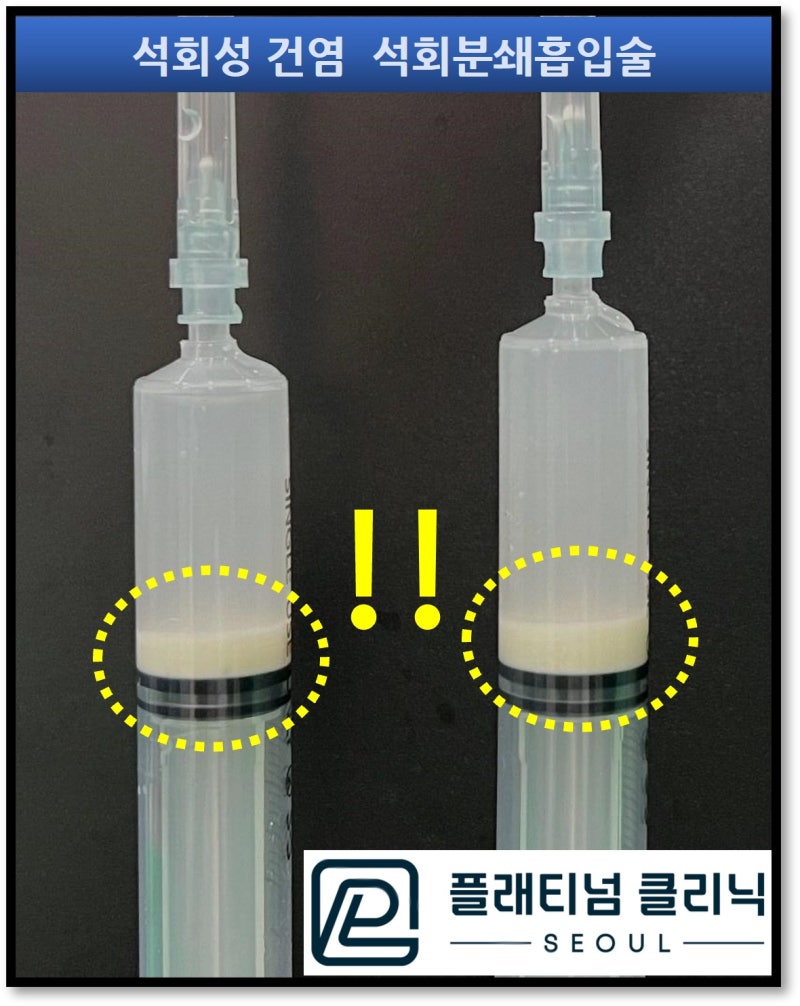
The white material settled at the bottom of the syringe is the extracted calcification. A post-procedure X-ray was also taken.
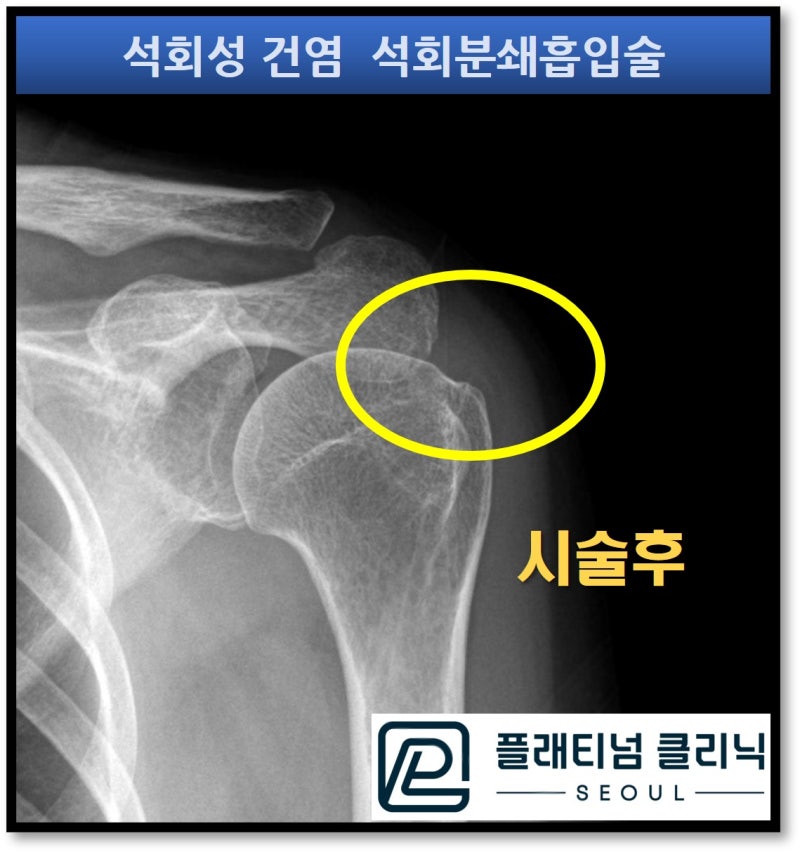
The bright white calcification that was visible before the procedure has been almost completely removed and is barely visible now. Once the calcification is aspirated out, the inflammation and resulting pressure are reduced, and the patient experiences dramatic pain relief. And of course, since the calcification is gone, you are finally free from calcific tendinitis! When I showed the patient the post-procedure X-ray and the syringe photo, they were overjoyed. They said the pain was already so much better and they were finally free from the calcific tendinitis that had plagued them. They said they would finally be able to sleep comfortably again. I felt truly proud that a patient who traveled so far could go home with such a great result.
Calcific tendinitis can be treated with calcification crushing and aspiration. Platinum Clinic at Sinsa Station in Gangnam is the pioneer and authority in calcification crushing and aspiration. I hope all patients suffering from calcific tendinitis can recover fully without surgery. Dr. Dongkyu Lee