
Rotator cuff tear symptoms are particularly common in 'men aged 20-40' and 'women over 50'. Since pain from rotator cuff tears comes and goes depending on the size, location, and pattern of the tear, it's easy to neglect. Common rotator cuff tear symptoms include: 1) Deltoid pain (top, sides, front/back of shoulder) 2) Pain worsening at night 3) Initially, pain only occurs when lifting the arm, but as the condition worsens, pain develops in all directions (even lying still causes pain) 4) A catching sensation and sound when moving the shoulder 5) Weakened shoulder and arm strength 6) Unable to reach behind the back to scratch or use the bathroom

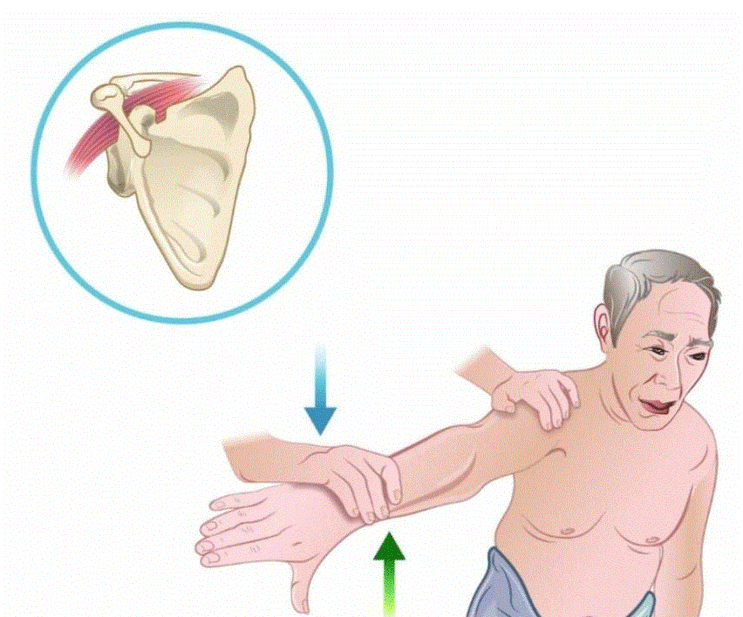
If you suspect a rotator cuff tear, you can do a simple self-test. Raise the painful arm to shoulder height, hold a beverage can, rotate the arm so the thumb points down, then slowly raise the arm upward. If pain is felt when slowly moving the raised arm forward and backward, it's a rotator cuff tear symptom, suggesting the rotator cuff may be torn. If the self-test reveals symptoms, how should it be treated? Treatment methods vary depending on the severity of symptoms. If pain occurs only on days with heavy shoulder or arm use, and the arm can still be raised enough to touch the ear, it's likely a 'partial tear.' Non-surgical treatments such as medication, injection therapy, manual therapy, and shockwave therapy can improve symptoms. However, if non-surgical treatment for 6 months or more doesn't improve shoulder pain and symptoms worsen, with pain even at rest or severe enough to wake you from sleep, more aggressive treatment like bone marrow stimulation therapy may be needed. If non-surgical treatment hasn't shown improvement, the partial tear has likely progressed further and the shoulder tendon can no longer function properly, necessitating more aggressive treatment.


Bone marrow stimulation therapy uses ultrasound guidance to precisely identify the affected area, then creates multiple small holes in the shoulder bone using a special drill. When holes are made in the bone, various growth cells emerge, and these growth cells regenerate the damaged tendon. Simply put, it's a treatment method that uses autologous stem cells to regenerate and heal damaged tendons.


The key to bone marrow stimulation therapy is precise targeting of the torn area and the extent of bone marrow stimulation achieved. Accurately locating the position via ultrasound is critical, and creating holes at the proper depth and uniform spacing to allow bone marrow to exit is essential. When bone marrow stimulation therapy is combined with appropriate additional prolotherapy based on each patient's tear status, the previously torn area can be observed recovering to near-normal. Rotator cuff tear symptoms demand especially early diagnosis and treatment, as delayed care can worsen the tear, reducing treatment outcomes even after a procedure. Missing the treatment window can cause the surrounding tendons to lose elasticity, eventually damaging the joint itself and potentially requiring shoulder joint replacement surgery. To prevent rotator cuff tear symptoms, stretch regularly and avoid frequently lifting heavy objects or raising the arms above ear height to move objects.