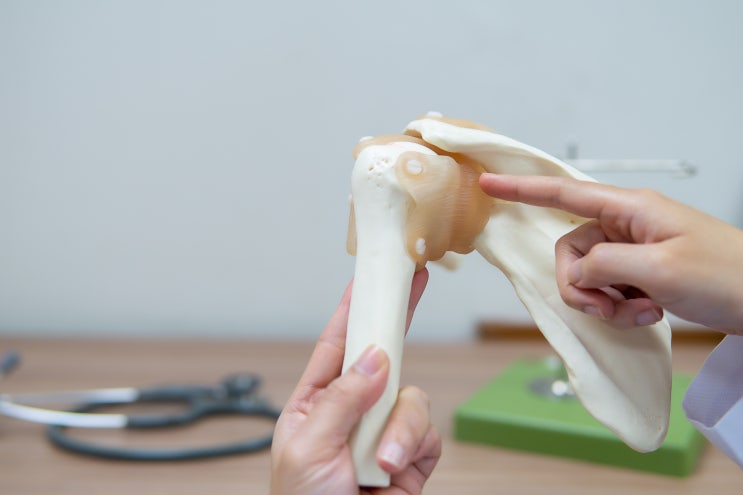
The shoulder is a joint with great range of motion and freedom. However, the risk of injury is also higher compared to other joints. While exercise-related shoulder injuries are common, even more cases involve pain developing suddenly during everyday activities. This is because repetitive overuse from housework or occupational demands increases the likelihood of shoulder conditions. Among the many shoulder conditions, shoulder calcification is a condition where stones accumulate in the rotator cuff tendons. Calcification embedded in tendons and soft tissues irritates the surrounding area, causing inflammation and severe shoulder pain.
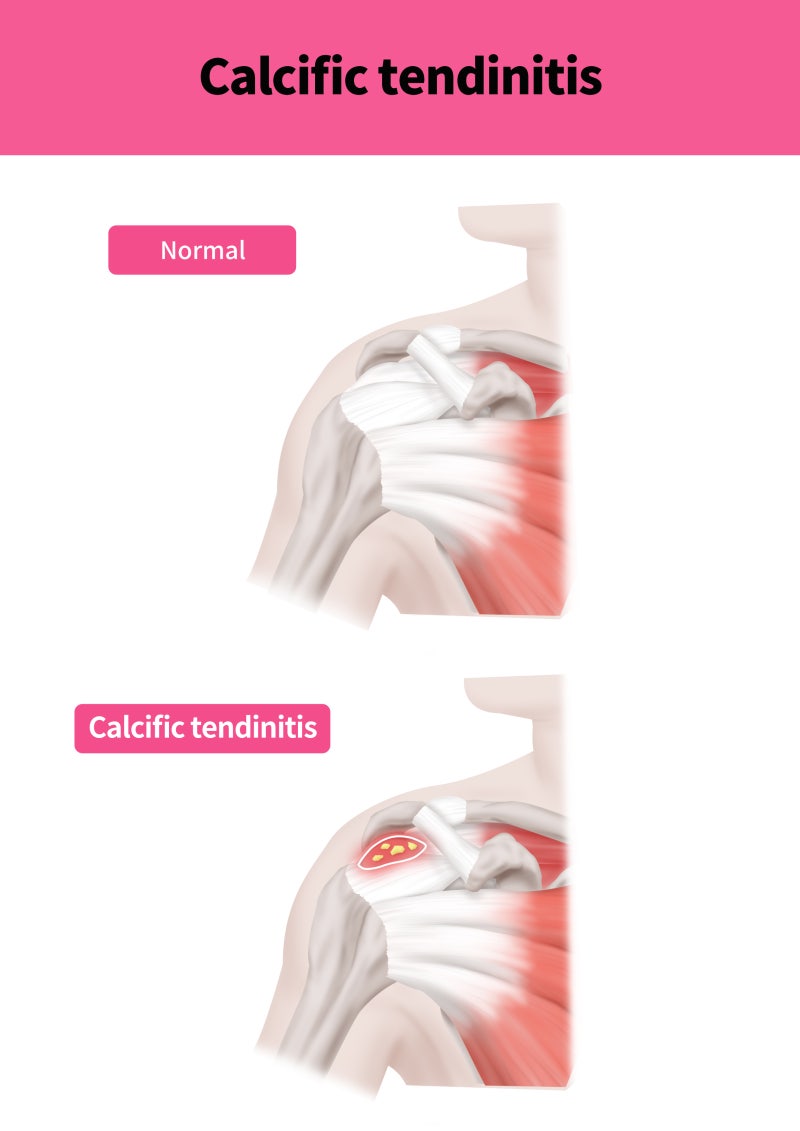
Shoulder calcification characteristically causes sudden severe pain even when the shoulder has been previously pain-free. Symptoms include a burning sensation, severe pain when lying on the affected shoulder during sleep, excruciating pain from even touching the shoulder, shoulder pain even without excessive arm movement, pain radiating from the shoulder to the arm and neck, and worsening nighttime pain. Calcific tendinitis causes especially severe nighttime shoulder pain; nighttime pain can be so extreme that sleep is impossible, while daytime pain is relatively milder. Sharp, stabbing shoulder pain is common, and pain may appear and disappear intermittently. Naturally, lifting the affected shoulder forward or sideways is also restricted.
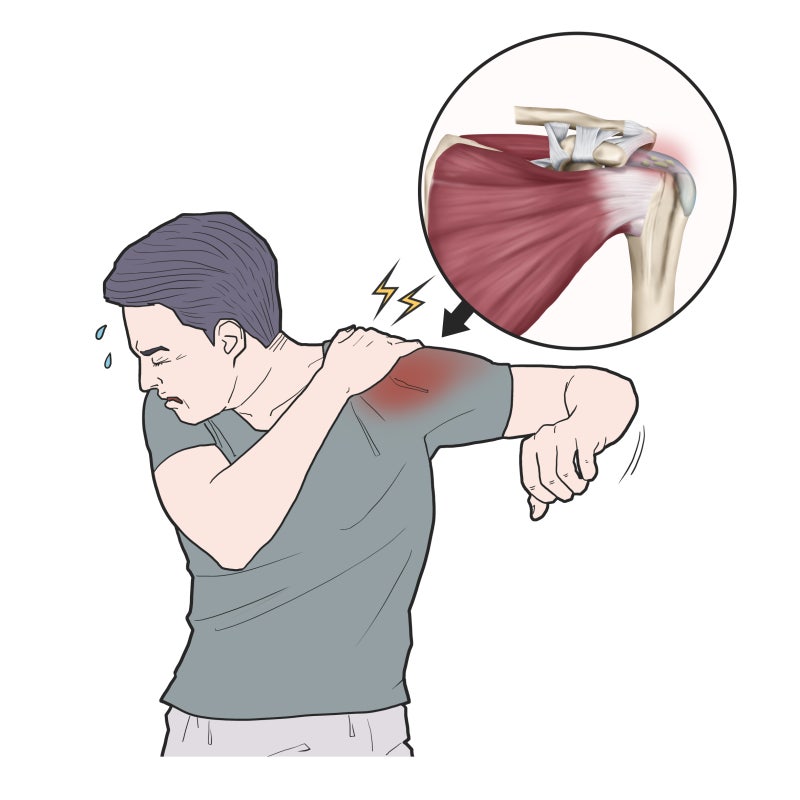
The exact cause of shoulder calcification has not yet been clearly established in medicine. However, it's understood that it occurs due to blood circulation problems in the shoulder tendons or micro-damage from repetitive shoulder use. In other words, when blood circulation to the shoulder is disrupted, the tendons are deprived of blood supply, undergo degeneration, and calcification forms. Diagnosis of calcific tendinitis before treatment is possible with X-ray alone. However, micro-calcifications in the formation stage or chalk-like deposits may not be visible on X-ray, so joint ultrasound may also be used for diagnosis. Once calcification is found within the tendon through diagnosis, calcific deposit treatment should begin.

Calcific deposit treatment can achieve results through non-surgical methods in most cases. Treatment begins with reducing inflammation caused by the deposit, then proceeds to remove or promote absorption of the calcification. For deposits in the formation stage, since shoulder pain is extreme, removing them through PIMS therapy calcific deposit aspiration provides the fastest results. PIMS therapy calcific deposit aspiration removes calcification embedded in the tendons using a syringe under ultrasound guidance, without arthroscopic surgery. Ultrasound allows precise treatment targeting only the damaged or calcified tissue without disturbing healthy tissue. PIMS therapy is most effective during the acute painful phase when calcification is dissolving. Shoulder pain typically resolves within days after PIMS therapy calcific deposit aspiration.
However, PIMS therapy alone cannot resolve everything. To prevent and address inflammatory adhesion reactions and shoulder joint stiffness caused by calcification, additional shoulder stretching and rehabilitation exercises for range-of-motion recovery must be performed. Since it's not possible to extract all calcification with a syringe, residual deposits after PIMS therapy should be addressed with extracorporeal shockwave therapy to increase tendon blood flow and promote rapid absorption. Early-stage shoulder calcification symptoms can be easily mistaken for simple shoulder muscle pain, leading to neglect. It can also be confused with other shoulder conditions like rotator cuff tears or frozen shoulder. Self-diagnosis can worsen symptoms and lead to inappropriate treatment with various side effects. Seek treatment at the appropriate time.