
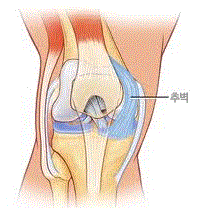
The knee joint operates much like a moving machine. Bones and the surrounding ligaments and tendons can create sounds as they rub against each other. The real concern is when sound is accompanied by pain. Many people assume this is degenerative arthritis, but if you're young, plica syndrome should be considered. Plica syndrome is relatively common in younger patients but is easily self-diagnosed as a simple sprain, potentially causing delayed treatment.

Plica syndrome commonly affects young people who enjoy various sports activities and homemakers who frequently bend and extend their knees. Although unfamiliar, it accounts for a significant proportion of knee conditions in younger patients. Plica is an abnormally thickened portion of the joint membrane covering the knee. This thickened tissue damages surrounding structures, causing pain with a clicking or catching sensation when bending and extending the knee. Symptoms are usually absent when the knee is fully bent but appear during extension. During the active daytime hours, increased fluid inside the knee pushes the plica away, reducing pain. But in the morning, reduced fluid brings back the pain. This pattern often leads patients to dismiss the symptoms, missing the treatment window. Most plica syndrome patients arrive at the clinic after their condition has progressed beyond the initial stage when medication and physical therapy would have been sufficient. If plica syndrome persists, the plica loses elasticity, becomes thicker, and can progress to cartilage damage due to continued irritation. Diagnosis is made by an orthopedic specialist through physical examination of knee movement, supplemented by MRI to assess the thickened plica tissue and surrounding cartilage damage.

If knee pain persists after medication and physical therapy, consulting an orthopedic specialist is recommended. In severe cases, arthroscopic plica excision can be performed through a 0.5 cm minimal incision to remove the thickened medial plica. Avoid squatting positions, and if plica syndrome is suspected, rest to reduce strain on the knee. Most importantly, regular stretching to loosen stiff muscles and ligaments and maintain joint flexibility is beneficial. However, sudden or forceful movements can increase pressure and overload the joint, so slow, circular motions around the knee are preferred. If your body is stiff, try a warm bath or foot soak first to raise body temperature and improve knee flexibility before stretching. These non-surgical methods must be practiced consistently to help with muscle relaxation and blood circulation. Take care of your knee joints through daily maintenance.