
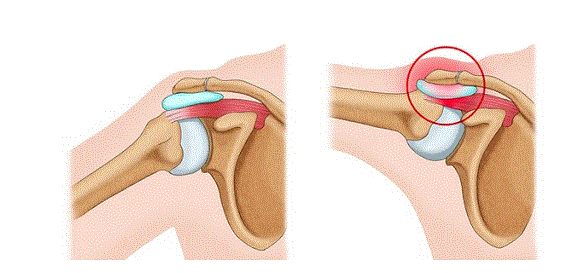
In modern society, people use their shoulders constantly. From smartphone use and computer work, to household chores and intense exercise — the shoulder works tirelessly until we fall asleep. Impingement syndrome refers to pain caused by collision between the bone that acts as a roof over the shoulder joint and the muscles and tendons that move the shoulder. If you hear clicking sounds accompanied by pain when raising your arm, impingement syndrome should be suspected.

Without early treatment, impingement syndrome can lead to secondary conditions such as rotator cuff tears or calcific tendinitis, making early detection and treatment the most important factor. Impingement syndrome is one of the most common shoulder conditions along with frozen shoulder. According to National Health Insurance statistics, one in three patients treated for shoulder pain is diagnosed with impingement syndrome. Most symptoms involve shoulder pain, and when the condition progresses, pain can extend to the arm and back of the neck. Diagnosis involves X-ray, ultrasound, and when necessary, MRI to check for structural damage to bones, ligaments, and muscles.

At diagnosis, doctors typically say: "The overgrown acromion bone is rubbing against the ligament every time you move your shoulder, causing inflammation and pain. You need acromioplasty surgery to shave down the bone." But does impingement syndrome truly require bone shaving to eliminate pain and achieve a cure? Understanding the root cause of impingement syndrome reveals that acromioplasty is not the only solution. Impingement syndrome is ultimately a condition that develops from prolonged poor posture and habits. The natural rhythm between the scapula and upper arm bone that enables balanced joint movement becomes disrupted, causing unnecessary collisions and pain. With properly balanced rotator cuff tension, the subacromial space remains adequate to raise the arm. But when poor posture or habits cause the shoulder to shift or develop rounded shoulders, the scapular-humeral rhythm breaks down and impingement occurs. In summary, it's not that bone spurs on the acromion cause the impingement — rather, the arm bone moves from a higher starting position than normal due to displacement, causing the collision. When the balance of muscles and soft tissues around the shoulder is disrupted, posture unconsciously shifts, and no matter how hard you try to move correctly, the arm bone and scapula operate out of position, causing unnecessary impingement.

The fundamental treatment for impingement syndrome is not blindly shaving down overgrown bone, but correcting the underlying poor posture and habits while restoring balance to the imbalanced rotator cuff and soft tissues through rehabilitation exercise. If tendon tears or damage are found during examination, additional treatment to repair the damage must be performed. Even if X-ray shows acromion bone growth of several centimeters, surgery is not always necessary. Acromioplasty is indicated in cases where prolonged impingement has already caused rotator cuff tears and secondary conditions. Simply improving daily habits can prevent impingement syndrome. Before shoulder-intensive activities like baseball, bowling, upper body weight training, golf, swimming, or badminton, spend at least 10 minutes thoroughly stretching to increase shoulder flexibility. Proper daily habits and posture are also essential. Avoid leaning on one armrest when sitting, and correct habits like sleeping on your side or gripping the top of the steering wheel while driving.