
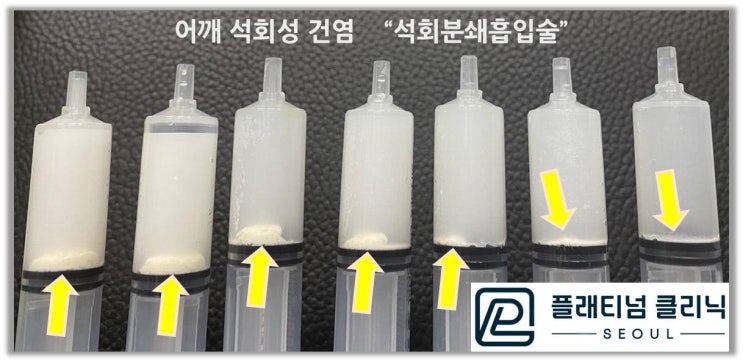
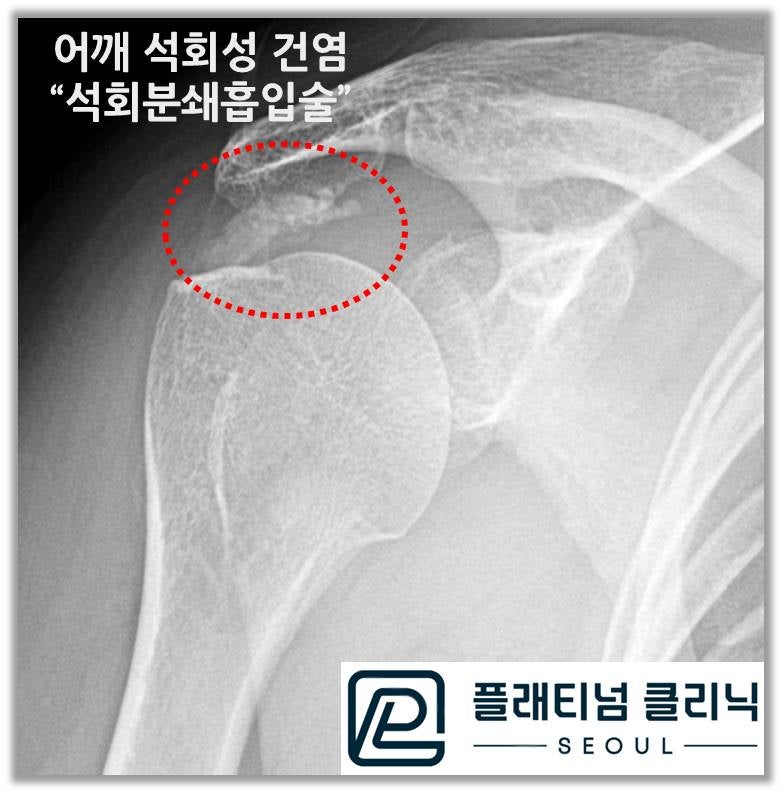
Hello. I am Dr. Dongkyu Lee, an orthopedic specialist. How is calcific tendinitis diagnosed and treated? First, let me explain the diagnosis. Calcific tendinitis can be diagnosed with a basic X-ray. Since calcium is a hard substance, it is visible on X-ray. However, very small or fine calcium deposits may not show on X-ray. Because X-ray is two-dimensional, deposits may be obscured by overlapping bone. If calcium is visible on X-ray, calcific tendinitis can be diagnosed. As I have mentioned before, calcium forms due to restricted blood flow, so the surrounding tendons may not be healthy. Ultrasound or MRI can be used to identify any additional problems. Since most calcific tendinitis occurs in the rotator cuff, ultrasound is sufficient for examination. Treatment methods may vary depending on the calcium phase (formative, resting, resorptive), and these phases can be assessed on ultrasound rather than MRI. So how is calcific tendinitis treated? If the calcium is fine and small, anti-inflammatory injections for pain control and shockwave therapy may bring improvement. One pitfall is when fine or small calcium is not visible on X-ray, leading to missed diagnosis and the condition being left untreated. In such cases, more calcium may form, and months later, a larger deposit may cause worse pain. For large deposits or severe pain, surgery was previously the main treatment. Arthroscopic surgery involves opening the tendon, removing the calcium, and suturing. Because the tendon is involved, a brace must be worn, a recovery period is needed, and rehabilitation is required. These concerns led me to develop a non-surgical calcium removal method over 10 years ago. That is "barbotage." Let me show you a video first.
After local anesthesia ensures a pain-free state, ultrasound precisely locates the calcium. A specialized syringe and tip are used to fragment the calcium, which is then aspirated. In the early years, calcium did not fragment or aspirate well, so I tried various approaches and now use custom-made syringes and tips. Here is a case.
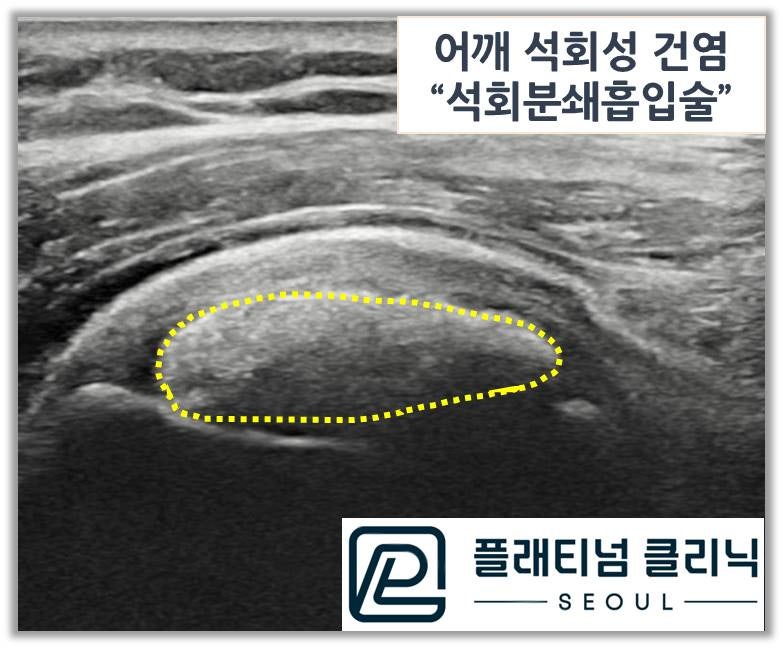
Ultrasound was performed to assess the calcium characteristics.
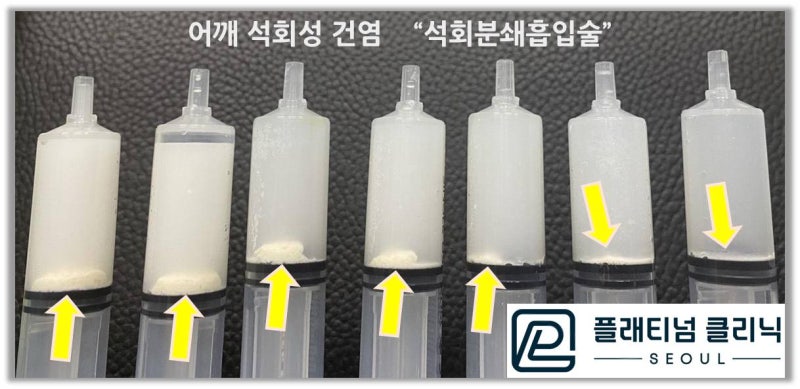
Here is the actual procedure video.
The video shows white, toothpaste-like calcium being aspirated through the syringe. When this extracts well, the patient's symptoms improve dramatically.
The post-procedure X-ray shows:
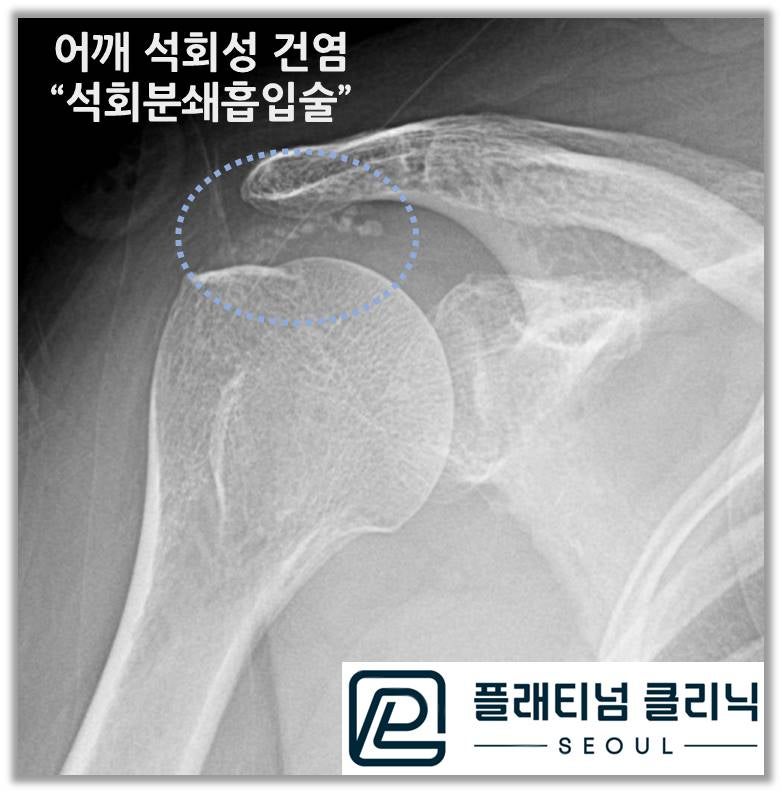
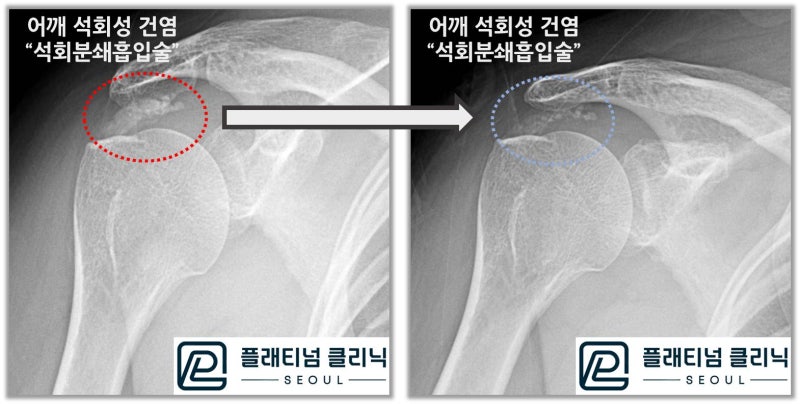
Even large calcific tendinitis can be treated with barbotage, resulting in near-complete calcium absorption and pain relief. Remaining calcium may be absorbed naturally through the body's healing response, and additional shockwave therapy can accelerate absorption. If diagnosed early, calcific tendinitis can be sufficiently treated with anti-inflammatory injections and shockwave therapy alone. So if you have shoulder pain, do not just take an X-ray and leave it at that. Ultrasound can sufficiently diagnose rotator cuff conditions and fine calcific tendinitis, so early accurate diagnosis is important. Even severe, large calcific tendinitis can be treated with barbotage. While some cases may require a second procedure, most are treated in a single session.
For those considering treatment for calcific tendinitis, "barbotage" will surely be of great help.