

Hello. I'm Dr. Dongkyu Lee, an orthopedic specialist. Today, let's learn about calcific tendinitis in a Q&A format. Q. First, what kind of condition is calcific tendinitis? The exact cause is unknown, but the immediate cause is restricted blood flow. In other words, when blood flow is restricted for some reason, the tendons or ligaments don't receive adequate blood supply and nutrition, which leads to degenerative changes in the tendons or ligaments, resulting in calcium deposits. Q. How does calcific tendinitis progress? It can be divided into 3 stages: the formative phase, the resting phase, and the resorptive phase. The formative phase is when the calcium deposit forms, the resting phase is when it remains stable, and the resorptive phase is when the calcium is being absorbed. During the formative and resting phases, the calcium is hard like chalk, while during the resorptive phase, it becomes sticky like toothpaste. In other words, calcific tendinitis is a condition where calcium forms and then gets reabsorbed. Q. Then can you just leave calcific tendinitis alone? You might think so, but those who have experienced the pain of calcific tendinitis know that it causes truly excruciating pain. The VAS (Visual Analog Scale) score is used to measure pain intensity, where 0 means no pain and 10 means the worst pain imaginable. The pain of childbirth averages about 6-7 points. So how severe is calcific tendinitis pain? It can reach up to a VAS score of 9. Because the pain is so extreme, simply leaving it untreated is incredibly difficult for patients suffering from calcific tendinitis. That's why it's a condition that requires treatment. Q. Does calcific tendinitis always cause pain? Not necessarily. During the resting phase, there may be little to no pain. The most painful phase is the resorptive phase, followed by the formative phase. The cause of pain in calcific tendinitis is increased pressure within the tendon or ligament due to inflammation caused by calcium deposits. During the resorptive phase, the calcium becomes sticky like toothpaste or cheese, and pressure within the tendon increases enormously, so most patients experience severe pain during this phase. During the formative and resting phases, pain may or may not be present depending on the size and characteristics. Q. How is calcific tendinitis treated? The fundamental treatment is removing the calcium deposit. When the calcium deposit is small or microscopic, extracorporeal shockwave therapy can yield good results. However, when the deposit is too large or hard, shockwave therapy alone may not be sufficient. Also, applying shockwave therapy during the resorptive phase may actually worsen the patient's pain. In such cases, surgery or non-surgical calcium crushing and aspiration can be performed to remove the deposit. Q. How is surgery performed for calcific tendinitis? Through arthroscopy, an incision is made in the tendon or ligament where the calcium is located, the calcium is removed, and the incision is then sutured closed. Since surgery involves damaging the tendon, a brace must be worn and rehabilitation is required. Q. What is the non-surgical calcium crushing and aspiration procedure? Using ultrasound guidance, the calcium deposit is precisely targeted and a needle is inserted into it. The calcium is then crushed depending on its characteristics. The crushed calcium is aspirated using a syringe. Since only a needle is used without surgery, patients can return to daily activities immediately. Also, because the calcium is removed and inflammation and pressure are immediately reduced, patients experience pain relief right after the procedure. Q. Where can I get the calcium crushing and aspiration procedure? The crushing technique varies depending on the calcium's characteristics (formative, resting, or resorptive phase) and size. Also, without precise ultrasound-guided targeting, it can be difficult to remove the calcium. That's why doctors without experience may not be able to remove calcium effectively. In my case, having performed this procedure for over 10 years, I can complete it in about 10-15 minutes. When I trained a fellow colleague and had them perform the procedure, it sometimes took an hour. Of course, with more experience, they'll get better at it. If you're curious about the calcium crushing and aspiration procedure, please visit the link below! https://blog.naver.com/9690067/222552391573
🔗 https://blog.naver.com/9690067/2225523915732022. 4. 29.
(Platinum Clinic) How Is Shoulder Calcific Tendinitis Treated?
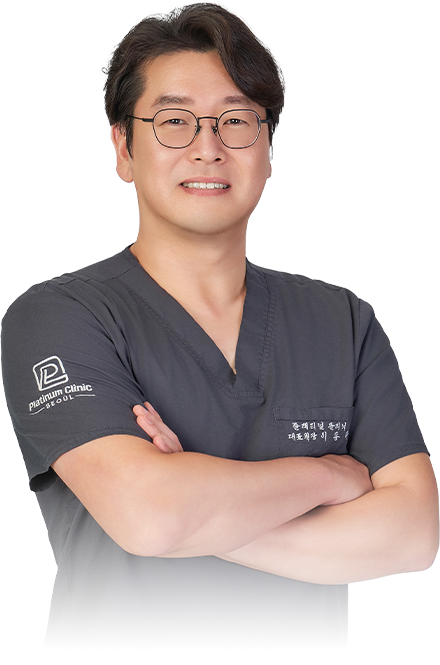
Dr. Dongkyu Lee
Orthopedic Specialist · Platinum Clinic
Shoulder surgical & non-surgical treatment