Hello. I'm Dr. Dongkyu Lee, an orthopedic specialist. Today, let's look at how rotator cuff partial tears are treated. First, let's understand the types of rotator cuff tears. Broadly, they can be divided into partial tears and complete tears. A complete tear means the rotator cuff is completely torn and detached from the humerus. Unfortunately, non-surgical treatment cannot heal a complete tear. Partial tears can be further classified into articular-side tears and bursal-side tears. The rotator cuff has roughly two layers — the tendon attaching on the articular (joint) side and the tendon on the bursal (outer) side. Treatment for partial tears varies depending on the tear size and characteristics.
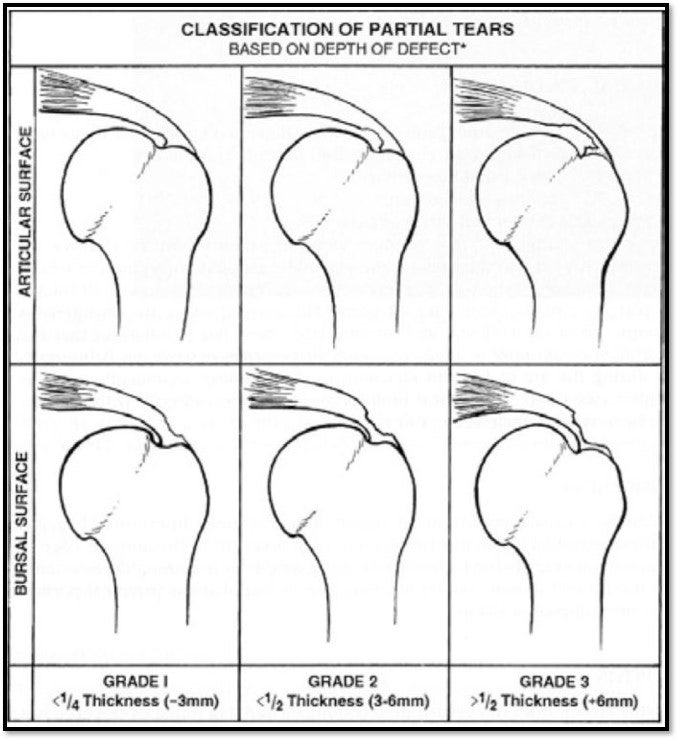
As shown in the image, grade 1 and 2 tears can typically improve with conservative treatment, while grade 3 tears may be managed conservatively but could require surgery if there's no improvement. Conservative treatment here doesn't simply mean medication and physical therapy. Rotator cuff tears are progressive conditions — if left untreated, the tear can enlarge. That's why more proactive treatment is needed. Let me show you a treatment case for a rotator cuff partial tear. A 50-year-old male patient had been suffering from shoulder pain for months and received only medication and physical therapy at another hospital. When the pain persisted, he came to our clinic.
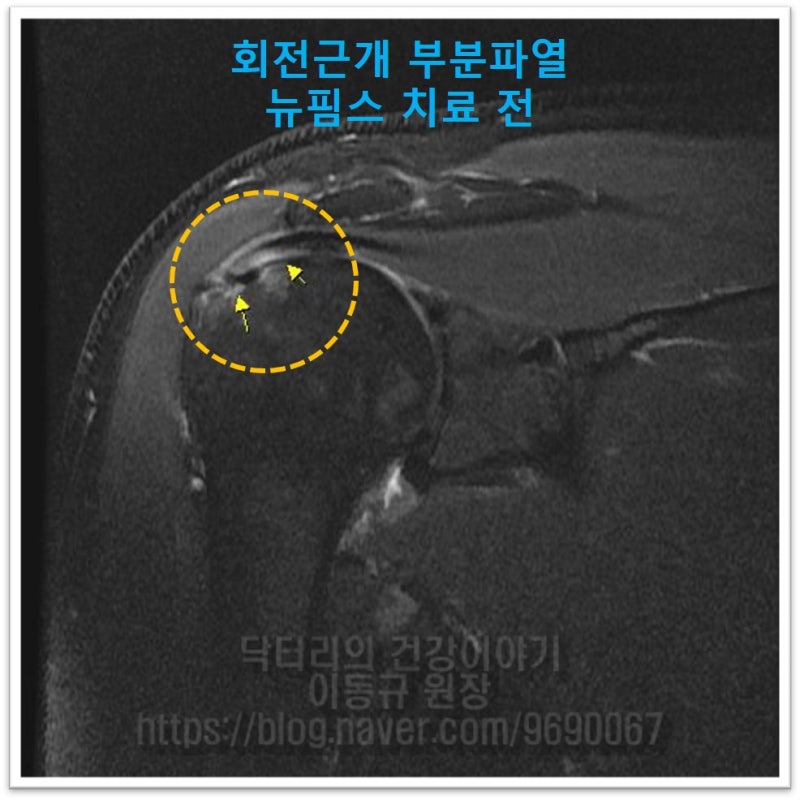
The MRI shows the rotator cuff tendon in very poor condition with severe inflammation. NewPIMS treatment was performed, which includes tendon regeneration therapy to help heal and strengthen the tendon.
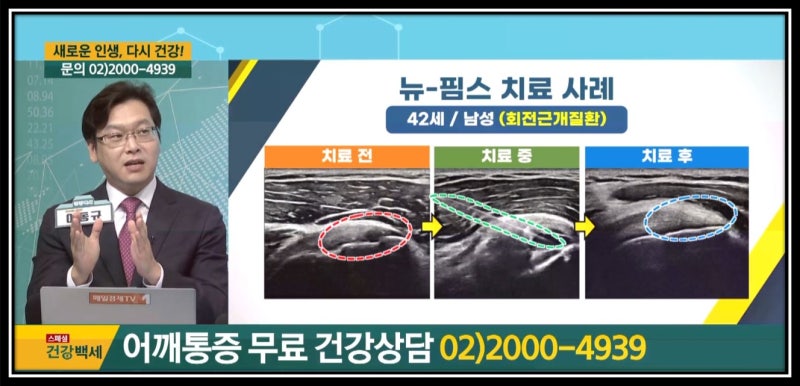
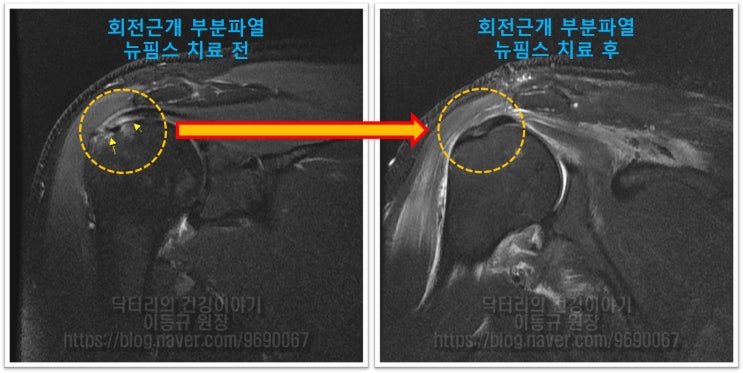
Rotator cuff partial tear treatment cannot be completed in a single session. After NewPIMS treatment, additional tendon strengthening therapy was performed over 5 weeks. Here are the results after treatment:
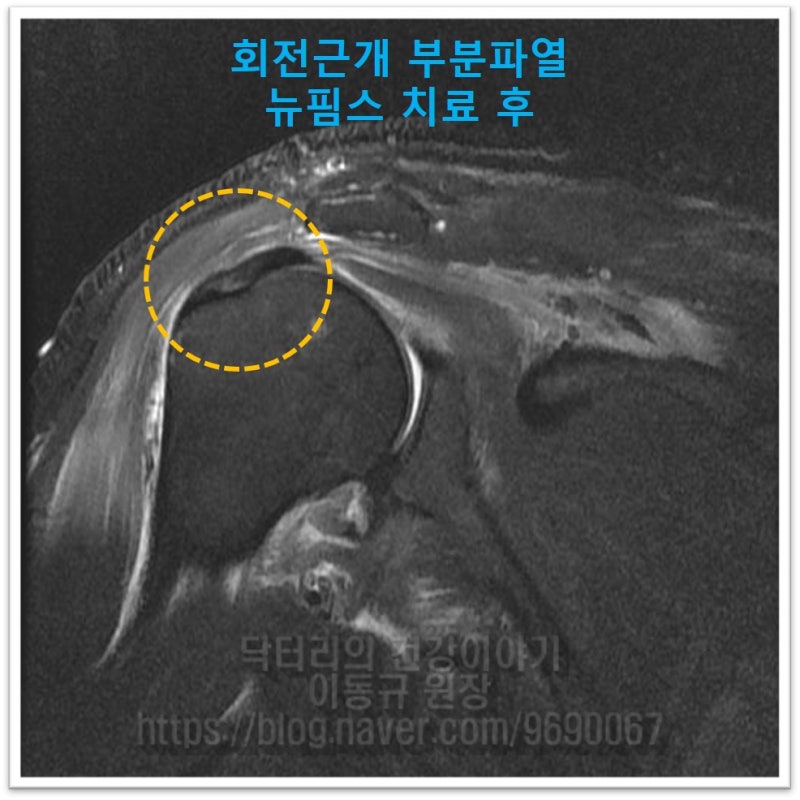
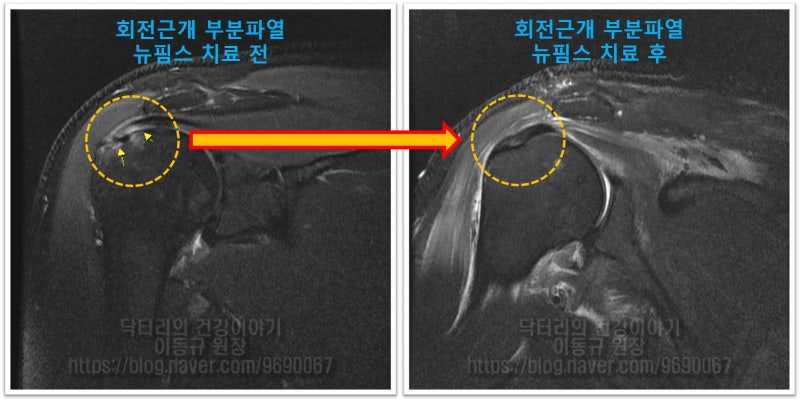
As the treatment results on MRI demonstrate, rotator cuff partial tears can be healed non-surgically. Simple conservative treatment (medication, physical therapy, pain injections, etc.) alone may not be sufficient. Proactive treatments like NewPIMS that promote tissue healing can prevent rotator cuff conditions from progressing and help the rotator cuff become healthy again. Rotator cuff tears are progressive. Most cases involve degenerative weakening of the tendon. Early and proactive treatment is essential when 'the tear is small' and 'the tear is only partial' — before it progresses further. Once the tear enlarges or becomes complete, surgical treatment becomes necessary.
As the saying goes, 'A stitch in time saves nine.' Don't let the condition worsen until surgery is needed — treat it early and live healthy.