Truths and Myths About Rotator Cuff Tear Treatment When a rotator cuff tear is present, the treatment approach may vary depending on the size and pattern of the tear. Tears can be classified into full-thickness tears and partial tears. For large full-thickness tears, non-surgical treatment is not effective, and surgical treatment is recommended. Smaller partial tears with mild symptoms can be further classified into two types: articular-side tears and bursal-side tears.
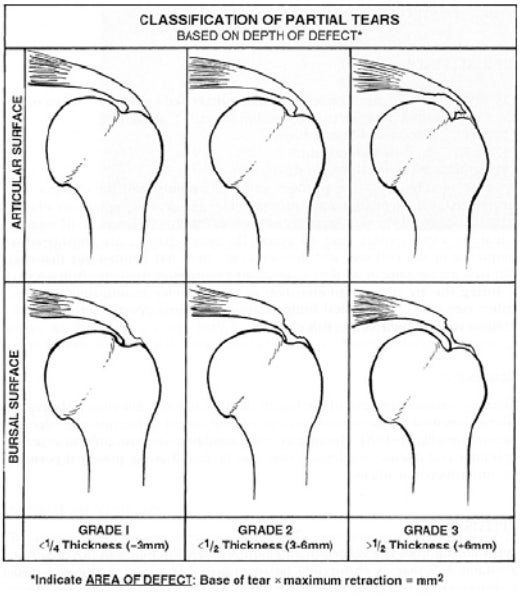
The upper diagram shows articular-side ligament tears, graded by thickness of the tear. The lower diagram shows the classification of bursal-side tears. Generally, articular-side tears can be improved with non-surgical treatment. Available treatments include prolotherapy (ligament-strengthening injections, DNA injections, PDRN injections, Regensil injections, etc.), shockwave therapy, and rehabilitation. If the damage is mild, these non-surgical treatments can heal the tissue and restore shoulder function. However, for bursal-side tears, while mild cases can be treated non-surgically, moderate or greater tears require surgical treatment. Additionally, tears larger than 6mm should be treated surgically. This patient had been experiencing shoulder pain for about 2 years and was diagnosed with a right rotator cuff tear via ultrasound at another clinic, where the patient received multiple rounds of prolotherapy and PIMS(?) therapy. The patient had received these treatments up until just one week before visiting us, totaling over 10 sessions. Despite repeated rotator cuff tear treatment, symptoms did not improve and pain worsened, prompting the visit to our clinic. First, we performed physical examination and ultrasound for accurate diagnosis.
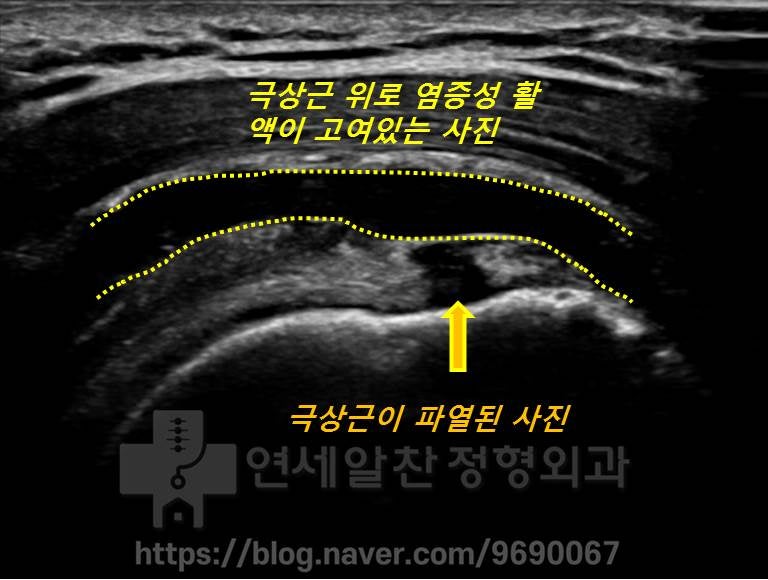
Ultrasound of the supraspinatus revealed a full-thickness tear with complete discontinuity, and an enormous amount of inflammatory effusion was observed. The severe inflammatory effusion caused excruciating pain and inability to use the arm, with significantly limited shoulder function.
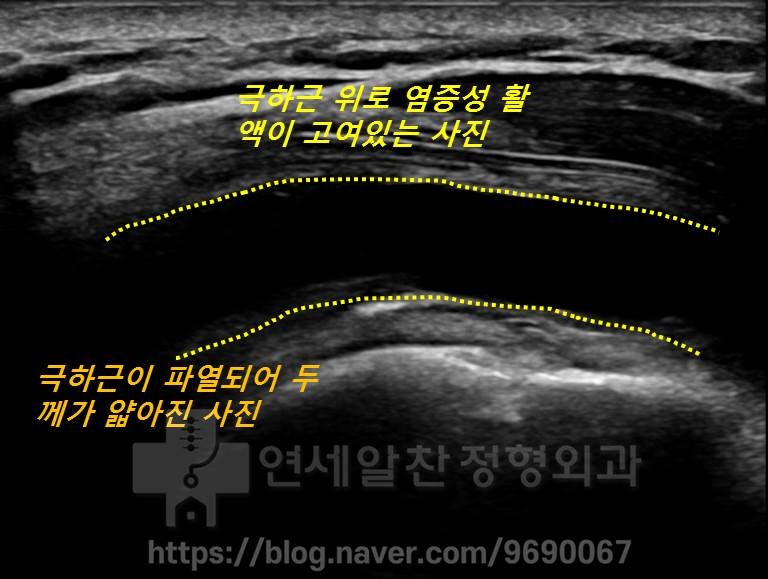
The infraspinatus was also torn, thinned considerably from its original thickness, with massive inflammatory effusion observed. Based on comprehensive assessment, the patient had a full-thickness supraspinatus tear and a grade III bursal-side infraspinatus tear, requiring surgical treatment. Could non-surgical treatment be effective for this type of rotator cuff tear? I looked into the PIMS therapy the patient had received and found it to be "a treatment that applies repeated stimulation to damaged muscles and ligaments to restore blood flow and control pain through neurotransmitter release." In other words, it appears more aimed at pain control than healing damaged tissue. So why was this treatment administered? There are likely two reasons: First, the ultrasound diagnosis may have been inaccurate, leading to non-surgical treatment. As mentioned before, ultrasound results vary with examiner skill, potentially causing misdiagnosis. If the initial diagnosis was wrong, proper treatment could never have been provided. Second, the tear may have been initially mild enough for non-surgical treatment, but ineffective treatment allowed it to worsen. Ineffective non-surgical treatment may have caused the tear to progress. Let's also examine this patient's MRI.
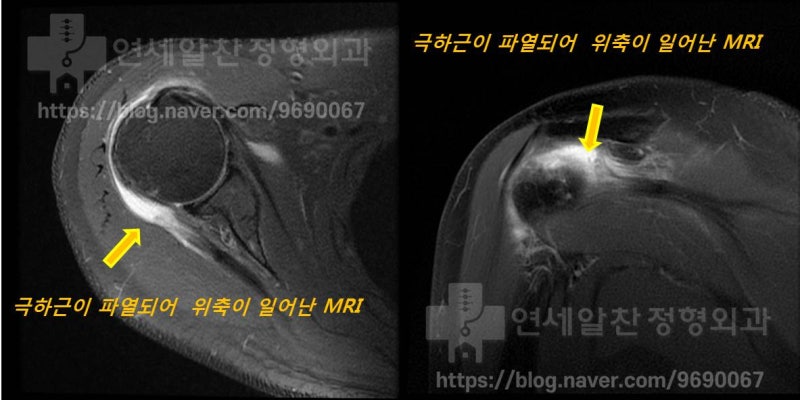
MRI also shows a full-thickness supraspinatus tear and near-full-thickness bursal-side infraspinatus tear, consistent with ultrasound findings, with a substantial amount of inflammatory effusion confirming the need for surgical treatment.
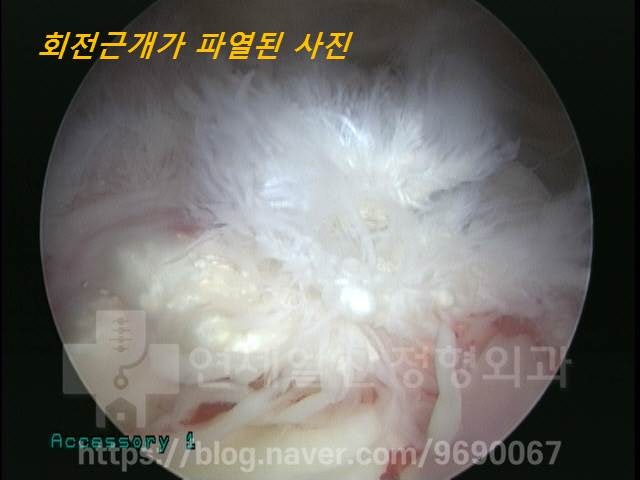
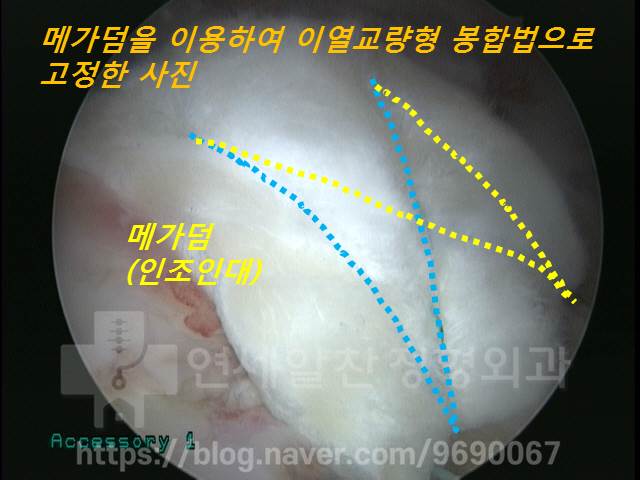
The arthroscopic image confirms severely advanced rotator cuff tear with degenerative changes.
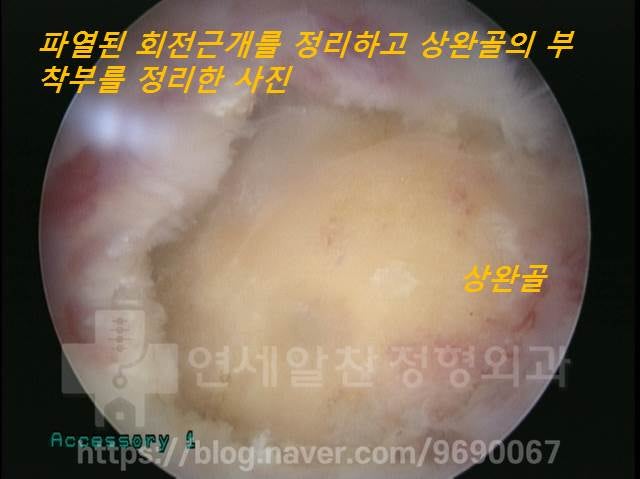
The severely damaged rotator cuff with advanced degenerative changes was debrided, and preparation was made to reattach the ligament to the humerus.
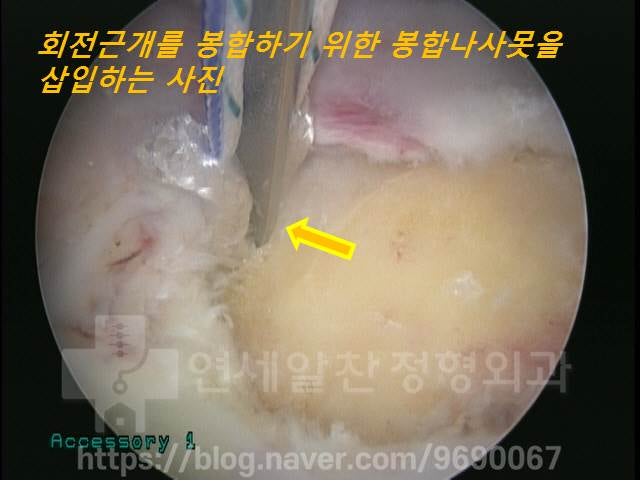
Suture anchors were placed to repair the torn rotator cuff.
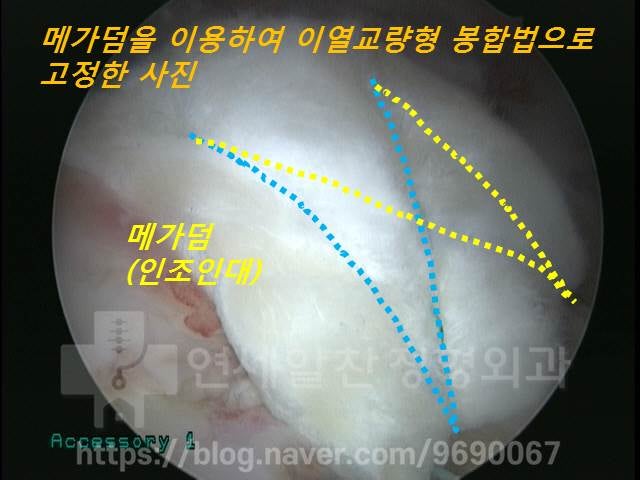
Given the patient's poor ligament quality with a high risk of re-tear if only the native ligament was repaired, an artificial ligament (MegaDerm) was used with a double-row repair technique for secure fixation. For effective non-surgical treatment of rotator cuff tears, accurate diagnosis is essential. The more precise the diagnosis, the more effective the treatment. Effective non-surgical treatment includes: 1. Accurate injection therapy: Ultrasound-guided injections are necessary to properly deliver the medication to the damaged ligament. 2. Appropriate physical therapy: Helps improve tissue blood flow and reduce inflammation. 3. Specialized rehabilitation: Strengthening and functional recovery of muscles surrounding the damaged rotator cuff is essential. Also, when surgery is needed for rotator cuff tears, no amount of non-surgical treatment will help -- it is like pouring water into a bottomless bucket. For full-thickness tears, bursal-side tears, or tears larger than 6mm, surgical treatment is the fastest path to recovery.