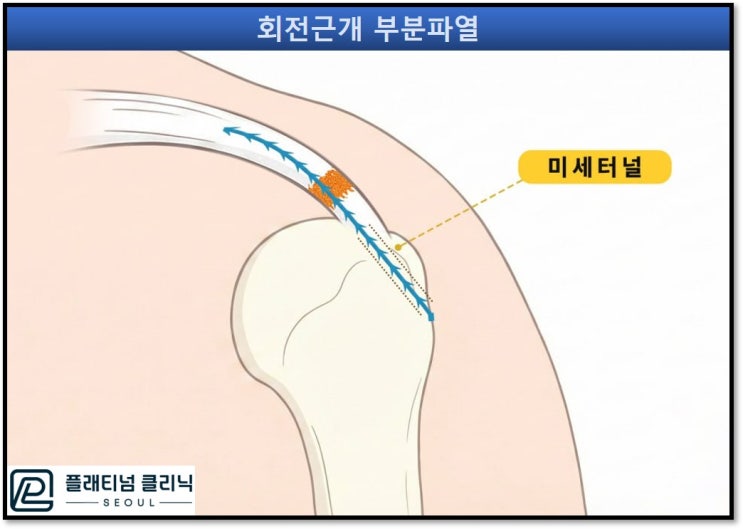
Hello. I am Dr. Dongkyu Lee, an orthopedic specialist. "They told me my rotator cuff is torn and surgery is the only option." "I have had multiple injection treatments, but it keeps coming back. Do I really need surgery now?" "Surgery sounds scary, and I hear recovery takes a long time... Is there any other way?" So many patients come to us with these exact concerns. Let me get straight to the point. Partial rotator cuff tears can be treated non-surgically. Today, I will explain in detail the reduction repair procedure, a non-surgical treatment for partial rotator cuff tears. ---------------------------------------------- Why are injection treatments alone not enough? Many patients with partial rotator cuff tears have already received multiple rounds of injection therapy. Steroid injections, DNA injections, PDRN, prolotherapy injections... You have probably experienced temporary relief followed by the pain returning again and again. Why does this happen? The Core Principle Injection therapy reduces inflammation and promotes tissue regeneration. However, it cannot physically reattach a ligament that has already torn. When a partial tear has progressed, the ligament needs to be physically sutured for a fundamental treatment. ---------------------------------------------- What is Reduction Repair? Reduction repair is a procedure that directly sutures the torn rotator cuff ligament using suture material. When you hear "suturing," you might think of surgery. However, reduction repair is a non-surgical treatment performed without any incision, using only a needle.
Category Reduction Repair (Non-Surgical) Arthroscopic Repair (Surgical) Incision None (needle only) 5mm or larger incision Anesthesia Local anesthesia General/regional anesthesia Hospitalization Same-day discharge 1-3 day hospital stay Brace Usually not required Worn for 4-6 weeks Recovery Period 6-12 weeks 3-6 months Indicated For Partial tears Full-thickness tears, large tears
---------------------------------------------- Real Patient Cases Case 1: A man in his 40s, an office worker unable to sleep due to night pain Patient Information - Age/Gender: 47-year-old male - Occupation: Office worker (heavy computer use) - Main Symptom: Right shoulder pain persisting for 6 months Symptoms At night, my shoulder aches and throbs, waking me up frequently. I can only fall asleep by turning onto my left side. There is a sharp, stinging pain when I rotate my arm backward. I received 3 injection treatments at another hospital, but the effect lasted only 2 weeks. Examination Findings Ultrasound examination revealed an articular-side partial tear of the supraspinatus tendon. The tear was approximately 40% of the tendon thickness and 1.2cm in length.
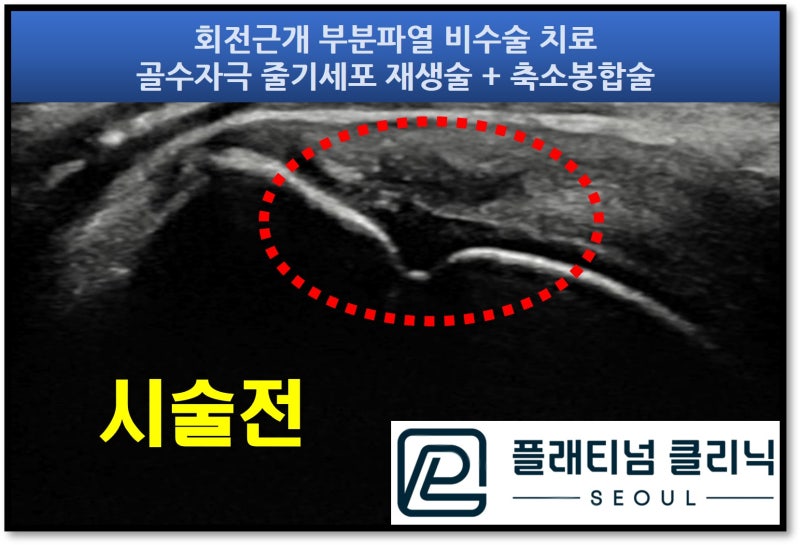
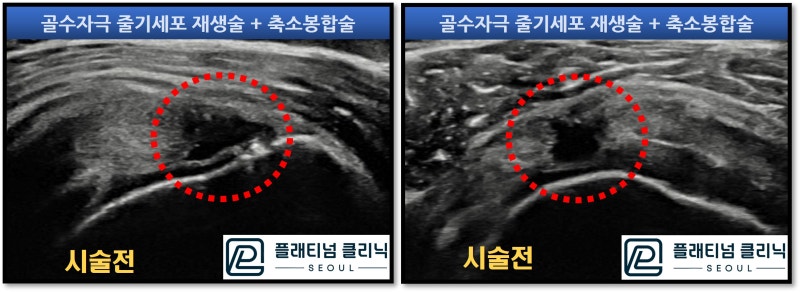
Case 1 - Pre-treatment ultrasound: Articular-side partial tear of supraspinatus (red circle) Treatment Reduction repair was performed at Platinum Clinic. Procedure time was approximately 20 minutes under local anesthesia. The patient was discharged the same day.
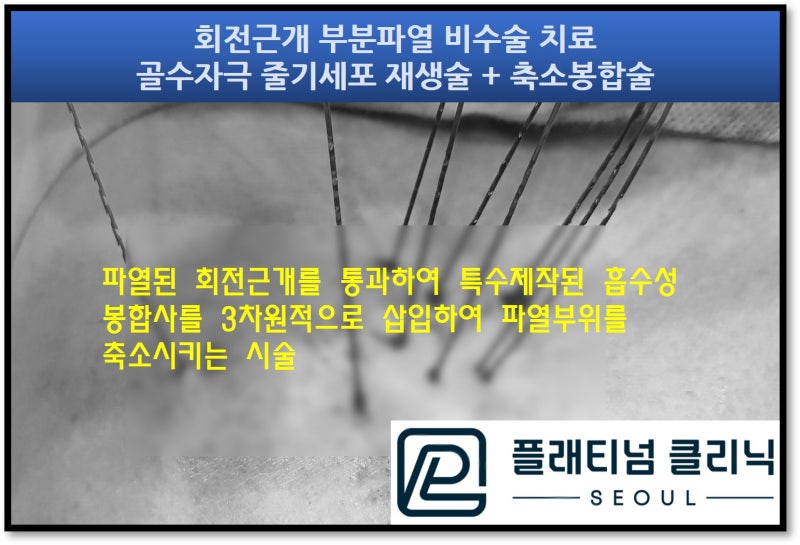
Reduction repair procedure in progress Results - 1 week later: Night pain reduced by 70% - 4 weeks later: Returned to daily activities, night pain resolved - 12 weeks later: Able to exercise, pain completely gone
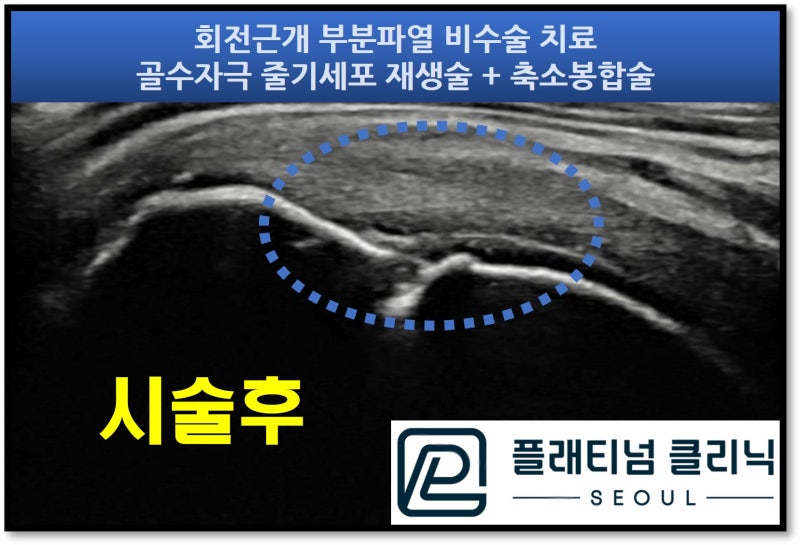
Case 1 - 12-week post-treatment ultrasound: Healing confirmed at the repair site ---------------------------------------------- Case 2: A woman in her 50s, a homemaker struggling with household chores Patient Information - Age/Gender: 54-year-old female - Occupation: Homemaker - Main Symptom: Left shoulder pain persisting for 1 year Symptoms Hanging laundry and reaching for items on high shelves became difficult. There is a "clicking" sound when raising the arm. Pain is severe when lying on the affected side. She was told "it is just part of getting older." Examination Findings MRI revealed an articular-side partial tear of the supraspinatus along with mild tendinitis.
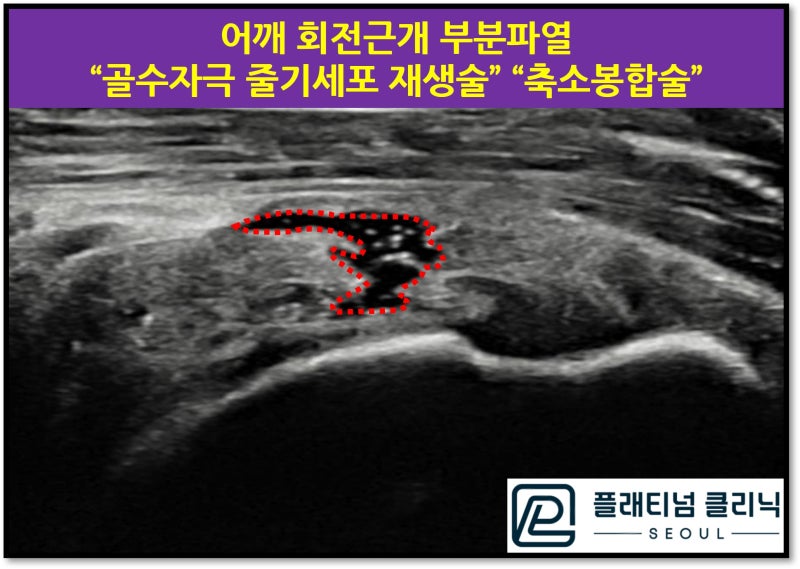
Case 2 - Ultrasound: Partial tear of supraspinatus Treatment Reduction repair combined with ligament regeneration injection for the area of tendinitis was performed. Results - 2 weeks later: Night pain resolved - 6 weeks later: Normal performance of household chores - 12 weeks later: Pain-free daily life
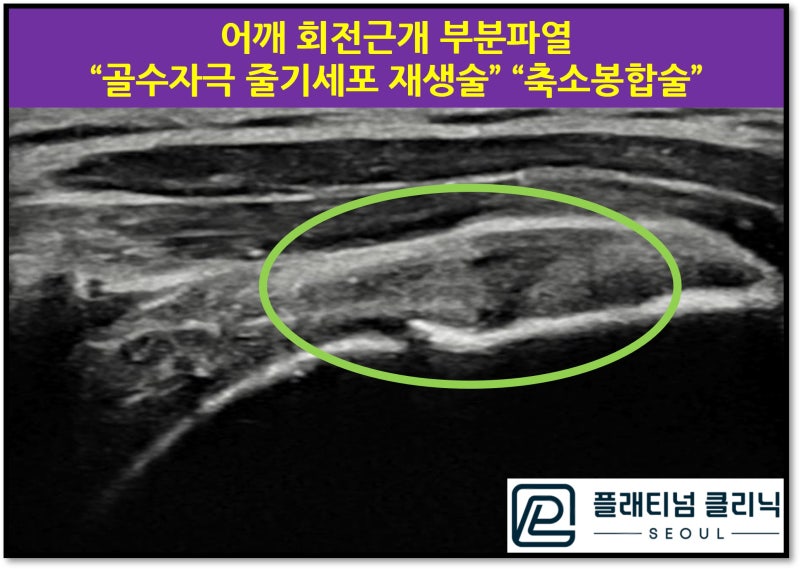
Case 2 - Post-treatment ultrasound: Healing confirmed at the tear site ---------------------------------------------- Case 3: A man in his 30s who could not give up exercise Patient Information - Age/Gender: 35-year-old male - Occupation: Fitness trainer - Main Symptom: Shoulder pain that occurred during bench press Symptoms There was a "pop" in the shoulder while lifting heavy weight. Since then, bench press and shoulder press have been impossible. He was told that surgery would mean 6 months without exercise, which was a major concern. Examination Findings Ultrasound revealed an articular-side partial tear of the supraspinatus. Although it was a traumatic tear, it was not a full-thickness tear.
Case 3 - Pre-treatment ultrasound: Bursal-side partial tear of supraspinatus Treatment Reduction repair was performed. Because the patient was young and highly active, a stronger fixation was needed, so the Bone Tunneling Method from Platinum Clinic was applied. Results - 4 weeks later: Light upper body exercise possible - 8 weeks later: Began weight training - 16 weeks later: Previous lifting capacity restored
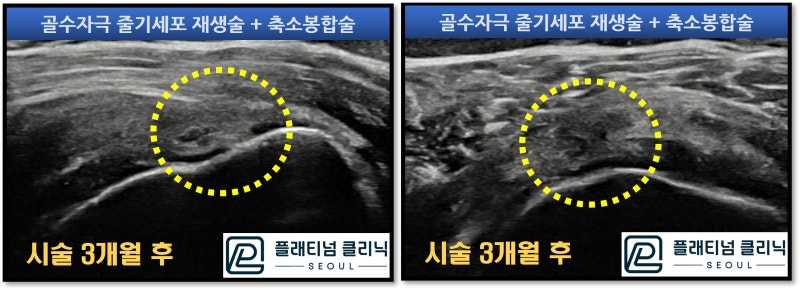
Case 3 - 16 weeks post-treatment: Complete healing at the repair site ---------------------------------------------- Research-Backed Effectiveness of Reduction Repair The effectiveness of percutaneous suturing (reduction repair) has been demonstrated in multiple studies. Study 1: Non-Surgical Treatment Outcomes for Partial Tears Reference: Arch Orthop Trauma Surg. 2019;139:1129-1136
Parameter Result Subjects 86 patients with articular-side partial tears Follow-up Period Average 24 months Pain Reduction Rate 87.2% Functional Recovery Rate 91.4% Re-tear Rate 5.8%
Study 2: Non-Surgical vs. Surgical Comparison Reference: JSES Int. 2021;5(3):421-428 This study compared outcomes of non-surgical treatment and arthroscopic surgery for partial tears.
Parameter Non-Surgical Treatment Arthroscopic Surgery Number of Patients 124 118 Functional Score Improvement 42.3 to 81.6 44.1 to 83.2 Patient Satisfaction 89.5% 91.2% Complications 2.4% 8.5% Return-to-Activity Period Average 4.2 weeks Average 14.8 weeks
Key Point For partial tears, the final outcomes of non-surgical and surgical treatment are similar. However, the return-to-activity period is over 3 times faster with non-surgical treatment. ---------------------------------------------- What Makes Platinum Clinic's Reduction Repair Different Not all reduction repairs are the same. Platinum Clinic's shoulder reduction repair uses the patented Bone Tunneling Method, where a special micro-drill creates micro-tunnels at the suture attachment site, and custom-made knotless collagen sutures are firmly secured. This approach provides stronger tension and more durable rotator cuff repair and reconstruction compared to standard reduction repair. Standard Reduction Repair vs. Platinum Clinic Reduction Repair
Category Standard Reduction Repair Platinum Clinic Reduction Repair Suture Fixation Fixed to soft tissue Fixed directly to bone (Bone Tunneling) Suture Type Standard suture Collagen suture (bioabsorbable) Knot Method Knot required Knotless method Tension Moderate Strong Applicable Range Small tears Up to medium-sized tears
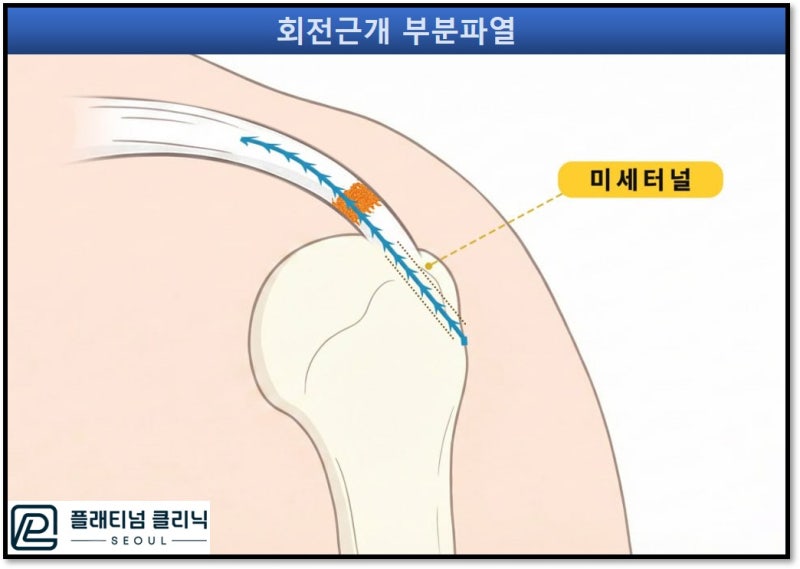
Platinum Clinic Bone Tunneling Method - Suture fixation through micro-tunnels drilled into the bone ---------------------------------------------- We Recommend Reduction Repair For Those diagnosed with a partial rotator cuff tear Those who have received multiple injection treatments with short-lived results Those who need quick return to daily life and find surgery too burdensome Those whose occupation makes wearing a brace difficult Those with night pain preventing sleep Those who are young and active and want to return to exercise quickly ---------------------------------------------- Platinum Clinic's 12-Week Rehabilitation Program Rehabilitation is just as important as the procedure itself. If the procedure resolves the structural problem, rehabilitation resolves the functional recovery. Rehabilitation must be performed systematically, under expert guidance, safely and consistently, for the full benefit of the procedure to be realized. At Platinum Clinic, we provide all procedure patients with a personalized 1:1 twelve-week rehabilitation exercise program. - Sports rehabilitation specialist designs the program directly - Considers pre-procedure condition, type of procedure, occupation, and more - Personalized rehabilitation exercise videos sent via KakaoTalk - Home rehabilitation possible from anywhere in the country Structure + Function = Complete Recovery Let the procedure restore the structure, and the 12-week rehabilitation restore the function. - Dr. Dongkyu Lee ---------------------------------------------- Frequently Asked Questions (FAQ) Q1. Is reduction repair painful? Since it is performed under local anesthesia, there is almost no pain during the procedure. You may feel some stiffness for 1-2 days afterward, which can be managed with standard pain medication. Q2. How long does the procedure take? It usually takes about 20-30 minutes. Q3. Can I go home right away? Yes, same-day discharge is available. You can go home after resting for about 30 minutes to 1 hour after the procedure. Q4. Do I have to wear a brace? In most cases, a brace is not necessary. However, depending on tear size and condition, a simple brace may be recommended for 1-2 weeks. Q5. When can I resume daily activities? Light daily activities are possible from the next day. Lifting heavy objects or vigorous exercise should begin gradually from 4-6 weeks. Q6. When can I exercise again? Light lower body exercise is possible from 1-2 weeks. Light upper body exercises can begin at 4 weeks, with full weight training recommended after 8-12 weeks. Q7. What is the recurrence rate? According to research, the re-tear rate is approximately 5-8%. Following the 12-week rehabilitation program can further reduce the likelihood of recurrence. Reference: Arch Orthop Trauma Surg. 2019;139:1129-1136 (re-tear rate 5.8%) Q8. Can reduction repair treat a full-thickness tear? For full-thickness tears, arthroscopic repair is more appropriate. Reduction repair is primarily indicated for partial tears. Q9. How much does it cost? Reduction repair is a non-covered procedure. The exact cost varies depending on the tear's condition and extent, so we provide guidance after your consultation. Q10. Another hospital recommended surgery. Can reduction repair still work? If it is a partial tear, reduction repair can often provide effective treatment. For an accurate assessment, please bring your MRI or ultrasound images to your visit. ---------------------------------------------- Key Takeaways Partial rotator cuff tears can be treated non-surgically. Reduction repair offers no incision, same-day discharge, and quick return to daily life. Platinum Clinic's Bone Tunneling Method provides even stronger tension and more durable repair. Procedure + 12-week rehabilitation = Complete recovery - Dr. Dongkyu Lee ---------------------------------------------- #RotatorCuffTear #PartialRotatorCuffTear #ReductionRepair #ShoulderReductionRepair #NonSurgicalTreatment #ShoulderNonSurgical #WithoutSurgery #RotatorCuffTreatment #ShoulderPain #NightPain #ShoulderLigamentTear #ArticularSideTear #BursalSideTear #BoneTunneling #CollagenSuture #ShoulderRehabilitation #SinsaStationOrthopedics #GangnamOrthopedics #PlatinumClinic #DrDongkyuLee ---------------------------------------------- References 1. Kim YS et al. Percutaneous suture technique for partial-thickness rotator cuff tear. Arch Orthop Trauma Surg. 2019;139:1129-1136. 2. Lee HJ et al. Nonoperative versus operative treatment for partial-thickness rotator cuff tears. JSES Int. 2021;5(3):421-428. 3. Matthewson G et al. Partial-thickness rotator cuff tears: Current concepts. Adv Orthop. 2020;2020:7368137. 4. Fukuda H. The management of partial-thickness tears of the rotator cuff. J Bone Joint Surg Br. 2003;85(1):3-11. ----------------------------------------------