Hello. I am Dr. Dongkyu Lee, an orthopedic specialist. "Isn't the repair procedure alone enough?" "What is bone marrow stimulation? Do I really need both?" These are the most common questions from patients who have been recommended reduction repair for a partial rotator cuff tear. Let me get straight to the point: **Combining reduction repair with bone marrow stimulation can improve treatment outcomes.** Today, I will explain the advantages of combining these two procedures, with real patient cases and research evidence. ----------------------------------------------
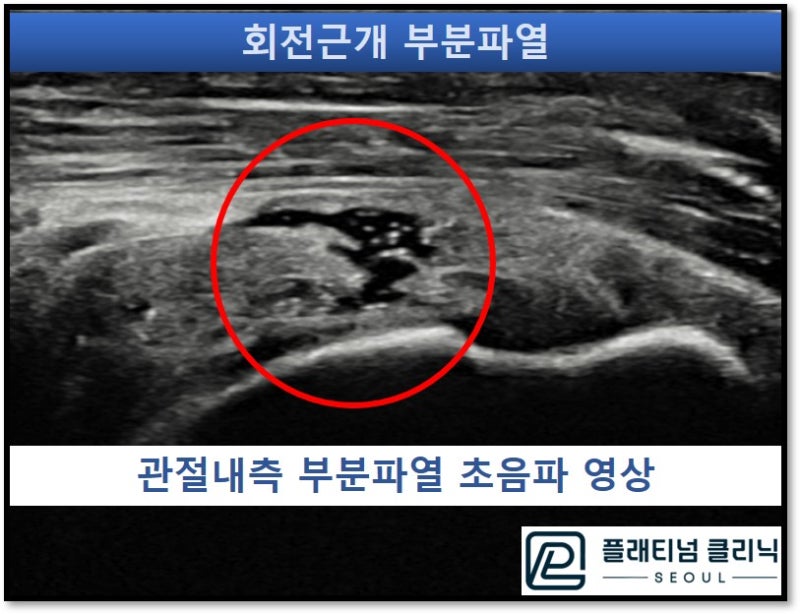
Ultrasound image of a partial rotator cuff tear ---------------------------------------------- Why might repair alone not be enough? The biggest concern after rotator cuff repair is re-tearing. No matter how well the surgery is performed, the tendon may detach again before it fully bonds to the bone. In large tears or elderly patients, re-tear rates of 30-60% have been reported. Why does this happen? Repair physically fixes the tendon in place. But for the tendon to biologically adhere to the bone, a sufficient healing environment is needed. This is exactly what bone marrow stimulation addresses. ----------------------------------------------
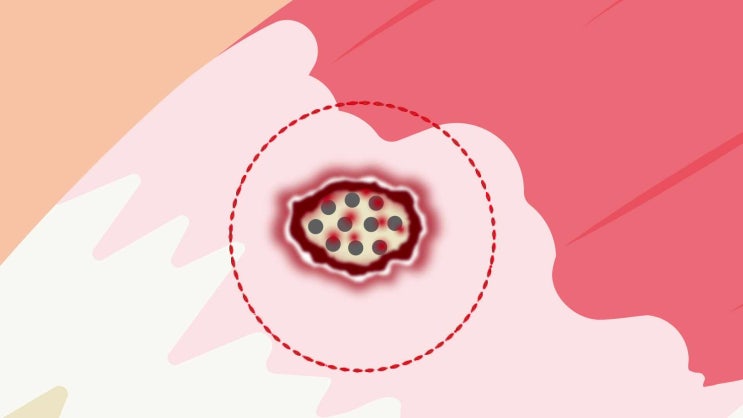
Illustration of the bone marrow stimulation procedure ---------------------------------------------- What is Bone Marrow Stimulation? Bone marrow stimulation (BMS) is a method that involves drilling micro-holes into the bone to stimulate the marrow. This causes the bone marrow to release stem cells, growth factors, and platelets, which promote healing at the tendon-bone junction. First introduced by Dr. Snyder in the United States in 2009 as the "Crimson Duvet" technique, it has been actively studied worldwide since then.
Core Principle Micro-holes in bone -> Bone marrow stem cell release -> Tendon-bone healing promotion Dr. Dongkyu Lee
---------------------------------------------- Real Patient Cases Case 1: Woman in her 50s, sleep disturbance from night pain Patient Information - Age/Gender: 56-year-old female - Occupation: Homemaker - Main Symptom: Right shoulder pain for 6 months, unable to sleep due to night pain Symptoms - Aching, throbbing shoulder when lying down, waking up frequently - Sharp "stinging" pain when lifting the arm sideways - Difficulty with daily tasks like hanging laundry and washing hair Examination Findings - Ultrasound: Articular-side partial tear of the supraspinatus confirmed - MRI: Approximately 50% tear extent, with surrounding inflammation
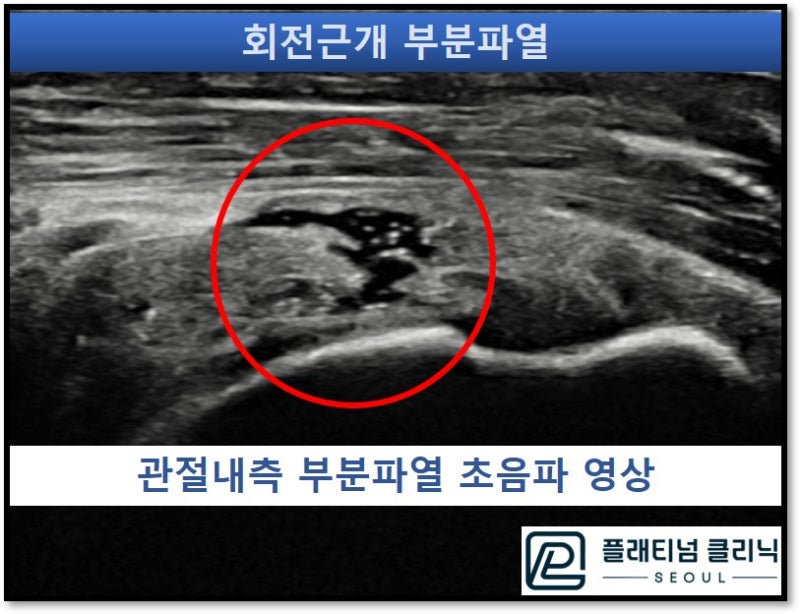
Case 1 - Pre-treatment ultrasound: Articular-side partial tear of supraspinatus
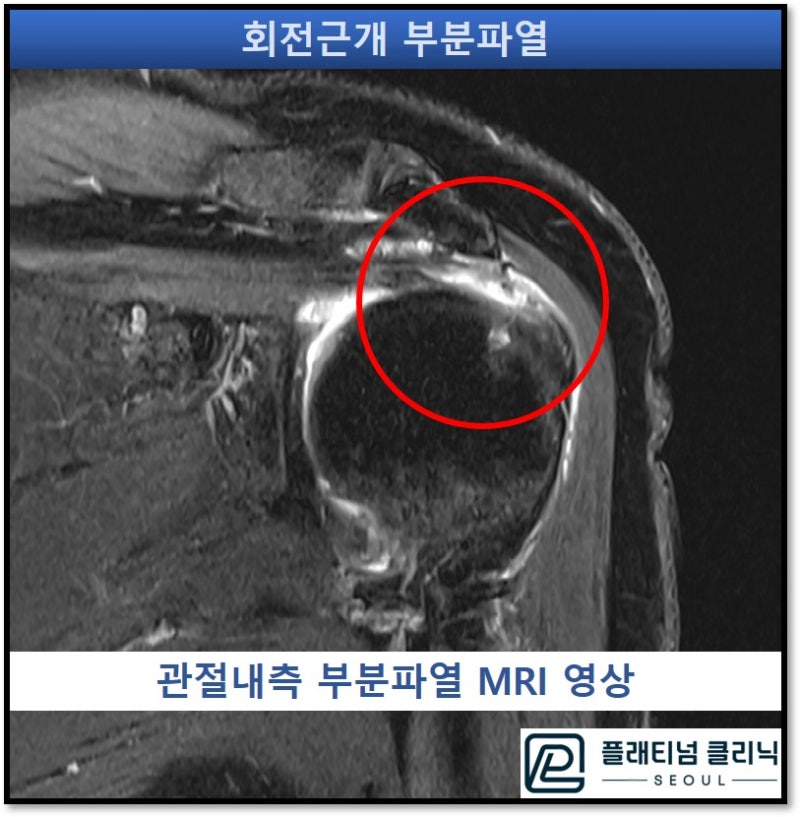
Case 1 - MRI findings: Partial tear confirmed by T2 high signal intensity Treatment - Combined reduction repair + bone marrow stimulation - Procedure time: Approximately 30 minutes - Same-day discharge
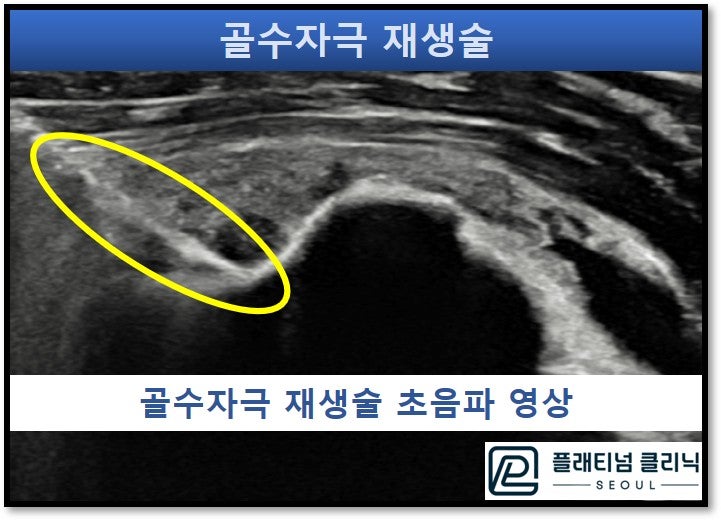
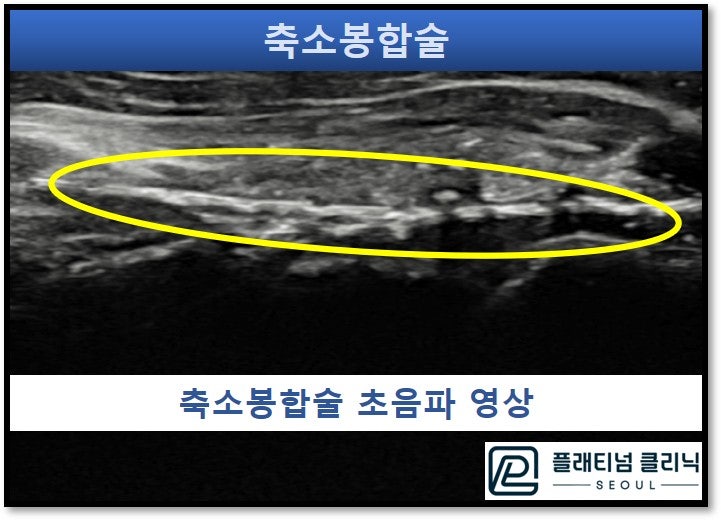
Case 1 - Reduction repair + bone marrow stimulation procedure in progress Results - 2 weeks post-procedure: Night pain resolved, able to sleep - 1 month post-procedure: Returned to daily activities - 3 months post-procedure: Resumed exercise
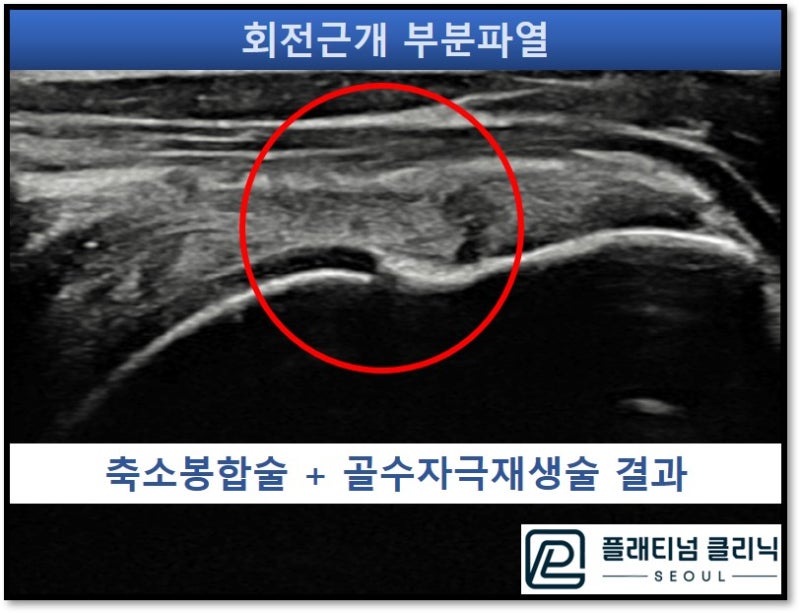
Case 1 - 3-month post-treatment ultrasound: Tendon structure recovery confirmed ---------------------------------------------- Case 2: Man in his 40s, sports injury Patient Information - Age/Gender: 45-year-old male - Occupation: Office worker (weekend tennis club) - Main Symptom: Sudden shoulder pain after a tennis serve Symptoms - Felt a "pop" during a serve, followed by pain - Feeling of weakness in the arm - Catching sensation when rotating the shoulder Examination Findings - Ultrasound: Articular-side partial tear of supraspinatus (traumatic) - MRI: Approximately 40% tear extent, acute injury findings
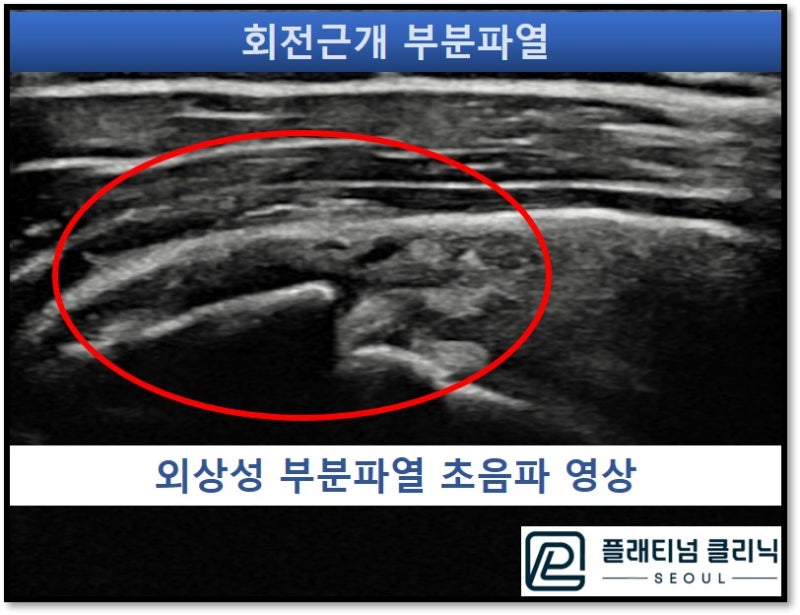
Case 2 - Pre-treatment ultrasound: Traumatic partial tear Treatment - Combined reduction repair + bone marrow stimulation - Patented collagen suture used for strong tension
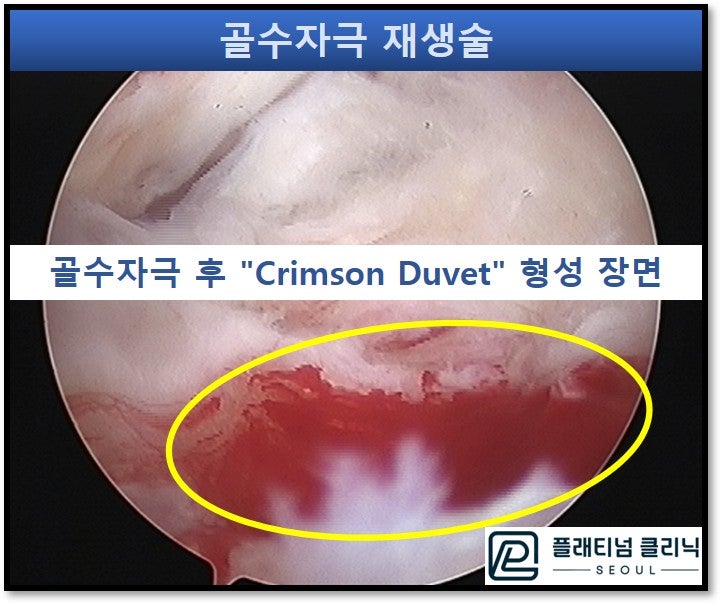
Case 2 - "Crimson Duvet" formation after bone marrow stimulation Results - 6 weeks post-procedure: Light exercise resumed - 3 months post-procedure: Returned to tennis - 6 months post-procedure: Competing in matches ---------------------------------------------- Case 3: Woman in her 60s, visited after failed treatment elsewhere Patient Information - Age/Gender: 63-year-old female - History: Over 10 injection treatments at another hospital with minimal effect - Main Symptom: Chronic shoulder pain for 2 years, progressively worsening Symptoms - "After injections, it feels better for a few days, then hurts again" - Difficulty reaching behind the back - Unable to lift heavy objects Examination Findings - Ultrasound: Articular-side partial tear of supraspinatus + degenerative changes - MRI: Chronic tear findings, early muscle atrophy
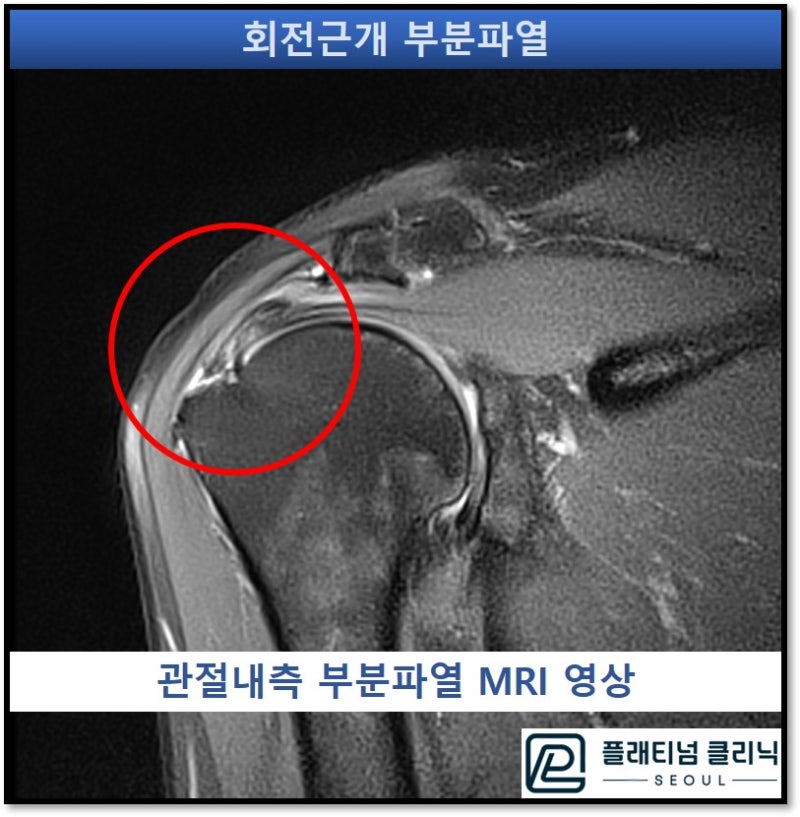
Case 3 - MRI findings: Chronic partial tear + degenerative changes Treatment - Combined reduction repair + bone marrow stimulation - Bone marrow stimulation to enhance the regenerative environment given the degenerative changes Results - 1 month post-procedure: "First time in 2 years I slept through the night" - 3 months post-procedure: Pain reduced by over 80% - 6 months post-procedure: Full return to daily activities
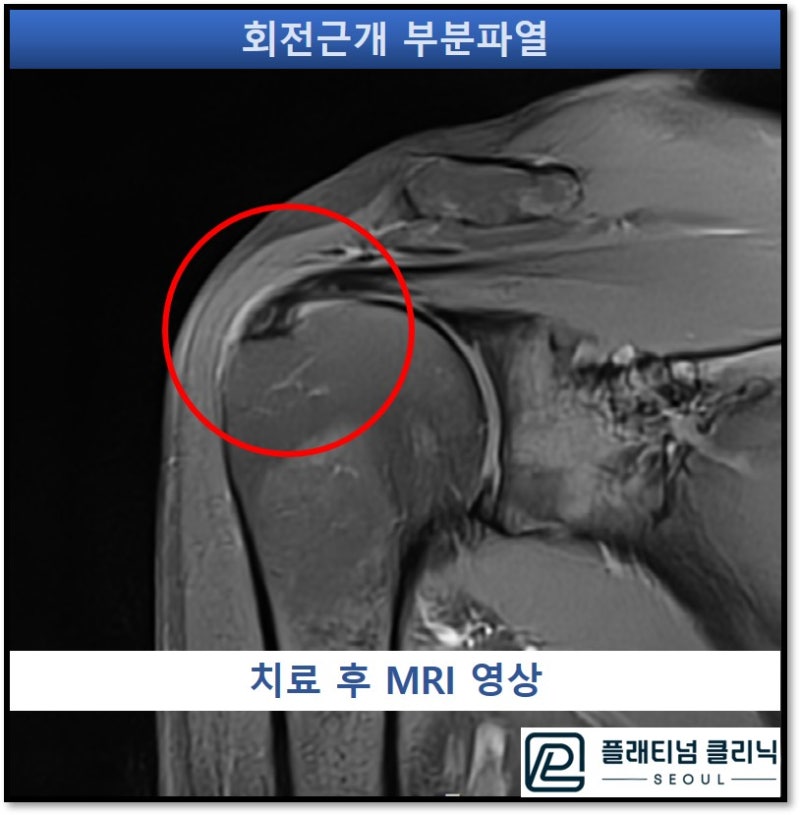
Case 3 - 6-month post-treatment MRI: Improved tendon thickness and structure ---------------------------------------------- Evidence From the Research First, re-tear rates are significantly reduced. A 2023 meta-analysis published in the Journal of Experimental Orthopaedics, covering 9 studies with 827 patients, found: - Bone marrow stimulation group: 17.5% re-tear rate - Repair-only group: 28.9% re-tear rate That is approximately a 40% reduction in re-tear rate. (P < 0.0001) Reference: J Exp Orthop. 2023;10:28, Abstract > Result and Results > Retear rate section, Figure 3A
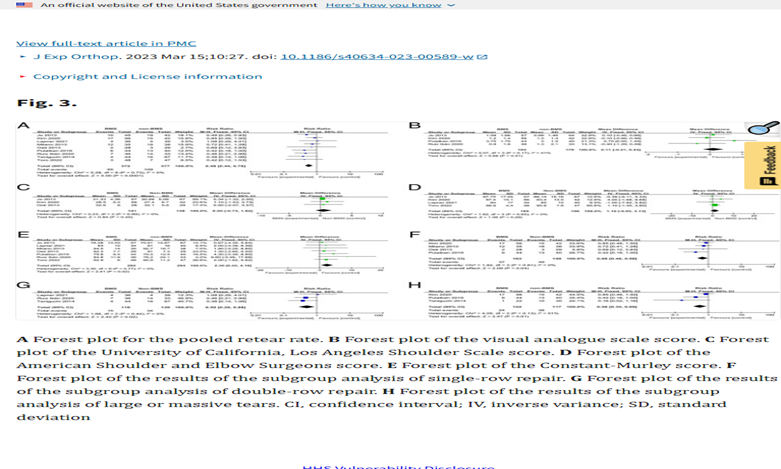
J Exp Orthop 2023 Figure 3 - Re-tear rate meta-analysis results (A: overall, H: large tears) ---------------------------------------------- Second, the effect is even more pronounced in large tears. In the same study, when analyzing only large and massive tears: - Bone marrow stimulation group: 19.7% re-tear rate - Repair-only group: 32.5% re-tear rate Reference: J Exp Orthop. 2023;10:28, Results > Subgroup analysis section, Figure 3H ---------------------------------------------- Third, it can be performed at no additional cost. A 2023 meta-analysis published in Frontiers in Surgery described bone marrow stimulation as a "cost-effective and straightforward technique." Reference: Front Surg. 2023;10:1047483, paper title and Conclusion
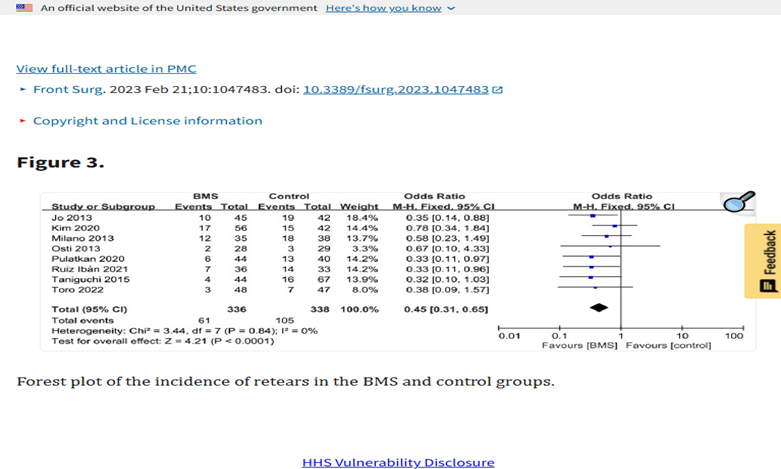
Front Surg 2023 Figure 3 - Forest plot: Re-tear rate comparison (BMS group vs. control) ---------------------------------------------- Detailed Results by Study
Study (Year) BMS Group Re-tear Control Group Re-tear Odds Ratio Jo 2013 10/45 (22%) 19/42 (45%) 0.35 Kim 2020 17/56 (30%) 15/42 (36%) 0.78 Milano 2013 12/35 (34%) 18/38 (47%) 0.58 Osti 2013 2/28 (7%) 3/29 (10%) 0.67 Pulatkan 2020 6/44 (14%) 13/40 (33%) 0.33 Ruiz Iban 2021 7/36 (19%) 14/33 (42%) 0.33 Taniguchi 2015 4/44 (9%) 16/67 (24%) 0.32 Toro 2022 3/48 (6%) 7/47 (15%) 0.38 Total 61/336 (18%) 105/338 (31%) 0.45
Source: Front Surg. 2023;10:1047483, Figure 3 ---------------------------------------------- Platinum Clinic's Reduction Repair + Bone Marrow Stimulation At Platinum Clinic, we combine reduction repair with bone marrow stimulation for partial rotator cuff tear patients. What Makes Platinum Clinic Different 1. Patented Reduction Repair Specialized drill creates micro-tunnels in the bone, and bioabsorbable patented collagen sutures are used. The tension is much stronger and more durable than standard reduction repair. 2. Precise Bone Marrow Stimulation Technique Using custom-made guides and drills, micro-holes are created at the exact location and appropriate depth. This creates an optimal healing environment without excessive or insufficient stimulation. 3. Over 10,000 Procedures Performed The expertise accumulated from diverse cases provides optimized treatment for each individual patient. We Recommend This For Those diagnosed with a partial rotator cuff tear (articular side) Those who have had multiple injection treatments with short-lasting results Those with recurring night pain or sharp stinging at specific angles Those who want non-surgical treatment and find surgery too burdensome Those concerned about recurrence after treatment ---------------------------------------------- FAQ - Frequently Asked Questions Q1. Does bone marrow stimulation leave holes in the bone? No. The micro-holes naturally fill in over time. In fact, this process makes the tendon-bone adhesion even stronger. Q2. Does it take longer to perform? Bone marrow stimulation itself adds about 5-10 minutes. It does not significantly affect the total procedure time. Q3. Will it make the pain worse? There is virtually no additional pain from the micro-holes. In fact, because healing is promoted, recovery is often faster. Reference: Zhang et al. (2023) VAS analysis showed no significant difference between the two groups (P = 0.34) Q4. Is it effective for all rotator cuff tears? It is most effective for partial tears. For full-thickness (complete) tears, suitability must be determined based on tear size and condition. Reference: Effectiveness confirmed even in large/massive tears (19.7% vs 32.5%, P = 0.01) Q5. Is this different from stem cell injections? Yes, it is different. Stem cell injections involve harvesting stem cells externally and injecting them, while bone marrow stimulation naturally induces stem cell release from your own bone marrow. Q6. Does the rehabilitation period change? The basic rehabilitation protocol remains the same. However, because healing is enhanced, you can expect more stable recovery. Q7. Is it effective even for older patients? Yes, it is effective. However, in older patients, the quantity and quality of bone marrow stem cells may be reduced, so the effect may be somewhat less than in younger patients. Still, the combined procedure can improve healing rates. Reference: Average patient age in the meta-analysis: 60.6-60.7 years Q8. Does it add significant cost? Bone marrow stimulation does not require expensive additional materials, so the cost increase is not substantial. Exact costs are provided during consultation. Reference: "cost-effective and straightforward technique" - Front Surg 2023 Q9. Are there any side effects? No serious side effects have been reported to date. Since micro-holes are drilled, there is a theoretical infection risk, but the procedure is performed in a sterile environment, so the actual occurrence rate is very low. Q10. Is one procedure enough? In most cases, one procedure is sufficient. Additional treatment may be needed depending on healing progress, but combining the procedures from the start reduces the likelihood of retreatment. Reference: 40% reduction in re-tear rate (17.5% vs 28.9%) ---------------------------------------------- Key Takeaways
Combining reduction repair with bone marrow stimulation can reduce re-tear rates by over 40%. (17.5% vs 28.9%, P < 0.0001) A way to improve healing rates without additional cost burden. Consult with Platinum Clinic to learn more. Dr. Dongkyu Lee
---------------------------------------------- ---------------------------------------------- References 1. Ajrawat P, et al. Bone marrow stimulation decreases retear rates after primary arthroscopic rotator cuff repair. J Shoulder Elbow Surg. 2019;28(4):782-91. 2. Zhang L, et al. Bone marrow stimulation in arthroscopic rotator cuff repair is a cost-effective and straightforward technique to reduce retear rates. Front Surg. 2023;10:1047483. 3. The role of bone marrow stimulation in rotator cuff repair. J Exp Orthop. 2023;10:28. 4. Snyder SJ, Burns J. Rotator cuff heal rates and clinical outcomes with bone marrow augmentation. Tech Shoulder Elbow Surg. 2009.