
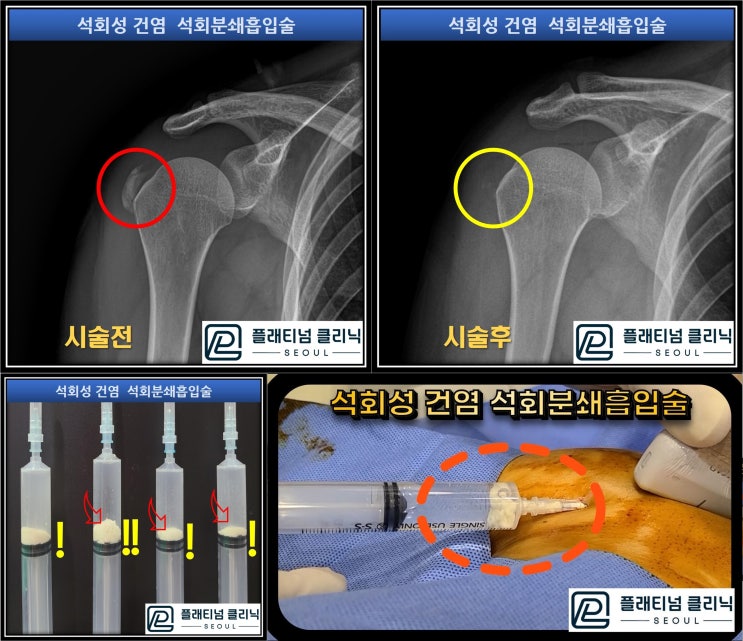
Hello, I'm Dr. Dongkyu Lee, an orthopedic specialist. Shoulder calcific tendinitis — a condition that causes excruciating pain. The pain can be so severe that patients can't move their arm, and many are unable to sleep at night. The pain tends to be most intense when the calcium deposit has a thick, toothpaste-like consistency. To put the severity into perspective — on a pain scale where 0 means no pain and 10 means the worst pain imaginable, childbirth is said to be around a 6. The pain from calcific tendinitis can reach up to 9, so you can see just how incredibly painful this condition can be. So how should shoulder calcific tendinitis be treated? The fundamental treatment is removing the calcium deposit. Since the severe pain is caused by inflammation and increased pressure from the calcium, there can be no fundamental cure without removing the source. That's why in severe cases, surgery is sometimes performed. However, calcific tendinitis can be treated without surgery. The calcium can be removed non-surgically. The answer is calcific deposit crushing and aspiration. I've explained this in detail at the link below. Please take a look. https://blog.naver.com/9690067/223214782578
🔗 https://blog.naver.com/9690067/223214782578Let me show you how the treatment works through a case. This patient is a woman in her 30s who came in with sudden severe shoulder pain. She had already had X-rays and an MRI taken at another hospital and was referred to me for non-surgical calcium removal. Let's take a look at her condition.
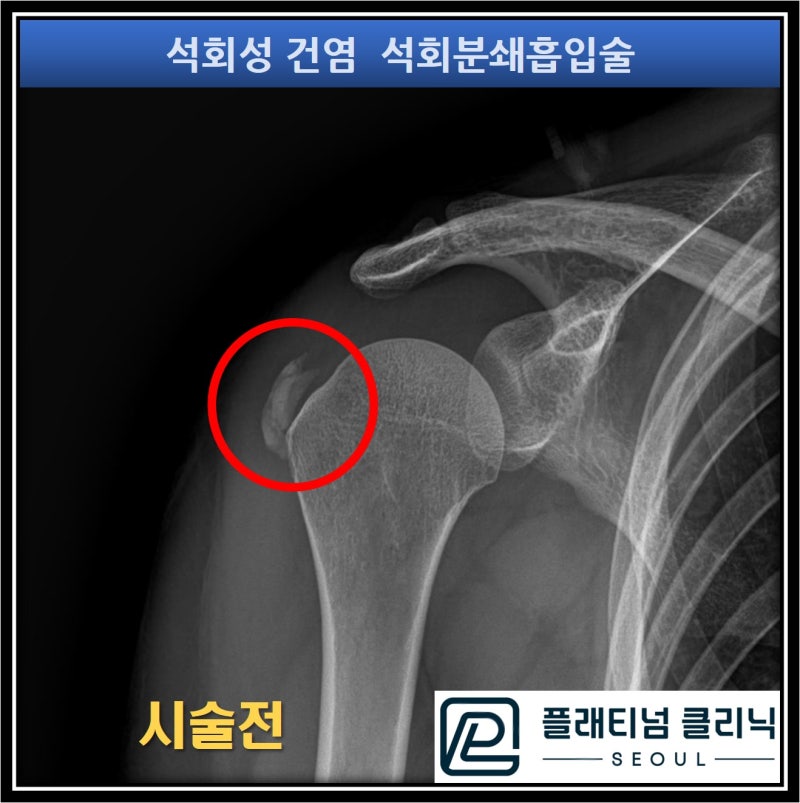
On the X-ray, the white area within the red circle is the calcium deposit. An enormously large deposit is visible. Ultrasound examination indicated that it was a thick, toothpaste-like consistency. I performed the calcific deposit crushing and aspiration procedure. With thick, viscous deposits, the aspiration alone can sometimes be difficult. In such cases, a special solution is used to soften the calcium first, and then the aspiration proceeds — with the calcium coming out just like toothpaste being squeezed from a tube. Afterward, any remaining calcium is crushed using a specially designed guide and drill, and sterile saline is used for additional aspiration. Let me show you the actual procedure video.
In the video above, you can see calcium emerging into the syringe like toothpaste being squeezed out. After the calcium is removed, medication is administered to promote healing of the tendon damage and empty spaces left behind by the calcium. Let's look at the syringe photo after the procedure.
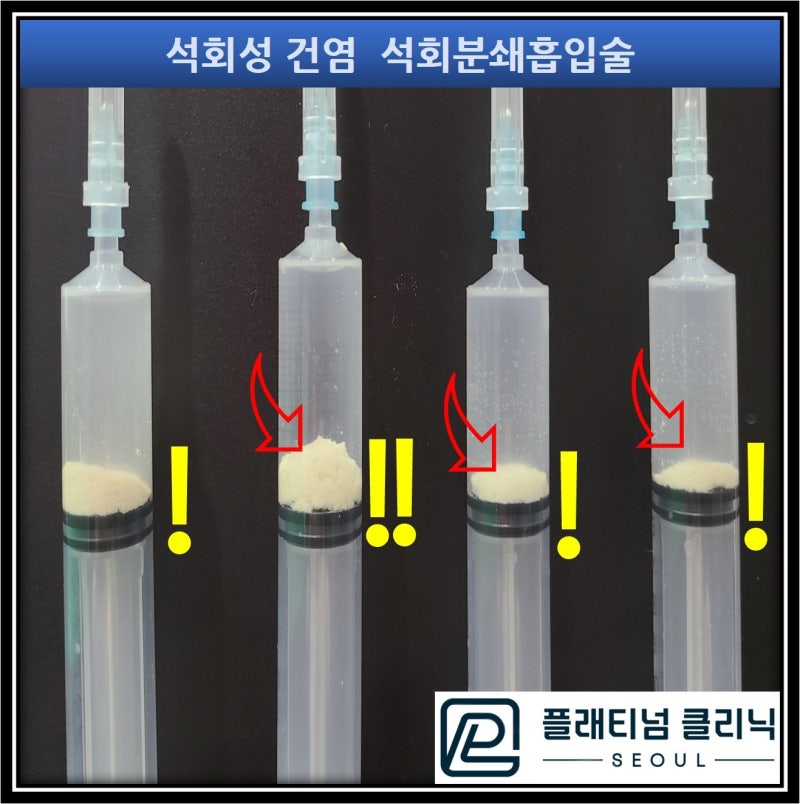
An enormous amount of white calcium is visible inside the syringe. Rather than a powdery consistency, it appears clumped and consolidated. A post-procedure X-ray was taken.
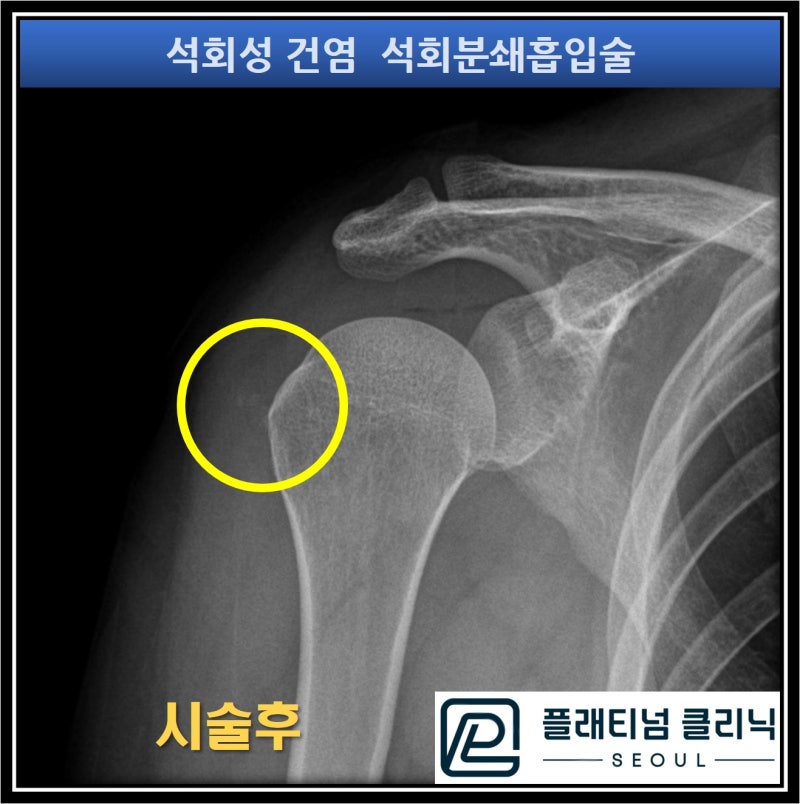
The large calcium deposit visible before the procedure has nearly disappeared.
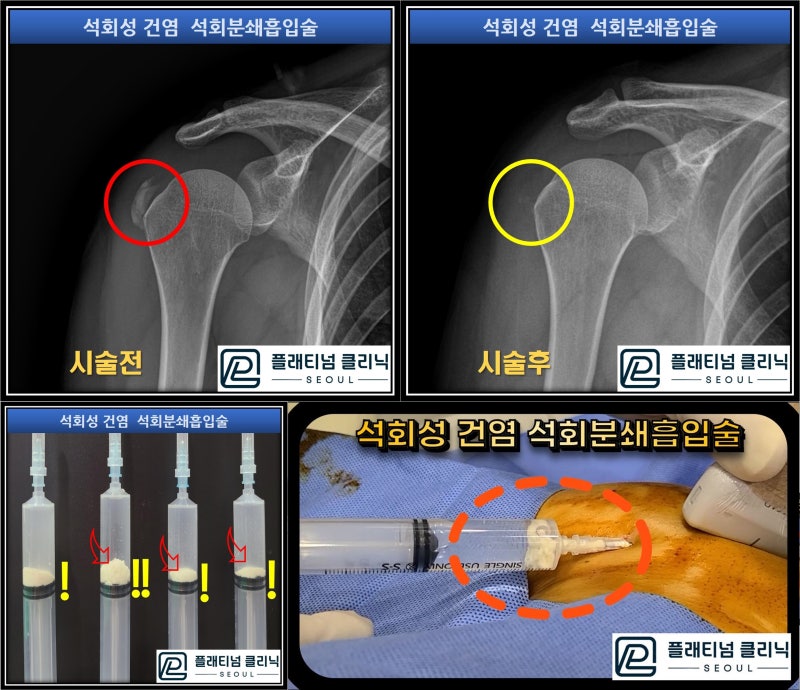
The comparison makes it even more apparent that the calcium deposit has been removed. Since 100% removal isn't always possible, any remaining micro-calcium can be efficiently absorbed through extracorporeal shockwave therapy after the procedure.
Shoulder calcific tendinitis — escaping severe pain. The answer is calcific deposit crushing and aspiration. Dr. Dongkyu Lee
Since this is a non-surgical treatment, patients can return to daily life and work right away. Shoulder calcific tendinitis can be treated without surgery.