
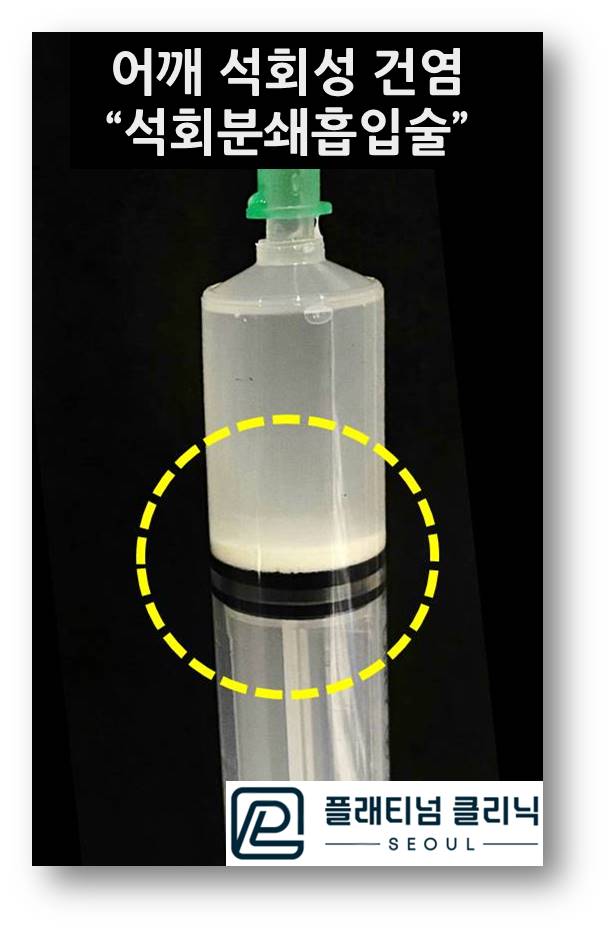
Hello. I'm Dr. Dongkyu Lee. Shoulder calcific tendinitis can cause extreme pain. However, depending on the size, nature, and stage of the calcification, the pattern of pain varies widely. Sometimes the pain is extremely severe. Sometimes there's a persistent manageable level of pain. Sometimes the pain comes and goes. One patient who came to me had been living with pain for nearly 10 years, had been diagnosed with calcific tendinitis, and only received injections and shockwave therapy when the pain was bad. They said they received injections about 2-3 times a year. Another patient had received 10 injections in a single year. Patients who've endured pain for extended periods express how terribly their quality of life has deteriorated. They are deeply distressed by the constant recurring pain. The fundamental treatment for calcific tendinitis is removing the calcification. Simply getting injections to manage pain is not a definitive treatment and can actually weaken the tendon. The reason patients continue managing with injections without addressing the root cause is the burden of surgery, time constraints, and concern about rehabilitation. That's why many patients come to me. Other hospitals recommend surgery for their calcific tendinitis, but they come to me because I can treat it non-surgically. That non-surgical treatment is "calcific deposit aspiration." For details about the method, please refer to the link below. https://blog.naver.com/9690067/222801103857
🔗 https://blog.naver.com/9690067/222801103857Let me show you a case. This patient had suffered from calcific tendinitis for 2 years and had received more than 10 injections. However, the pain only improved temporarily with each injection and kept recurring. The pain intensified and range-of-motion limitations developed, so when the treating hospital suggested it was time for surgery, the patient came to see me. Let's first check the condition.
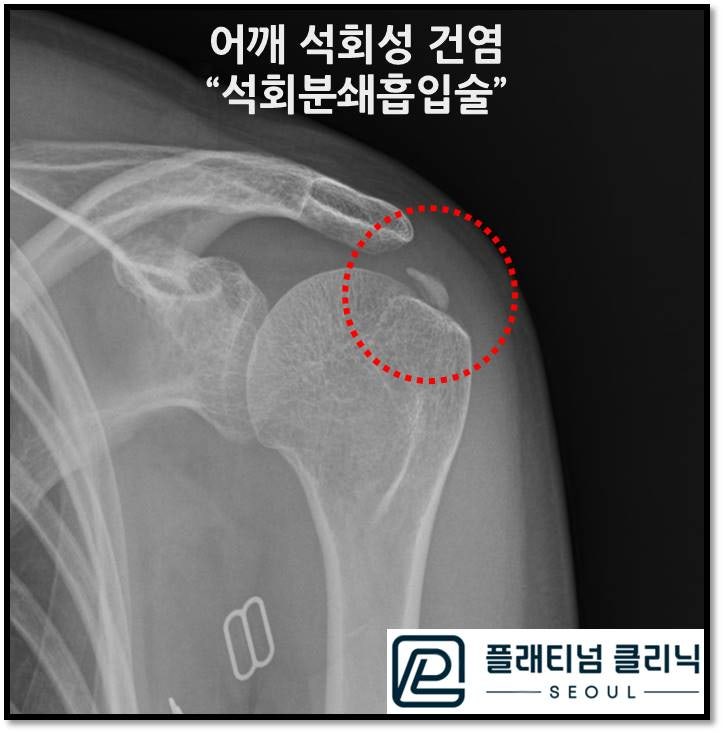
On the X-ray, calcification is visible as a white area within the red circle. Ultrasound was used to check the size and nature of the deposit.
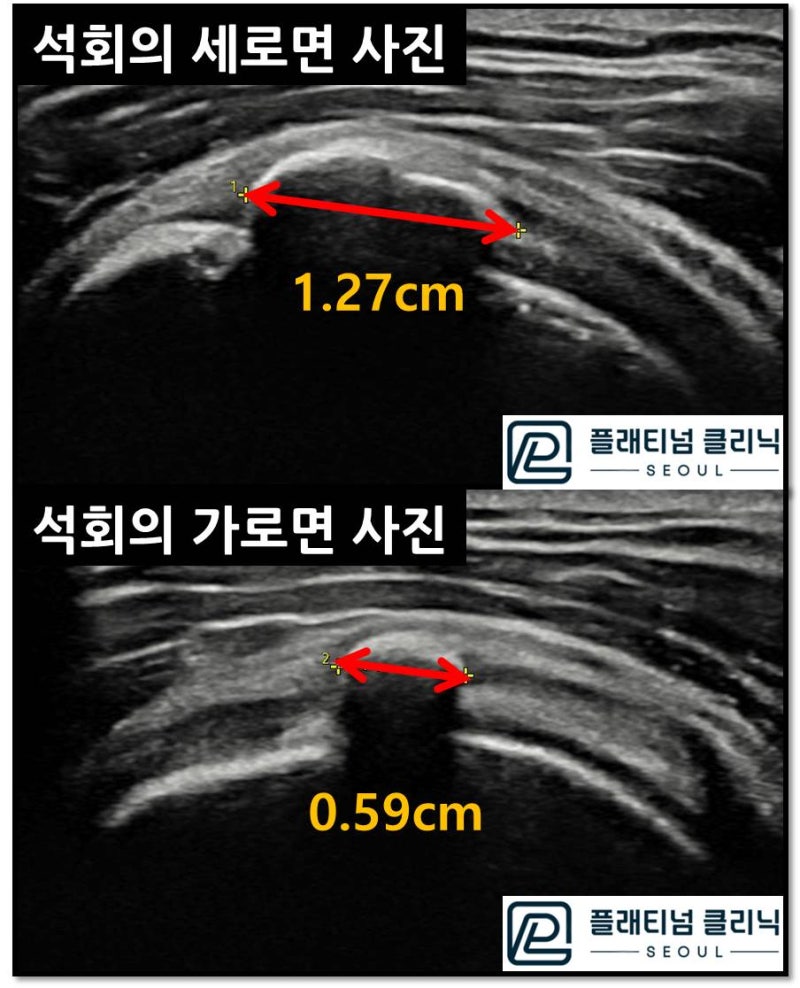
On ultrasound, a calcific deposit measuring 1.27 x 0.59 cm was observed. The dark acoustic shadow below the deposit indicates a hard, solid calcification. Calcific deposit aspiration was performed for definitive treatment.
In the video above, you can see the initially clear syringe becoming progressively whiter as the calcification is crushed and aspirated using saline solution. You can also observe chunk-like calcification being aspirated early in the process.
The video above shows the ultrasound footage captured during the actual procedure. A guide is inserted into the calcification, and after crushing the deposit, saline solution is injected and aspirated repeatedly to remove the fragmented calcification.
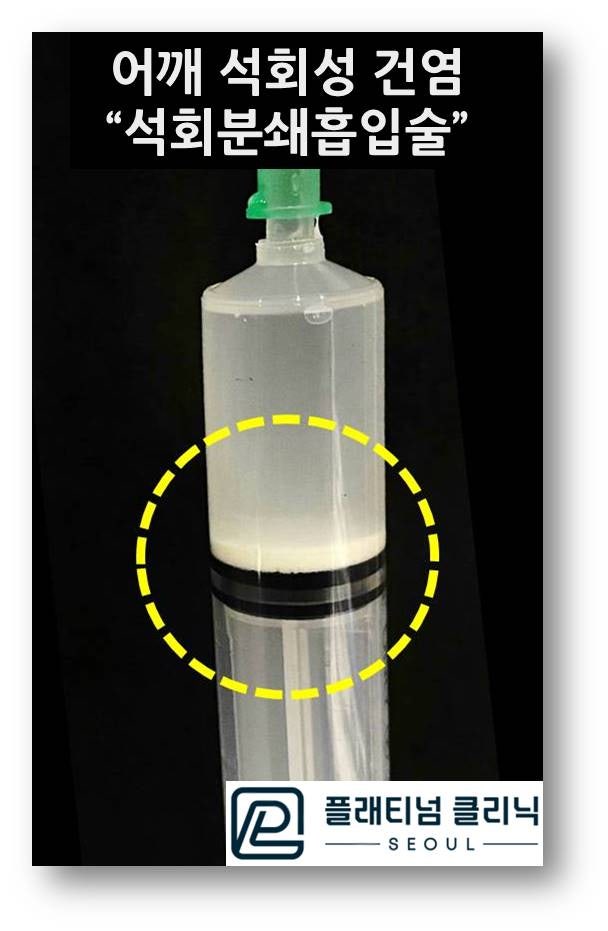
After the procedure, when the syringe is stood upright for sufficient time, you can see the calcification settle to the bottom as white sediment, as shown in the photo above. A post-procedure X-ray was taken.
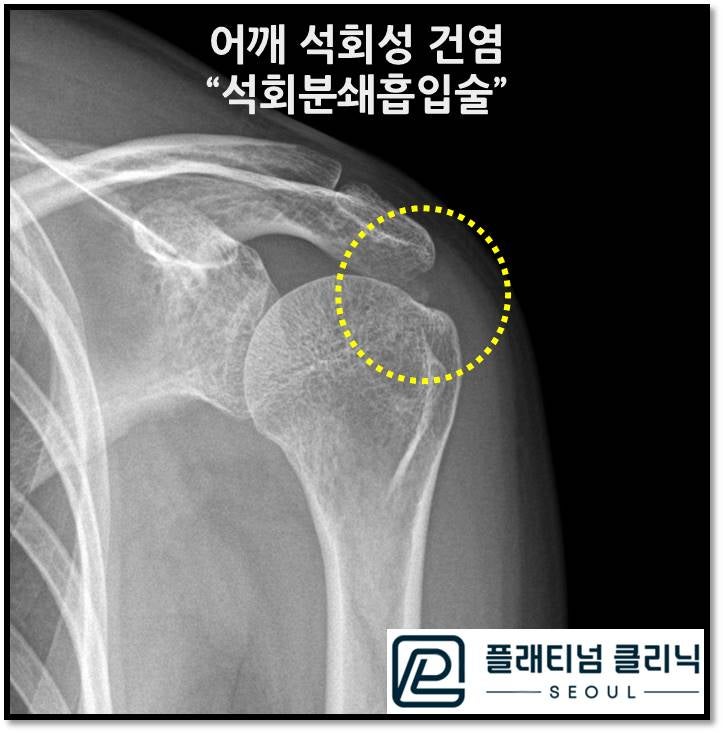
On the post-procedure X-ray, the previously visible calcification is now nearly invisible. Let's compare the before and after images.
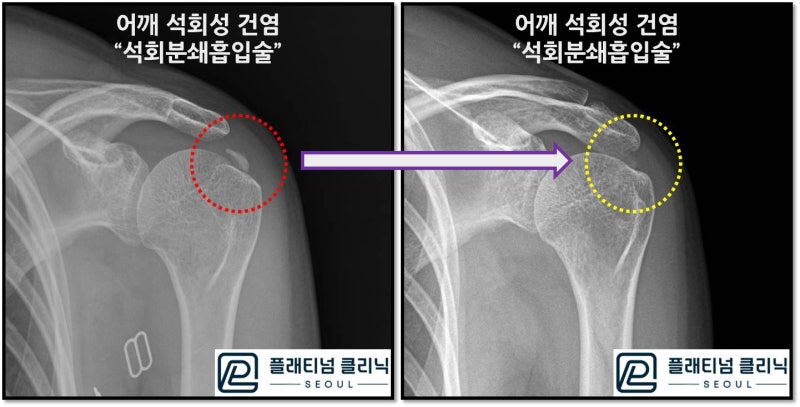
Comparing the before and after images, the removal of the calcification is clearly evident. The patient felt frustrated about years of suffering, saying they had no idea non-surgical treatment was available, and was overjoyed to finally be free from calcific tendinitis. Calcific tendinitis truly takes a toll on patients. However, many patients endure with injections due to fear or the burden of surgical treatment.
Calcific tendinitis can be treated non-surgically. It can be sufficiently treated through calcific deposit aspiration.
I hope you can now be freed from the suffering of calcific tendinitis.