Hello. I'm Dr. Dongkyu Lee. Today I'll introduce a procedure that, along with bone marrow stimulation stem cell regeneration, can help non-surgically treat partial rotator cuff tears. I've already posted about bone marrow stimulation stem cell regeneration, so please refer to the link below. https://blog.naver.com/9690067/222771089454
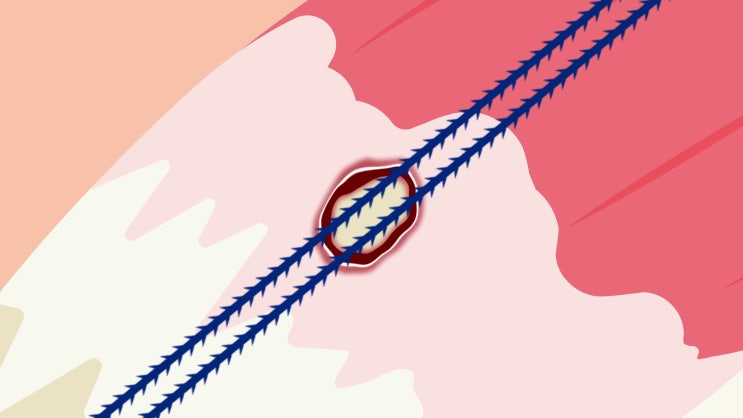
🔗 https://blog.naver.com/9690067/222771089454The rotator cuff is a tendon. Tendons connect bones to muscles. When a partial rotator cuff tear is present, the more the shoulder is used, the more the muscles contract and pull on the tear, causing it to progress. Therefore, if a partial rotator cuff tear is left untreated, it can progress to a complete tear that requires surgical treatment. In cases where the partial tear is large, bone marrow stimulation stem cell regeneration alone may not achieve satisfactory results. In such cases, the "reduction suture technique" can be used to reduce tear size and prevent further progression. Let me explain with a video.
As shown in the video, when a partial rotator cuff tear is present, specially designed sutures are inserted through the tear site using a guide. 2-6 sutures are placed in a grid pattern to reduce the tear size and prevent further progression. The sutures used in the reduction technique are absorbable sutures made of material that dissolves and is absorbed by the body. They maintain their structure for more than 3 months, so they not only reduce tear size but also prevent tear progression. As the sutures are absorbed, they promote collagen formation, a key component of tendons, thereby aiding in healing of partial rotator cuff tears. This reduction suture technique is performed non-surgically, and when combined with bone marrow stimulation stem cell regeneration, satisfactory results can be achieved for partial rotator cuff tear treatment. Let me show you an actual case. A 63-year-old female patient came to our clinic with left shoulder pain. She had previously undergone surgical treatment for a rotator cuff tear in her right shoulder. When told at another hospital that her left shoulder also needed surgery, she came to me saying she didn't want surgical treatment because she had suffered so much during the previous surgery and recovery. First, ultrasound examination was performed to assess the condition.
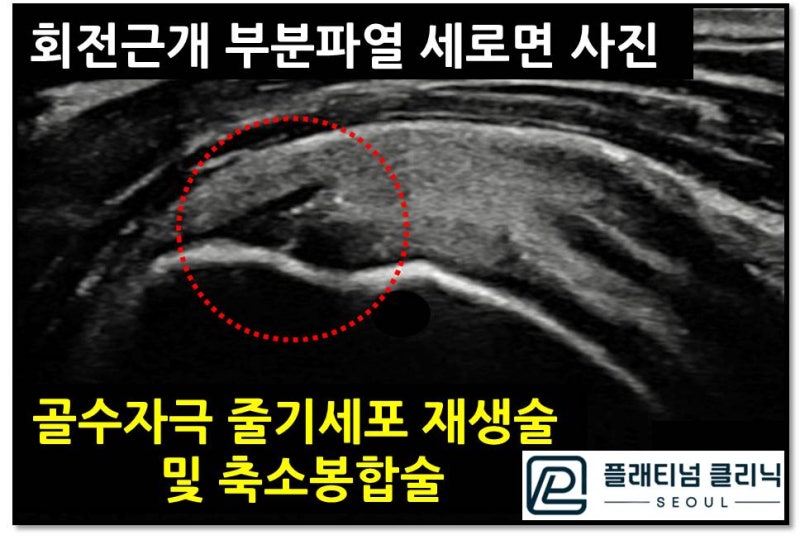
On ultrasound, the coronal view shows a partial rotator cuff tear within the red circle. The bursal-side tendon is maintained, but the articular-side tear has progressed considerably.
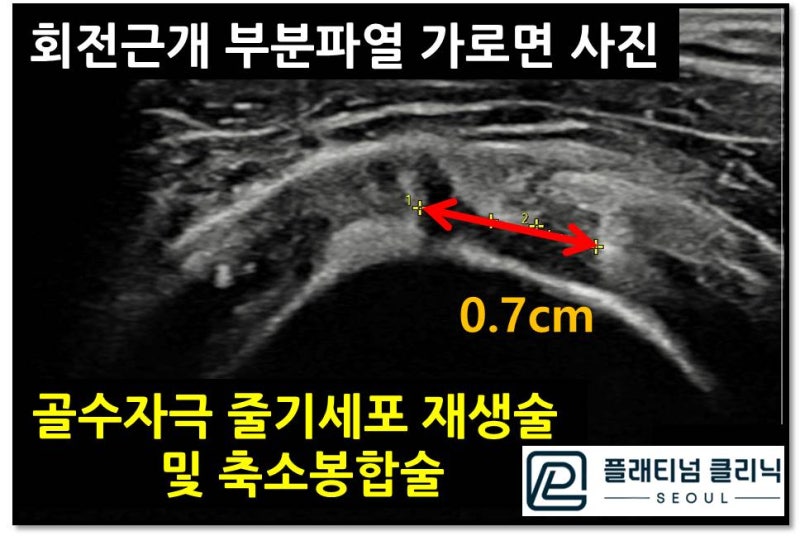
Checking the tear size, the axial view shows an approximately 0.7 cm articular-side partial rotator cuff tear. With confirmed partial tear and significant articular-side involvement, bone marrow stimulation stem cell regeneration and reduction suture technique were performed together.
In the ultrasound footage, the white line within the yellow circle is the guide. This shows the specialized drill being used through the guide to create holes in the bone at the tear site.
This shows the specialized guide being passed through the tear site and the specially designed suture being inserted and anchored via ultrasound guidance. After the procedure, ultrasound was examined again 3 months later.
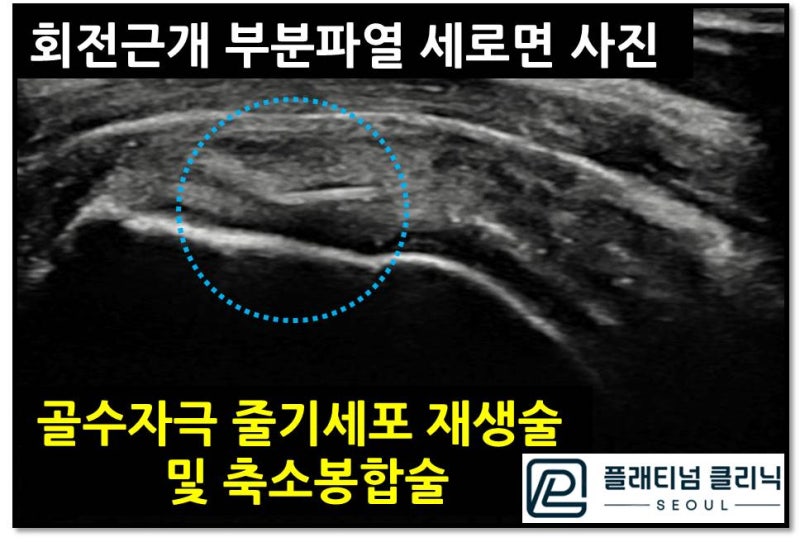
On the follow-up ultrasound, the blue circle shows the previously torn area. A faint white line of the still-maintained suture is visible. The previously dark torn area has recovered to the shape of normal tendon.
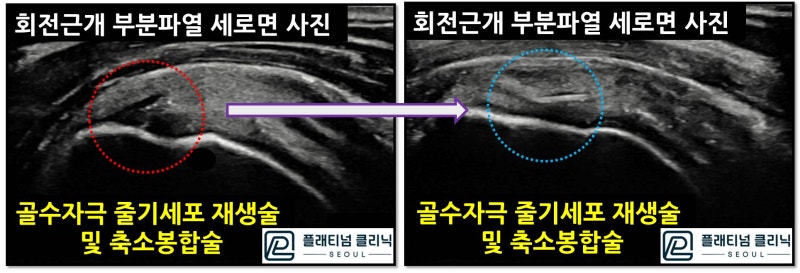
Comparing the before and after images, the improvement is even more clearly evident. Partial rotator cuff tears must not be left untreated. The tear will progress to a complete tear. For small tears with some structural stability, injection therapy may help. However, for tears that lack stability and are large, the tendon keeps contracting, making progression inevitable. In such cases, the reduction suture technique can reduce tear size and prevent further progression.
"Bone marrow stimulation stem cell regeneration" and "reduction suture technique" are non-surgical treatment procedures that can treat partial rotator cuff tears.