

If your shoulder suddenly becomes severely painful during daily activities, you may want to suspect shoulder calcific tendinitis. Shoulder calcific tendinitis is a condition where calcium gradually accumulates in the tendon area, hardens like stone, and simultaneously causes inflammation and pain in the shoulder. Calcific tendinitis can occur wherever there are tendons in the body, but it most commonly occurs in the shoulder. If you've been suffering from shoulder pain for months to over a year without finding the exact cause, calcific tendinitis should be considered.

Common symptoms of shoulder calcific tendinitis: - Sudden extreme shoulder pain without injury or excessive activity - Pain worsens when pressing where the upper arm meets the shoulder - Shoulder pain worsens at night, unable to sleep on the affected side - Pain for over 1 year with treatment but no improvement, becoming chronic
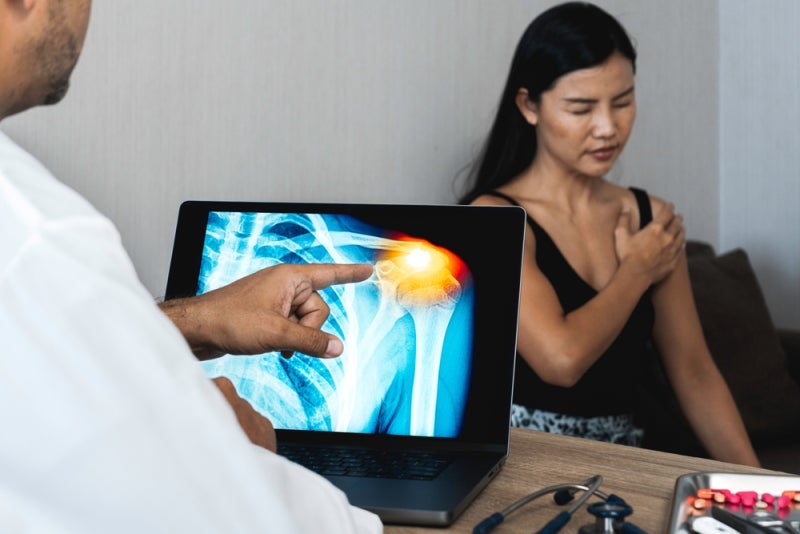
Not all calcific deposits cause severe shoulder pain. Even with calcification in the shoulder, if it doesn't trigger an inflammatory response, there may be no symptoms. The main symptom of calcific tendinitis is sudden extreme shoulder pain without any special trigger. However, during the long period while calcification accumulates, there are virtually no symptoms including pain. Calcific tendinitis pain is most severe when the accumulated, hardened deposit begins to gradually dissolve. The body creates blood vessels around the calcification to eliminate it, triggering active inflammation that causes particularly severe shoulder pain at night. Calcific tendinitis significantly reduces quality of life due to the severe pain.

In early stages, medication and physical therapy can improve symptoms. Calcific tendinitis requires reducing inflammation in the tendon area to relieve pain, and removing the calcification. Treatment is determined based on pain severity, duration, and deposit size. If calcification is present without pain or with mild symptoms, anti-inflammatory medications combined with physical therapy including extracorporeal shockwave therapy and manual therapy can improve symptoms. However, when calcification becomes chronic and continuously causes inflammation, fundamental treatment to remove the deposit through calcific deposit aspiration and shockwave therapy is needed. When the deposit is 1-2 cm or larger, pain is severe, or pain persists for over a year, conservative treatment is ineffective, and a specialized needle must be used to crush and remove the calcification. What is calcific deposit aspiration?

After local anesthesia of the shoulder only, ultrasound-guided needle puncture is used to crush and aspirate the calcification, making this a non-surgical treatment. Being non-surgical, the procedure time is relatively short compared to arthroscopic surgery, and it's an effective way to fundamentally remove the deposit. During calcific deposit aspiration, complete removal of all calcification is difficult. Because calcification forms with tendon tissue trapped between the deposits, removing everything could risk damaging healthy tendons.


Therefore, the calcific deposit aspiration procedure focuses on crushing and aspirating as much as possible while thoroughly cleaning the joint interior, which significantly reduces the extreme pain. Residual calcification should be treated with extracorporeal shockwave therapy to promote natural absorption. Shockwave therapy delivers energy to the painful area to regenerate blood vessels, increase blood flow, improve symptoms, and regenerate damaged tissue. Thus, shoulder calcific tendinitis can be treated effectively through non-surgical methods without arthroscopic surgery. Don't endure calcific tendinitis pain any longer -- reclaim your healthy shoulder through PIMS therapy!