
What causes shoulder pain? There are many conditions related to shoulder pain, including frozen shoulder, rotator cuff tears, calcific tendinitis, and myofascial pain syndrome. Among these, frozen shoulder is perhaps the most prevalent. Frozen shoulder, or adhesive capsulitis, is a shoulder condition where the normally spacious joint capsule narrows and adhesions form, restricting joint movement and causing shoulder pain. Frozen shoulder symptoms include: shoulder pain, inability to raise arms that were previously liftable, difficulty reaching into cabinets for items, difficulty with undergarments, and even difficulty with bathroom hygiene. If you experience these symptoms, frozen shoulder should be suspected.
Common symptoms of frozen shoulder: 1. Shoulder range of motion decreases, with pain beyond that range 2. Little to no pain within the reduced range of motion 3. X-rays show no special findings besides osteoporosis 4. Blood tests show no abnormal findings 5. No identifiable disease cause 6. Natural recovery occurs with pain resolving and range of motion returning to normal 7. Most common in ages 40-60, though increasingly frequent in the 20-30 age group due to poor posture The key treatment for frozen shoulder is loosening the stiff joint capsule. First, injection therapy reduces inflammation and releases adhesions. Afterwards, rehabilitation exercises help further loosen the shoulder, allowing most frozen shoulder cases to heal naturally. However, if the frozen shoulder is secondary to diabetes, calcific tendinitis, or rotator cuff tendon damage, these underlying conditions must be treated simultaneously. If only frozen shoulder treatment is performed while ignoring secondary conditions, the frozen shoulder may recur or fail to heal properly. Therefore, during frozen shoulder treatment, checking for and simultaneously treating any accompanying conditions like rotator cuff tears, diabetes, or calcific tendinitis is the fastest path to recovery.

Many people think frozen shoulder will heal on its own. This is half true and half false. The conclusion is that frozen shoulder can self-heal. However, natural healing takes years and results in limited shoulder range of motion, so appropriate treatment at the right time is better for shoulder health. The key to frozen shoulder treatment is loosening the stiff shoulder. Early-stage medication and exercise therapy can quickly reduce pain, but most people mistake it for mild shoulder pain, neglect it, and only visit the hospital when the capsule has stiffened and the shoulder is painful and immobile. At this point, simple medication and exercise therapy alone are insufficient, and hydrodilatation followed by rehabilitation exercises becomes necessary.

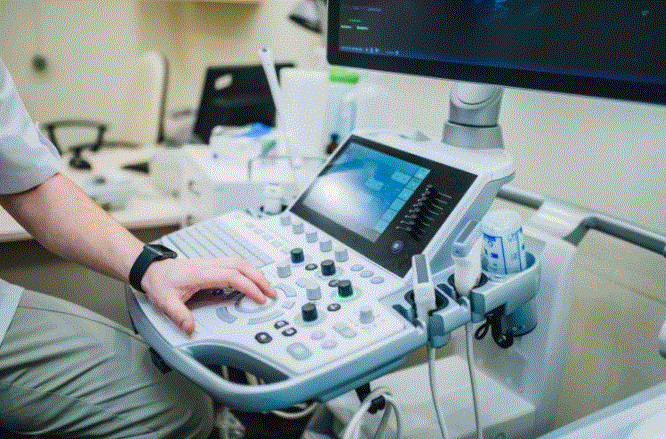
Hydrodilatation is a non-surgical frozen shoulder treatment using ultrasound guidance. Under ultrasound, the joint location is precisely identified, the adhesive joint is inflated, and medication is injected at the affected site to resolve inflammation. Ultimately, the most effective treatment involves quickly loosening the stiff shoulder to restore range of motion. When exercise alone can't loosen the shoulder or when pain prevents any movement, hydrodilatation injection is effective. After hydrodilatation improves inflammation and reduces pain, combining manual therapy and extracorporeal shockwave therapy as physical treatments can provide even faster results.


During rehabilitation, stretching should not be pushed to the point of severe pain. Stretch within your tolerable range! Also, when the shoulder develops problems, surrounding tissues weaken and stiffen, so incorporating exercises to address these areas as well will be even more effective. If you feel something is wrong with your shoulder, visit a nearby hospital for a simple X-ray or ultrasound to quickly identify the issue and take steps toward recovery.