


With the widespread use of smart devices, people of all ages frequently experience neck stiffness and shoulder muscle tension. Shoulder tension can make neck movement difficult, block blood circulation to the shoulder, and prolonged tension leads to stiff, inflexible muscles that are more vulnerable to injury. The posture of looking at smartphones is particularly bad for the neck and shoulders. Maintaining such poor posture for extended periods inevitably worsens symptoms.

The small neck bones support the 5-7 kg weight of the head. The more the head tilts forward, the greater the pressure on the neck, and the neck and shoulder muscles continuously strain to hold the head in place, causing tension, tightness, and pain. If neck and shoulder trapezius pain leads to using the shoulder joint incorrectly, it can also increase vulnerability to shoulder-related conditions. Improving poor posture and regularly performing neck and shoulder stretches to relieve tight muscles is recommended. Here are some neck and shoulder stretches you can do anytime, anywhere.
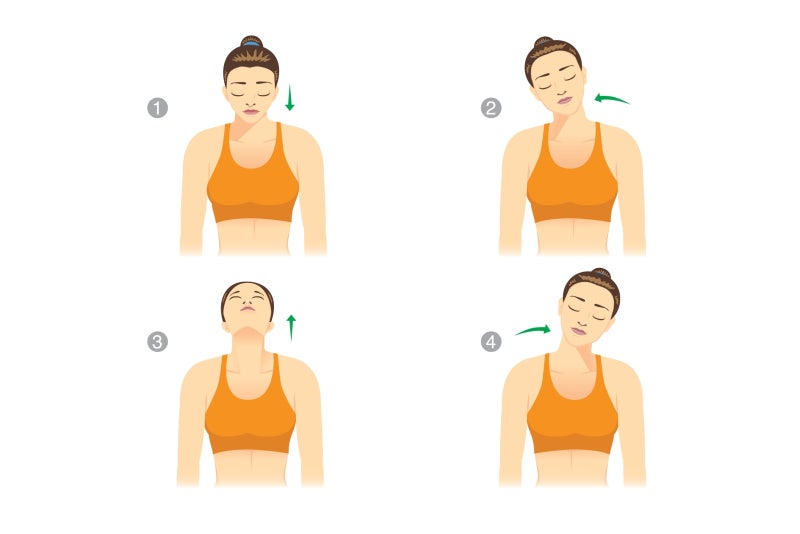
Neck and Shoulder Stretch 1. Look up at the sky exercise Sit up straight, spread your fingers comfortably, stack your palms front to back, press on your right collarbone, then slowly tilt your head back and draw circles. Neck and Shoulder Stretch 2. Shoulder shrugs Sit with your upper body comfortably upright, inhale while shrugging your shoulders up. Hold this position, then exhale while slowly lowering your shoulders. Repeat 10 times for 2 sets. Neck and Shoulder Stretch 3. Shoulder circles Bend both arms so your hands touch your shoulders, then raise your elbows to shoulder level. Imagine a paintbrush on your elbow and draw the biggest circles possible. Repeat 10 times in each direction for 2 sets. Self-diagnosis for neck and shoulder stiffness:

- Pain worsens at night for no reason, and lying on the side is difficult - Shoulders feel stiff and achy in the morning after waking up - Neck and shoulder muscles easily tighten, feeling heavy - Pain or numbness extends from the shoulder down to the forearm - Difficulty reaching far to pick up objects - Shoulder pain even when not using the shoulder - Heat, swelling, pain, stiffness, or crackling sounds in the shoulder joint If you have these symptoms, your neck and shoulder tension is very severe. This can also be a signal that shoulder joint problems may develop. To prevent conditions, regular neck and shoulder stretching helps relax muscles and promote healthy blood circulation. If you can't manage stretching on your own, visit a hospital promptly.