


Shoulder pain is something almost everyone experiences at least once, as the incidence of shoulder-related conditions continues to rise. If you're experiencing pain that persists for a long time rather than simple muscle soreness that resolves on its own, you may want to consider conditions such as rotator cuff inflammation or a rotator cuff tear. To determine whether you have rotator cuff inflammation or a tear, a simple X-ray alone is not sufficient — you'll need an ultrasound or MRI examination. In the past, MRI was widely used to clearly identify rotator cuff damage and lesions, and it is still used today as a tool for accurate shoulder diagnosis. However, considering the cost, getting an MRI can feel burdensome. Recently, ultrasound equipment has also advanced significantly, allowing relatively accurate diagnosis of shoulder tendon damage and inflammation, making ultrasound a popular diagnostic choice. However, ultrasound results can vary greatly depending on the examiner's skill level, so it's important to visit a clinic where a board-certified orthopedic specialist is available.
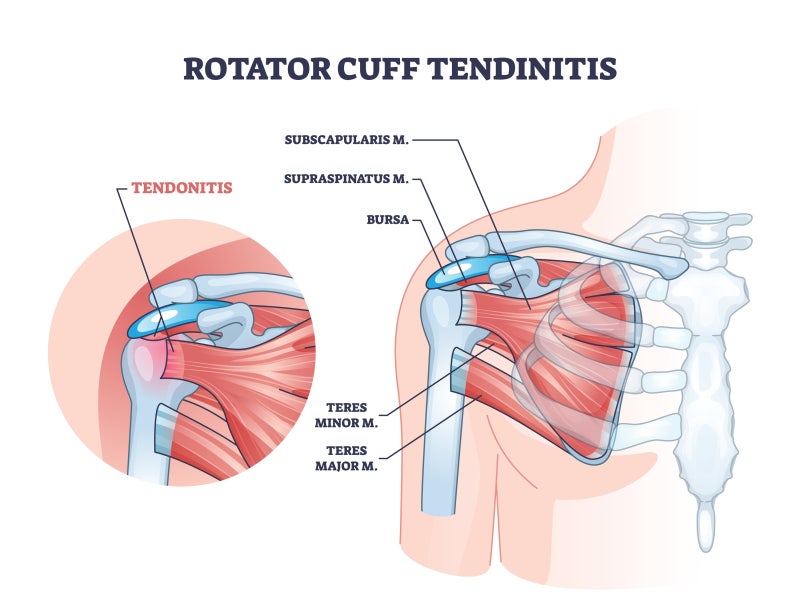
The rotator cuff can be damaged not only by trauma but also by poor posture and overuse. Unlike other joints, the shoulder has muscles and tendons that pass between bones. The rotator cuff consists of four muscles — the subscapularis, supraspinatus, infraspinatus, and teres minor — and together they are called the rotator cuff. The rotator cuff helps the shoulder move stably and rotate smoothly. Rotator cuff inflammation, as the name suggests, occurs when one or more of these tendons are damaged, causing inflammation and pain, which leads to limited shoulder movement — a common shoulder condition. Even with shoulder pain, some range of motion is still possible, which often causes people to miss the right time for treatment. If rotator cuff inflammation is left untreated, it can progress to muscle weakness or a rotator cuff tear, so caution is advised.

If you have rotator cuff inflammation, treatment should begin with reducing the inflammation. Common treatments for rotator cuff inflammation include injections and extracorporeal shockwave therapy. Injections typically use a steroid-based anti-inflammatory agent that contains a powerful pain-relieving steroid component. This injection is so effective that rotator cuff inflammation can be quickly brought under control and pain subsides. Steroid injections suppress rotator cuff inflammation, reduce tissue swelling, stabilize over-excited pain nerves, reduce pain around joints and spinal nerves, and help speed recovery. They are very effective for patients with acute rotator cuff inflammation. Just like putting out a fire quickly, steroid injections rapidly resolve the rotator cuff inflammation caused by various factors. When used appropriately before excessive inflammation makes tissue recovery impossible, steroid injections effectively suppress the inflammation. However, just as too much of anything can be harmful, excessive use of shoulder steroid injections can cause serious side effects. These include weakened bones, weakened internal structures, and gradual tissue deterioration. Additionally, blood sugar levels can rise and infection risks increase, so patients with severe diabetes or a history of infections should be cautious with steroid injections. With accurate diagnosis and proper treatment intervals, frequency, and dosage, excellent results can be expected in relieving inflammation and pain.

The second commonly used treatment for rotator cuff inflammation is extracorporeal shockwave therapy! Extracorporeal shockwave therapy for rotator cuff inflammation delivers ultrasound waves to joints and tendons to improve blood circulation and treat inflammation in tendons and ligaments, thereby relieving pain. Since treatment is delivered by applying shockwave energy from the skin surface, there are no scars, bruises, or other issues, and patients can return to daily activities immediately without a recovery period. This makes it a popular treatment option for busy office workers, students, homemakers, and many others. Besides rotator cuff inflammation, there are various other causes of shoulder inflammation. Therefore, it's important to accurately identify the underlying condition based on the location of inflammation and treat it accordingly. Receiving timely treatment for rotator cuff inflammation is crucial to prevent secondary conditions such as tears and arthritis.