

According to the Ministry of Health and Welfare, 7 out of 10 people in Korea have experienced back pain at least once, making it an extremely common condition. When most people develop back pain, they immediately think their disc has ruptured and is compressing a nerve. Of course, there are cases where a herniated disc physically compresses a nerve and causes back pain. Another scenario is when an inflammatory response occurs in the lower back area, causing pain. One study found that when MRIs were taken of healthy individuals aged 20 to 80, 69% showed abnormal findings in their spine — and some of these subjects reported no back pain at all.

These research findings suggest that physical compression doesn't necessarily translate into back pain. A herniated disc is a lifestyle disease that develops from prolonged poor habits. When bad habits persist, the bones, discs, and ligaments around the spine undergo aging and weakening, causing the disc to protrude. This leads to severe back pain — what we commonly call a herniated disc. A herniated disc is a degenerative spinal condition where the muscles and ligaments around the spine become weakened over time from prolonged pressure, losing their function, and the disc between the vertebrae also deteriorates. If you only treat the symptoms without addressing the root cause, the pain will return even after treatment.
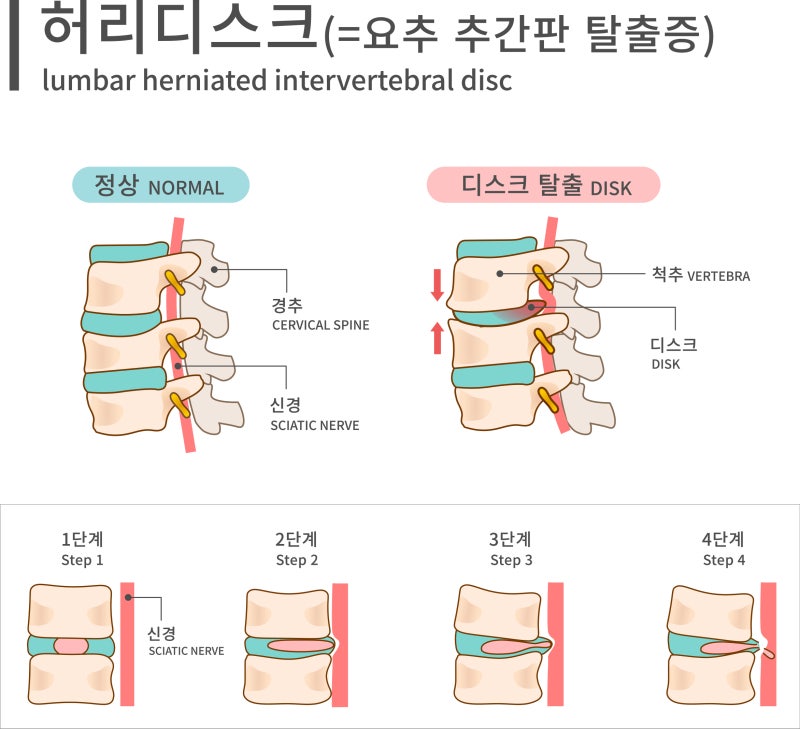
When a herniated disc develops, back pain intensifies and severe pain and numbness can radiate to the buttocks and legs. If you experience these symptoms, you should consider a herniated disc. Except in special cases where the disc severely compresses nerves causing leg weakness or paralysis, treatment should be initiated. If you suspect a herniated disc, there's also a self-assessment method. While lying flat on your back, slowly raise your leg — if you feel back pain or tingling when your leg reaches 30-70 degrees, there's a high possibility of a herniated disc. The self-test should be performed with the leg fully extended, and since pain may vary depending on spinal flexibility, visiting a hospital for an accurate diagnosis is the best approach. Among herniated disc treatments, are manual therapy and rehabilitation exercise the same thing? Most herniated disc treatments involve manual therapy or rehabilitation exercise. In fact, both are treatment methods used for a wide variety of conditions, not just herniated discs.
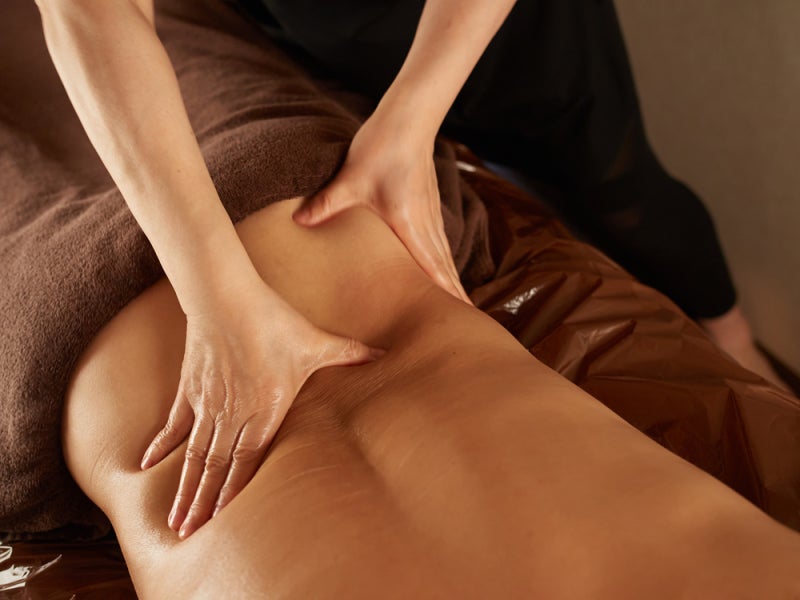
Manual therapy refers to all hands-on treatments performed by a therapist. Rehabilitation exercise is exercise aimed at recovery. Simply put, manual therapy involves the patient lying down to receive treatment, while rehabilitation exercise involves the patient actively moving and exercising. Myofascial release, manual therapy techniques, sports massage, and myofascial manipulation all fall under manual therapy. Corrective exercise and proprioceptive training fall under rehabilitation exercise. The key difference between manual therapy and rehabilitation exercise is whether the patient's direct participation is essential or optional. In manual therapy, the patient lies down while the therapist manipulates the fascia, muscles, and joints. In rehabilitation exercise, the patient must actively use their muscles — their participation is essential. Passive manual therapy alone provides only temporary, limited results, so it's important to also engage in active rehabilitation exercise where the patient moves on their own. No matter how much manual therapy loosens stiff muscles and realigns the spine, if the patient lacks the strength and ability to maintain that state on their own, everything will tighten and stiffen again over time, leading to recurrence. That's why herniated disc treatment must include first loosening what's stiff, then following up with rehabilitation exercise to maintain that state long-term. The process of training muscles and ligaments that haven't been properly used is a prerequisite for rehabilitation exercise. Another major difference between manual therapy and rehabilitation exercise is whether treatment focuses solely on the painful area or addresses overall body alignment. When the neck hurts, the back and shoulders should also be treated; when the back hurts, the pelvis and back should also be addressed.
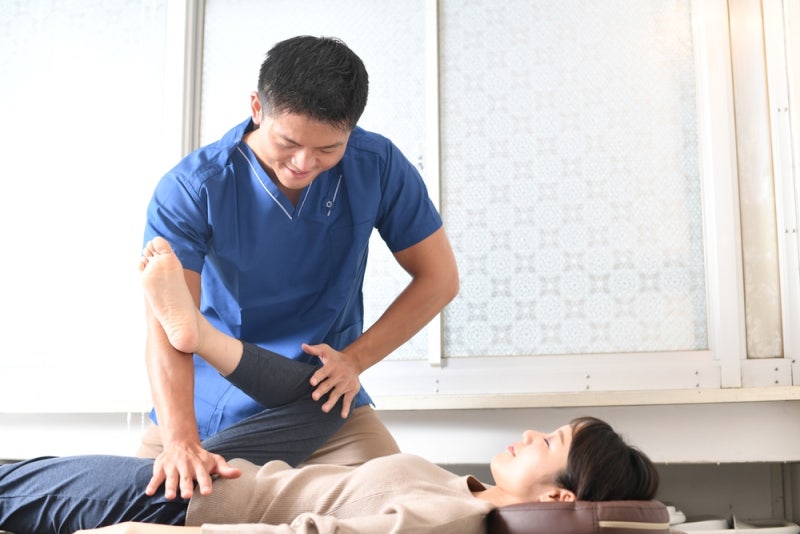
However, not all patients can participate in rehabilitation exercise. Patients with severe back pain from a disc rupture cannot actively participate in rehabilitation exercise, no matter how hard they try. Even if they could, proper body movement would be impossible because of the pain. In such cases, even though rehabilitation exercise is necessary, injection therapy or passive manual therapy should be performed first to achieve some degree of pain relief, and only after minimal movement becomes possible should rehabilitation exercise begin.

To prevent recurrence after herniated disc treatment, rehabilitation exercise is essential to train the muscles to function independently and stabilize the spine. For a healthy back in daily life, the vertebrae, discs, and surrounding muscles must all work together in harmony. While we can't alter the vertebrae and discs without surgery, we can strengthen the muscles that surround them. This means performing exercises that strengthen the core muscles around the spine and abdomen. Maintaining good posture while walking and incorporating core strengthening exercises are also effective ways to prevent herniated discs.