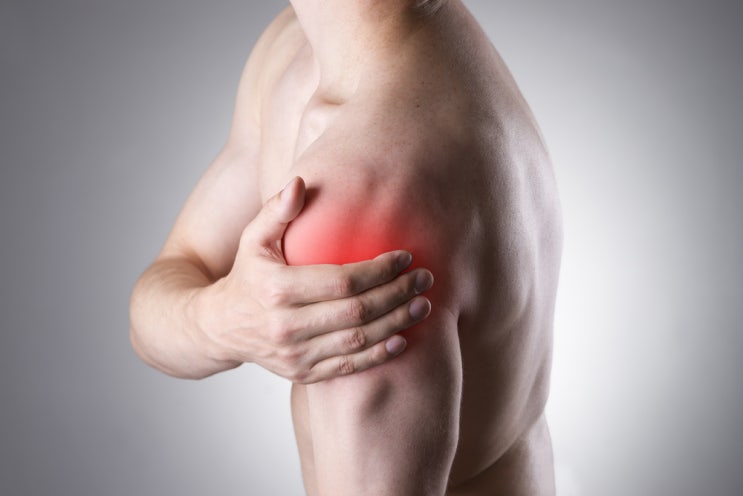
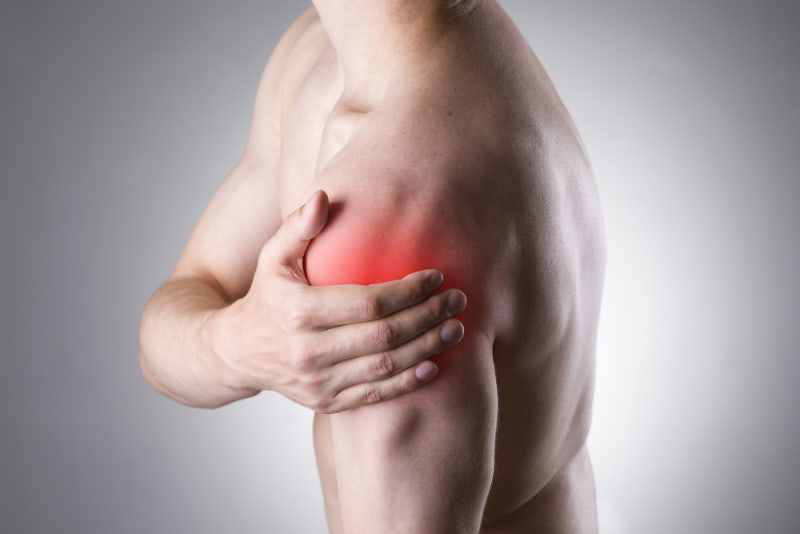
If your perfectly fine shoulder suddenly starts hurting severely, you may want to suspect calcific tendinitis. Calcific tendinitis is a condition where calcium gradually accumulates in the shoulder tendons, hardening into stone-like deposits while simultaneously causing inflammation and pain. While calcific tendinitis can occur anywhere tendons exist, it most commonly affects the shoulder. If you've been suffering from shoulder pain for months to over a year without identifying the exact cause, calcific tendinitis should be considered.

What are the hallmark symptoms of calcific tendinitis?
1) Sudden severe shoulder pain without any injury or excessive activity 2) Shoulder pain worsens at night, making it impossible to lie on the affected side 3) Over a year of treatment for shoulder pain without improvement — pain becomes chronic 4) Pressing where the upper arm meets the shoulder intensifies the pain If even one of the above applies to you, calcific tendinitis should be suspected. Not everyone with calcium deposits in their tendons experiences severe pain. Calcium deposits may be present without causing symptoms if they don't trigger an inflammatory reaction. The primary symptom of calcific tendinitis is sudden, severe shoulder pain without any apparent cause. However, during the long period before calcium deposits reach a certain level, there are virtually no symptoms.

The pain of calcific tendinitis is most severe when accumulated calcium, after hardening like stone, begins to slowly dissolve. The body creates blood vessels around the calcium to eliminate it, triggering an active inflammatory response that causes extreme pain. Calcific tendinitis can significantly reduce quality of life due to severe pain. In severe cases, patients lose sleep and may visit the emergency room due to piercing pain. In the early stages, symptoms can be improved with medication and physical therapy. However, when calcification becomes chronic and inflammation persists inside the shoulder, definitive treatment to remove the calcium — such as barbotage (calcium aspiration) or extracorporeal shockwave therapy — becomes necessary. Calcific tendinitis treatment requires relieving the inflammation in the tendon, promoting damaged tendon regeneration, and removing the calcium deposits. The treatment approach is determined by the severity and duration of pain and the size of the calcium deposits. First, if calcium is present but pain is absent or mild, most cases can be managed with anti-inflammatory medication along with non-surgical treatments including extracorporeal shockwave therapy and manual therapy.

However, when calcium deposits are 1-2 cm or larger, shoulder pain is severe, or pain has persisted for over a year, conservative treatment is insufficient. A specialized needle is needed to break up and remove the calcium. Barbotage involves piercing the calcium with a needle to break it into small pieces, injecting sterile medical fluid to wash the area around the tendon, and suctioning out the crushed calcium — a treatment that is relatively quick compared to arthroscopic surgery and can fundamentally remove the calcium deposits.


This method was derived from the arthroscopic surgical approach for calcific tendinitis. Depending on the calcium consistency, some come out smoothly like cheese, while harder deposits are crushed into chalk-like powder and suctioned with a syringe. However, not all calcium can be removed during barbotage. Since calcium doesn't deposit neatly within the tendon but embeds irregularly between tissue fibers, removing every last bit could damage healthy tendon tissue. Barbotage crushes as much calcium as possible, suctions the crushed material, thoroughly washes the surrounding tissue, and then includes tendon regeneration therapy.

Remaining calcium around the edges needs extracorporeal shockwave therapy to promote natural absorption. Shockwave therapy delivers shockwave energy to the painful area to regenerate blood vessels, increase blood flow, improve symptoms, and repair damaged tissue — making it excellent for helping absorb residual calcium and increasing blood flow to the tendons after barbotage. Barbotage may be considered when calcium deposits are too small for needle extraction, symptoms are not severe, or conversely when pain and calcium size are significant but the patient prefers to avoid surgery. Calcific tendinitis can be effectively treated through non-surgical methods — so don't let the condition worsen, and seek active treatment.