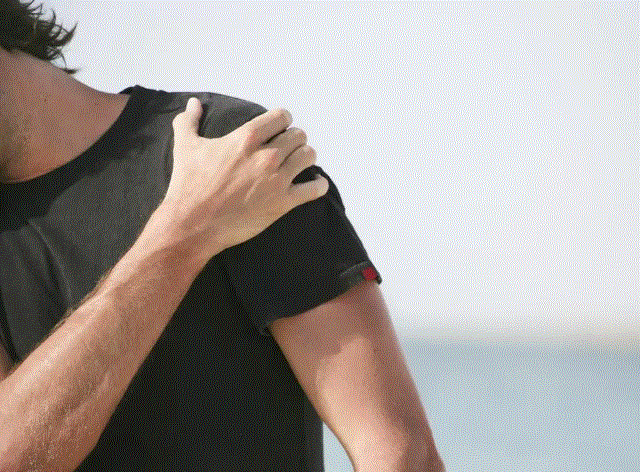
If your perfectly fine shoulder suddenly starts hurting severely, you may want to suspect calcific tendinitis. Calcific tendinitis is a condition where calcium gradually accumulates in the tendon area, hardening into stone-like deposits while simultaneously causing inflammation and pain. Calcific tendinitis can occur in any joint with tendons, but it most commonly affects the shoulder.

If you've been suffering from shoulder pain for months to over a year without finding the exact cause, calcific tendinitis should be considered. The pain from calcific tendinitis is most severe when hardened calcium begins to slowly dissolve. Our body creates blood vessels around the calcium in an attempt to eliminate it, triggering an active inflammatory response that causes extreme pain. Calcific tendinitis significantly reduces quality of life due to severe pain. In the early stages, medication and physical therapy can improve symptoms. However, when calcification becomes chronic and continuously causes inflammation inside the shoulder, definitive treatments such as barbotage or extracorporeal shockwave therapy are needed to remove the calcium.

Calcific tendinitis treatment involves relieving tendon inflammation and removing the calcium deposits. The approach depends on the degree of pain, duration, and the size of the calcium deposits. If calcium is present but pain is absent or mild, anti-inflammatory medication along with non-surgical treatments including extracorporeal shockwave therapy and manual therapy can usually improve symptoms. However, when calcium deposits are 1-2 cm or larger, shoulder pain is severe, or pain has persisted for over a year, conservative treatment is insufficient and definitive treatment is needed to break up and remove the calcium. What is barbotage (calcium aspiration)?

Barbotage uses a needle to pierce, break up, and suction out calcium deposits — an effective treatment that is relatively quick compared to arthroscopic surgery and can fundamentally remove calcium. However, it is difficult to remove all calcium embedded within the tendons during barbotage, because calcium deposits irregularly between tissue fibers, and removing everything could damage healthy tendon tissue.


After barbotage removes as much calcium as possible and washes the surrounding tissue, remaining calcium needs extracorporeal shockwave therapy to promote natural cellular absorption. Shockwave therapy delivers energy to the painful area to regenerate blood vessels, increase blood flow, improve symptoms, and repair damaged tissue. Shockwave therapy alone may also be used when calcium deposits are too small for needle extraction or symptoms are mild. Additionally, after calcium removal, the resulting space in the tendon requires additional tendon regeneration therapy to prevent recurrence. Calcific tendinitis can be effectively treated through non-surgical methods without requiring surgery.


Post-treatment care after barbotage becomes clear when you consider why calcium forms in the first place. Calcific tendinitis develops because of restricted blood flow to the tendons. After treatment, it's important to exercise regularly to maintain good blood flow to the tendons.