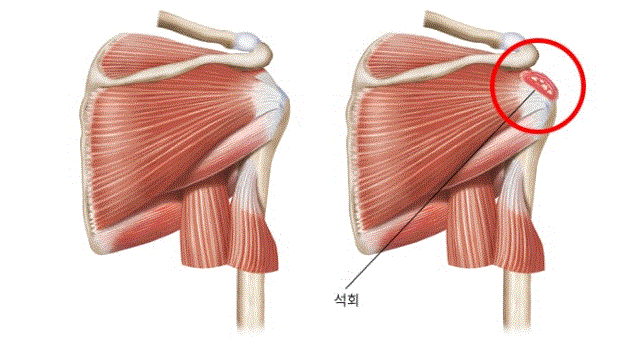
If you experience sudden, severe shoulder pain that makes it difficult to raise or move your arm without any injury or overexertion, calcific tendinitis should be suspected. Calcific tendinitis occurs when stones form in the rotator cuff tendons, causing acute inflammation and pain. As stones form within the tendon, internal pressure increases, causing sudden severe shoulder pain and movement difficulty. The pain can be so intense that some patients visit the emergency room at night.

There are various reasons calcific tendinitis develops. It's primarily caused by degenerative changes in the shoulder tendons. The shoulder is much more active than other joints, which means shoulder tendons age faster than those in other areas. As degenerative changes cause calcium to accumulate within tendon cells, the tendons gradually calcify. As these deposits grow larger and cause inflammation — potentially even tearing surrounding tendons — prompt medical attention is essential when severe shoulder pain occurs.

Diagnosis requires simple X-ray along with ultrasound examination. Large calcium deposits appear as white substances on X-ray. Ultrasound can reveal the shape and consistency of calcium inside the tendons, including micro-calcifications invisible on X-ray. Importantly, diagnosis should check not only for calcium but also for accompanying rotator cuff tendon inflammation or tears. Since most patients with calcific tendinitis have degenerated or torn tendons rather than healthy ones, treating the tendon alongside the calcium is essential to reduce recurrence. Early-stage treatment begins with anti-inflammatory injections and extracorporeal shockwave therapy to improve blood supply to the tendons. When calcium deposits are large or conservative treatments like shockwave and injection therapy haven't provided relief, barbotage can provide definitive non-surgical calcium removal.

Barbotage is performed under local anesthesia near the shoulder nerve bundle, using precision ultrasound to directly break up and extract the calcium. A specialized needle crushes the calcium within the tendon, and it's suctioned out with a syringe. Since this removes the calcium itself, it not only reduces pain but serves as a definitive treatment addressing the root cause. Unlike arthroscopic surgery, no skin incision is needed — patients can use their arm immediately after the procedure and quickly return to daily activities.

However, even after barbotage removes the calcium, leaving the affected rotator cuff tendon untreated can allow calcium to reaccumulate and calcific tendinitis to recur. Therefore, after calcium removal, injection therapy with tissue supplements such as collagen, growth factors, and DNA or cell proliferation promoters should be administered to restore the tendon to normal.

The goal is not just to remove calcium but to restore the aged tendon that caused the calcium formation, thereby preventing recurrence of calcific tendinitis.