

If foot pain or heel pain starts at some point and does not improve, gradually worsening and causing persistent pain in the sole of your foot, you may want to suspect plantar fasciitis. Plantar fasciitis requires treatment to improve, but the treatment period can be quite long, and if not properly managed, there is a high likelihood of recurrence. Plantar fasciitis refers to heel pain and sole pain. It is a condition where inflammation develops in the plantar fascia, a thick and strong fibrous band that starts from the calcaneus (heel bone), runs along the bottom of the foot, and attaches to the front of the toes. The plantar fascia normally maintains the arch of the foot, absorbs shock, and helps lift the foot while bearing weight. It also plays a crucial role during walking.

The causes of plantar fasciitis are quite diverse. It can occur when the arch of the foot is structurally lower than normal (flat feet), or conversely, when the arch is higher than normal, causing deformity. It can also result from leg length discrepancy or muscle contracture in the legs. The most common cause is inflammation from overuse of the feet. Activities such as walking long distances, wearing shoes without cushioning on hard surfaces, or subjecting the plantar fascia to excessive weight-bearing beyond normal levels can easily trigger inflammation. Once plantar fasciitis develops, the condition continues to progress without treatment. The typical symptom is severe pain when first stepping out of bed in the morning, but not all plantar fasciitis patients experience the same symptoms. Pain usually occurs on the inner side of the heel and can also be triggered by pressing the sole with your hand. Bending the toes upward toward the top of the foot may intensify the pain, and in some cases, there is no pain at rest but it worsens when you start moving your feet. In some cases, the pain may decrease again after moving for a certain period.

Plantar fasciitis treatment typically involves medication and physical therapy. Anti-inflammatory medication combined with physical therapy and shockwave therapy helps reduce inflammation in the sole and promotes blood circulation to the feet, stimulating tissue regeneration. However, as mentioned earlier, plantar fasciitis treatment takes considerable time. For severe flat feet where the arch is absent, custom insoles that create an arch can also be helpful. Insoles help cushion impact on the feet and distribute weight-bearing loads. Rather than off-the-shelf functional insoles, custom-made insoles designed after precise arch angle calculations at a hospital are more beneficial for treatment. Due to the long treatment period and continued foot use during treatment, which can extend recovery time, many people give up on treatment midway. However, if you combine proper daily management with plantar fasciitis treatment, a full recovery is possible. So what kind of daily management should you do? The answer is stretching. Regular stretching, foot baths, and massage to prevent excessive strain on your feet are very helpful for both treating and preventing plantar fasciitis.

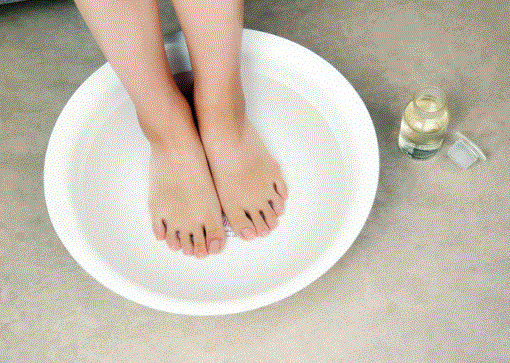
Plantar fasciitis pain can worsen as the day goes on, so after your daily activities, a simple warm foot bath at home to relax the fascia followed by sole stretches and massage using a tool or towel is recommended. Treatment methods are important, but daily habits matter just as much. Wearing comfortable shoes on a regular basis is essential, and if your feet are strained from activities like wearing high heels, make sure to do foot baths and stretches that evening. Our feet endure the most stress of any body part throughout the day! Improve your foot health through plantar fasciitis treatment and daily management!