
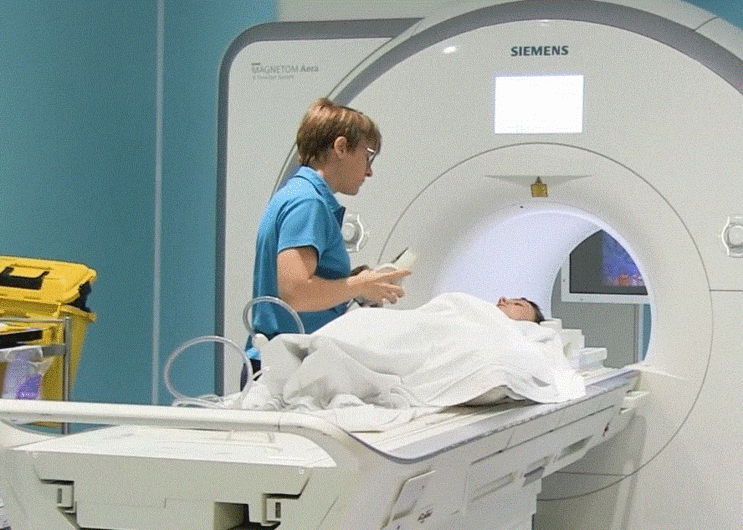
An MRI scan uses magnets and radiofrequency waves. It is a safe examination with absolutely no radiation exposure. MRI costs vary depending on the hospital and the body part being scanned. While the loud noise and anxiety from the enclosed space during an MRI scan can be concerning, contrary to common worries, there is no health risk from radiation exposure. The principle behind MRI works by using a device composed of magnets to generate radiofrequency waves that resonate with hydrogen nuclei in the water molecules within our bodies, measuring the differences in signals produced and converting them into images. Compared to CT scans, MRI has the advantage of producing excellent soft tissue images without using contrast agents. An MRI scan typically takes about 20-30 minutes, which is longer than a CT scan.

Most MRI scans are performed without contrast agents. However, to better visualize certain lesions or blood vessels, contrast agents may be injected intravenously for enhanced imaging. Contrast agents are medications, and their use carries the possibility of side effects. However, MRI contrast agents use gadolinium-based agents rather than the iodinated contrast used in CT scans, making them relatively safe with fewer side effects. The incidence of MRI contrast side effects is extremely low compared to CT contrast agents, and most side effects that do occur are mild and temporary, such as rash, nausea, vomiting, and skin itching. However, in patients with impaired kidney function, excessive use of MRI contrast agents can cause a serious condition called nephrogenic systemic fibrosis.

Therefore, if you have kidney disease and need a contrast-enhanced MRI, consultation with your doctor is essential. Because MRI generates a strong magnetic field, having metal objects or devices inside the body can cause problems. People with metal objects in their body cannot undergo MRI. For example, patients with cerebral aneurysm clips, cardiac pacemakers, nerve stimulators, or cochlear implants may be restricted from MRI examinations. MRI requires lying still in an enclosed space for at least several tens of minutes. People with claustrophobia may find it difficult to undergo an MRI. Sedatives can help most claustrophobic patients complete the examination, but some patients may still be unable to undergo MRI despite medication. Some patients with extreme obesity may also be unable to fit inside the MRI machine. Patients with claustrophobia or extreme obesity should consider open MRI.

MRI is excellent for imaging various joints, organs, the brain, blood vessels, and other body parts. For shoulder conditions, particularly when diagnosing rotator cuff tears, frozen shoulder, and calcific tendinitis, ultrasound is often preferred over MRI. In the United States, ultrasound is commonly used for diagnosing shoulder conditions. Ultrasound is more affordable than MRI, and it can detect degenerative tendon changes and ligament texture that are difficult to identify on MRI, which captures images in millimeter-thick slices, by providing real-time monitoring for more accurate assessment. However, the skill level of the physician performing the ultrasound is extremely important. An experienced doctor with extensive knowledge of shoulder conditions must perform the examination for accurate results. Rather than automatically opting for an MRI for shoulder conditions, consult with a specialist who can identify your condition and recommend the most appropriate and cost-effective examination for your specific needs.