
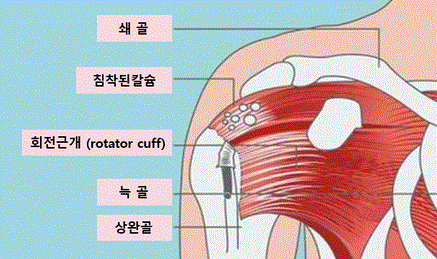
The term calcific tendinitis may sound unfamiliar, but according to Korean health insurance data, the number of calcific tendinitis patients has increased by over 29% in the past 5 years. Calcific tendinitis occurs when calcium deposits, similar in composition to bone, accumulate within the rotator cuff tendons, causing severe pain.

When calcific nodules first form and are compacted, there is usually little shoulder pain. However, after the nodules have been compacted for a long time, they gradually dissolve, causing severe inflammation in the tendons or joint and triggering pain. Most patients with calcific tendinitis report having no symptoms at all until one day they suddenly experience severe shoulder pain.

The exact cause of calcific tendinitis is not fully understood, but it commonly develops when oxygen and blood supply to damaged tendons is restricted, or from degenerative tendon changes. On ultrasound, most calcific tendinitis patients have not only the calcium deposits but also additional secondary issues such as tendon tears or tendinitis. Calcific tendinitis can develop in any joint, but it is particularly common in the shoulder joint. The severe pain makes it difficult to raise, extend, or use the arm, and night pain reduces sleep quality.

Calcific tendinitis is treated with conservative therapy or percutaneous calcium deposit aspiration depending on the extent of tendon damage, calcium consistency, and deposit size. The most commonly used conservative treatment for calcific tendinitis is extracorporeal shockwave therapy. Shockwave therapy can be a burden on patients both psychologically and financially due to the long treatment period. Also, unless the deposits are very fine, rapid treatment results cannot be expected in a short period.
For faster and more precise calcific tendinitis treatment, percutaneous calcium deposit aspiration (barbotage) under ultrasound guidance may be considered. Using ultrasound guidance, the location of the calcium deposit within the shoulder tendon is identified, and a specialized fine needle is used to break up the calcium, which is then aspirated through a syringe. Since the calcium causing pain within the tendon is essentially a calcium compound, the broken-up deposit fragments are aspirated through the syringe, and remaining particles are naturally absorbed by the body. Additional shockwave therapy can help promote blood supply and accelerate absorption of remaining calcium.