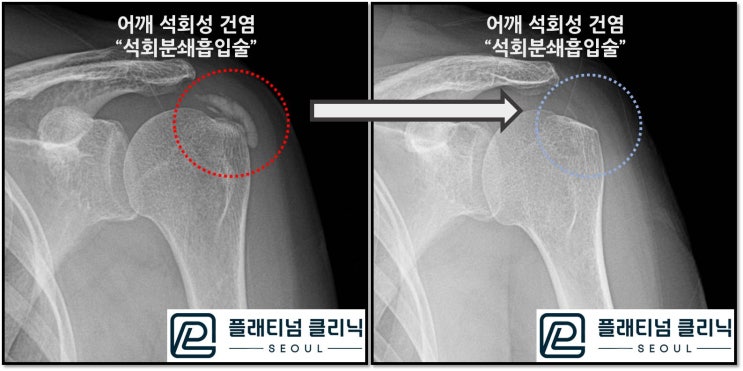
Hello. I am Dr. Dongkyu Lee, an orthopedic specialist. A patient came in who had suffered tremendously from calcific tendinitis for 3 years. The patient had been diagnosed with calcific tendinitis and received regular anti-inflammatory injections and shockwave therapy. Treatment provided temporary relief followed by recurrence, repeated multiple times... Severe pain frequently prevented sleep... Frequent nighttime awakenings from pain led to insomnia... With such shoulder pain affecting daily life, depression developed and medication was needed... The patient said the suffering was so severe that they wanted to cut off their arm... They came to me begging to be healed. As I have mentioned before, calcific tendinitis can cause extremely severe pain. Therefore, removing the calcium is the fundamental treatment. First, an X-ray was performed.
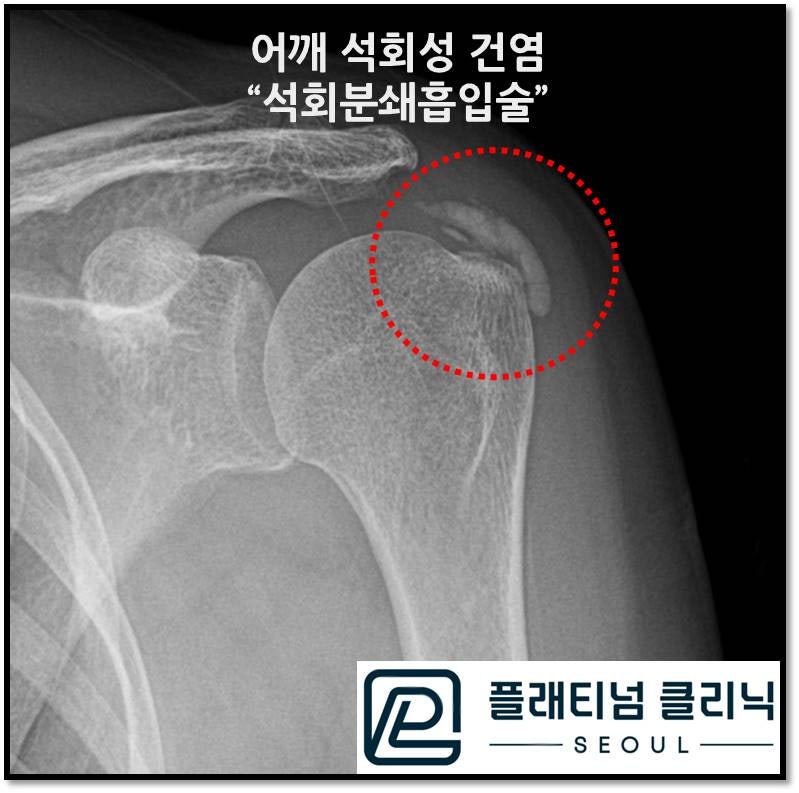
With such a large deposit, pain is extremely severe and the patient suffers greatly. The patient had been recommended surgery at another hospital but came to me saying:
"I searched online and learned it could be treated without surgery. Please help me."
The patient pleaded. Barbotage, a non-surgical treatment for calcific tendinitis, was performed.
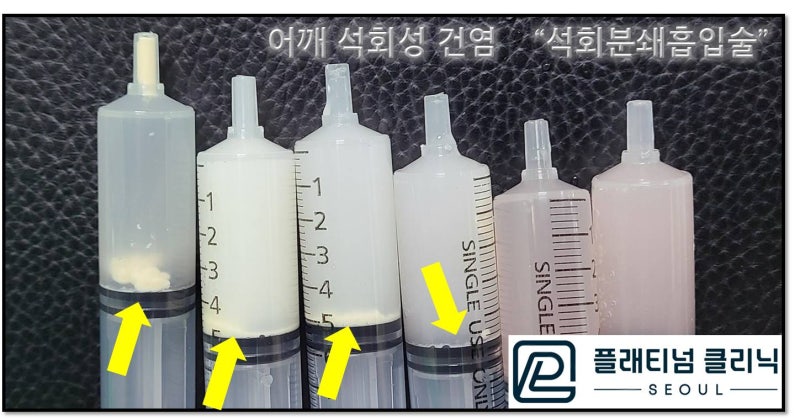
As shown in the video, the procedure is performed using syringes. First, local anesthesia is administered to control the patient's pain. Then, using ultrasound to precisely target the calcium, a syringe is inserted and a specialized tip is used to fragment the calcium. Saline solution is then used to remove the fragmented calcium. Here are the post-procedure syringe photos.
After removing the calcium, another X-ray was taken.
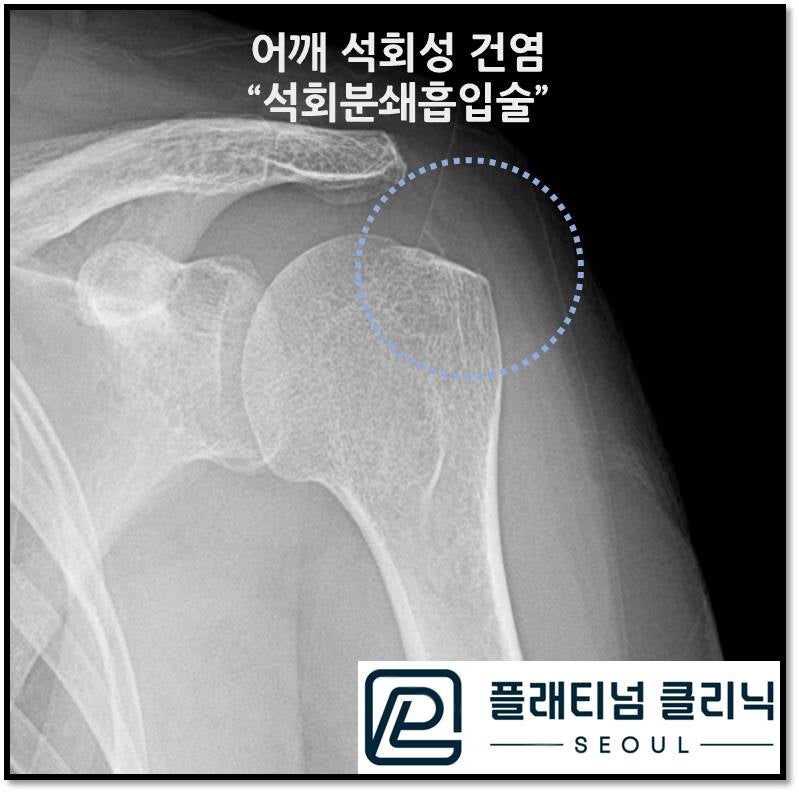
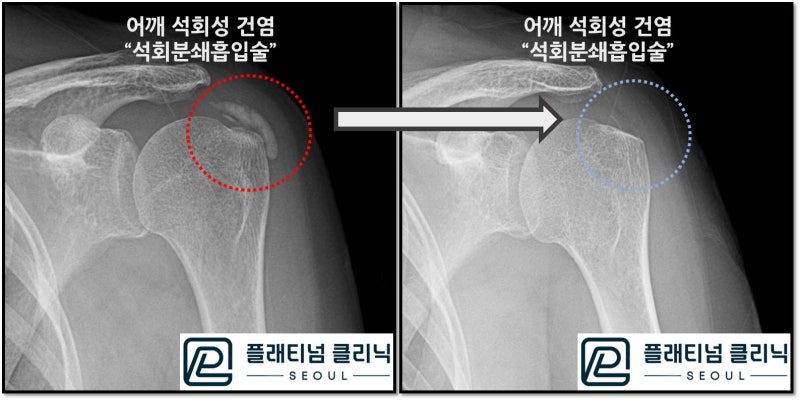
The patient said the pain disappeared after the procedure and was absolutely thrilled. "If only I had met you 3 years ago, I wouldn't have suffered like this..." they said, half laughing, half crying with tears of joy as they were discharged. Seeing patients who suffered from calcific tendinitis experience such dramatic improvement is very rewarding from a treatment perspective. It makes me think, 'I am doing the right thing.'
I hope that patients suffering from calcific tendinitis will not have to endure such prolonged pain.