
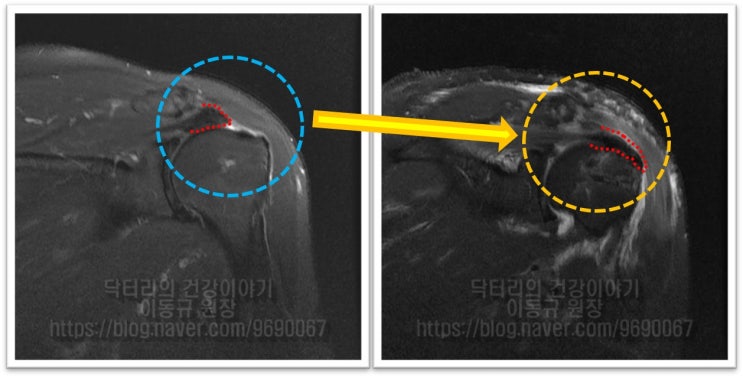
Hello. I'm Dr. Dongkyu Lee, an orthopedic specialist. Today, let me introduce a case where I used the double-row suture technique for a stronger repair during arthroscopic rotator cuff surgery. When a rotator cuff tear has progressed significantly, simple suture repair alone may not withstand the tension on the rotator cuff, leading to re-tears. Additionally, if the tear has been present for a long time, advanced degenerative changes in the tendon can also cause re-tears. The double-row suture technique involves suturing the rotator cuff in two layers. The area where the rotator cuff attaches to the humerus is called the "foot print," and this technique secures it not just two-dimensionally but three-dimensionally as a surface. This case involves a 67-year-old female patient. She had suffered from pain for a long time and had only received injection treatments. Recently, injections no longer helped, daily activities became difficult, and night pain prevented sleeping, prompting her to visit our clinic. Physical examination showed positive impingement sign and empty can test.
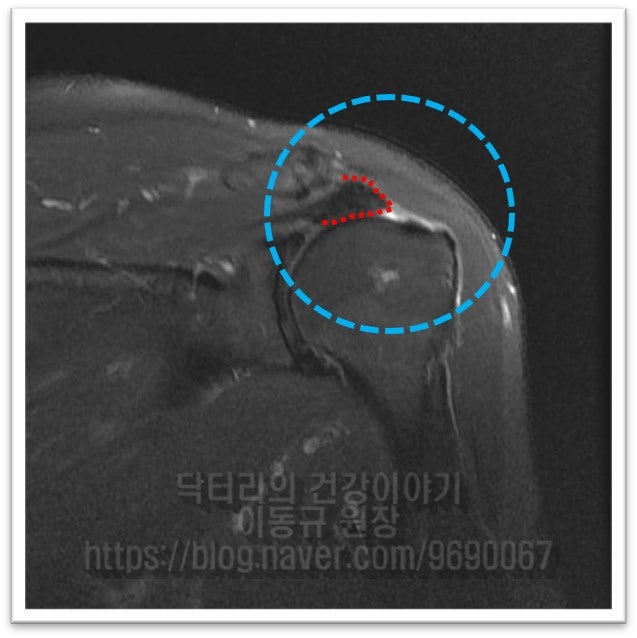
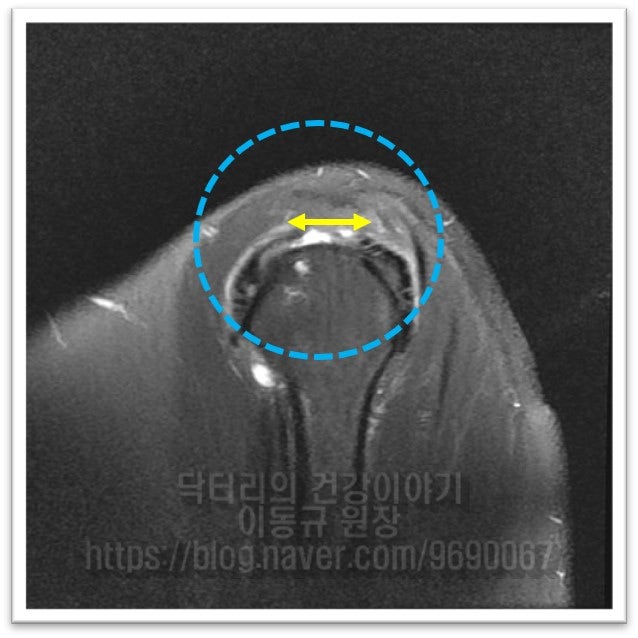
This appeared to be a medium-sized tear, and arthroscopic rotator cuff repair was performed.
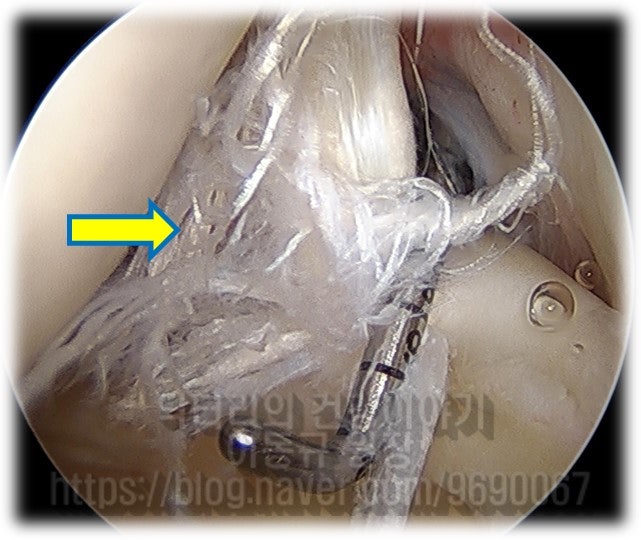
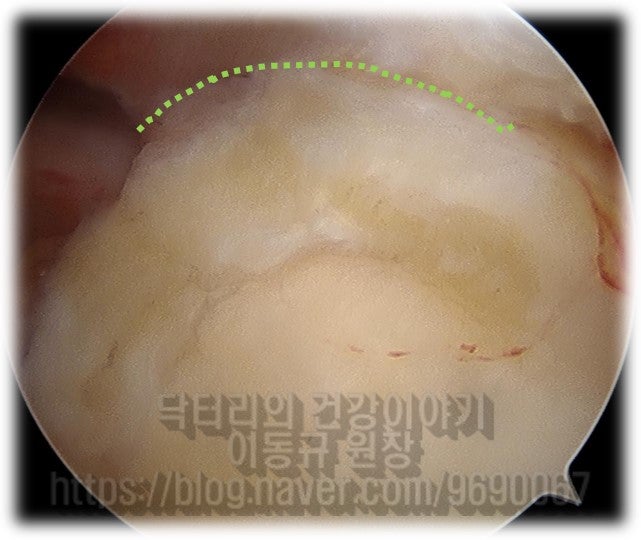
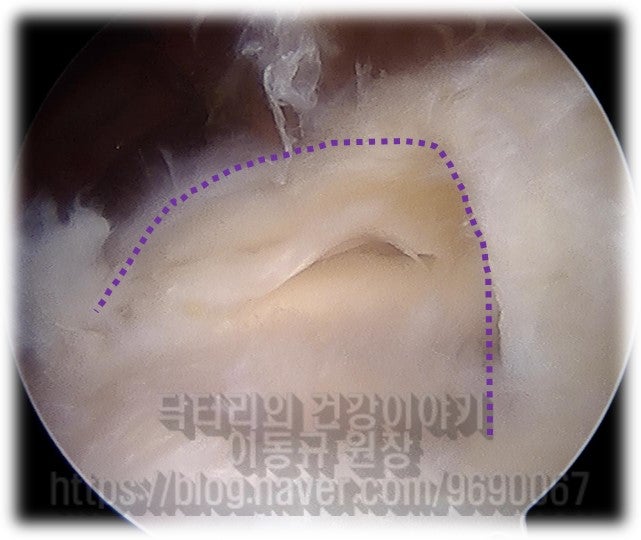
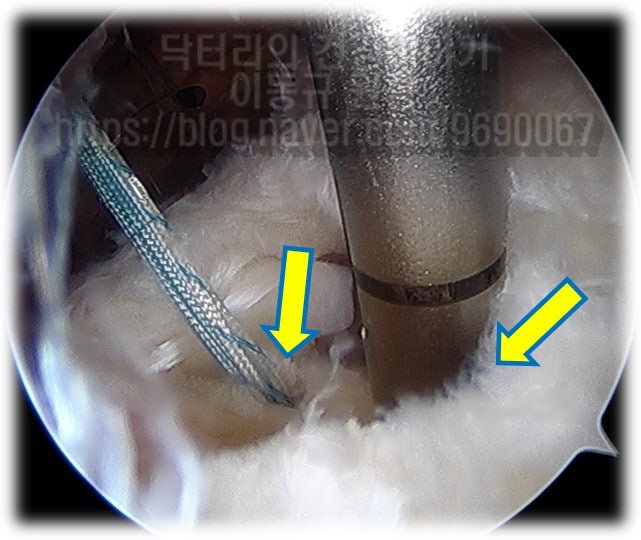
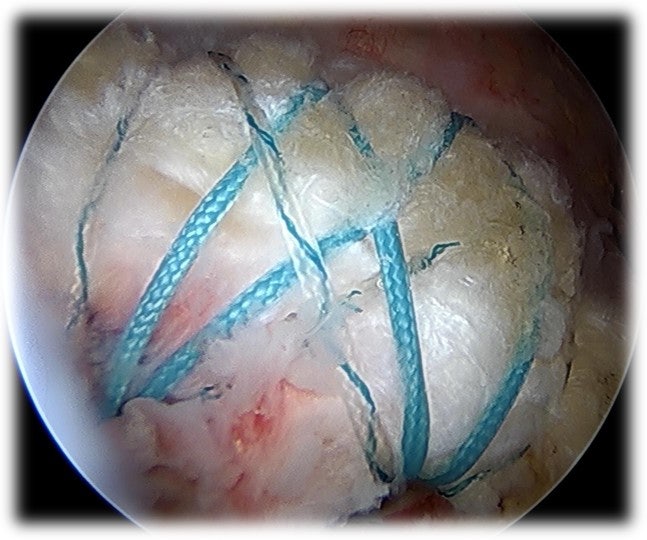
Let's compare the post-operative MRI.
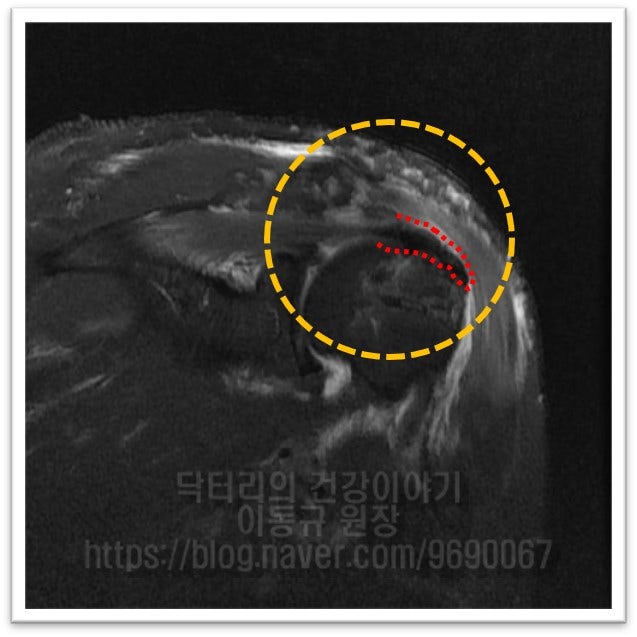
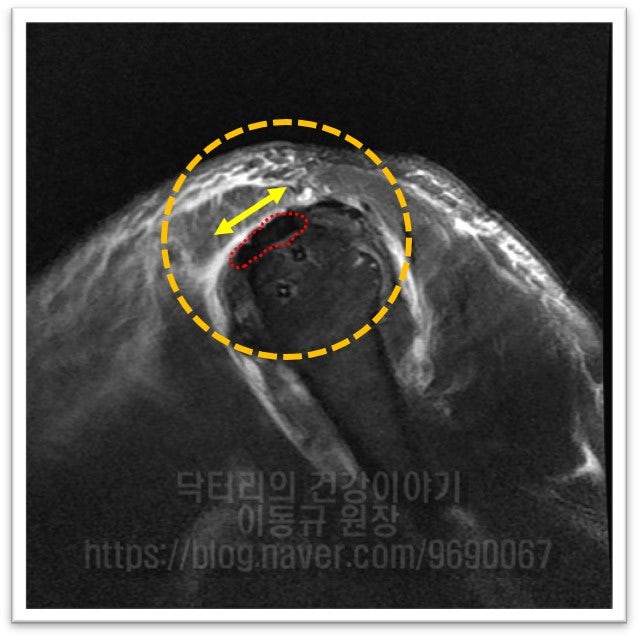
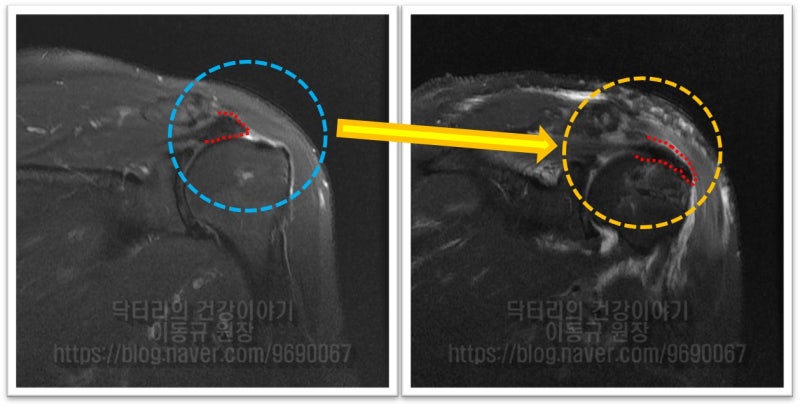
The advantages of the double-row suture technique: 1. A larger area of the torn rotator cuff can be attached to the humerus across a wider surface. 2. The stronger fixation better withstands tension on the rotator cuff. 3. Because the repair is more secure, rehabilitation can begin earlier and more comfortably. Despite being 67, the patient is now doing excellent rehabilitation, sleeping well at night, and functioning normally. Personally, I use the double-row suture technique in nearly all rotator cuff repair surgeries. The reasons are the secure fixation and the ability to begin early rehabilitation.