When Augmentation Is Needed for Shoulder Rotator Cuff Tears

2021. 11. 16.

When Augmentation Is Needed for Shoulder Rotator Cuff Tears


Hello. I'm Dr. Dongkyu Lee, an orthopedic specialist. When a rotator cuff tear has been present for a long time, restricted blood flow leads to progressive degenerative changes. In such cases, even surgery may not fully heal the tendon. It's like sewing new cloth — it holds firmly. But sewing deteriorated cloth means it can tear again. If the rotator cuff tear has been present for a long time, augmentation may be needed depending on the tendon condition. Let me show you a case. A 48-year-old female patient was diagnosed with a rotator cuff tear 5 years ago but couldn't undergo surgery due to work and personal reasons. She had only been receiving pain injections when it hurt. Physical examination showed a positive empty can test, suggesting a supraspinatus tear. Let's look at the MRI.
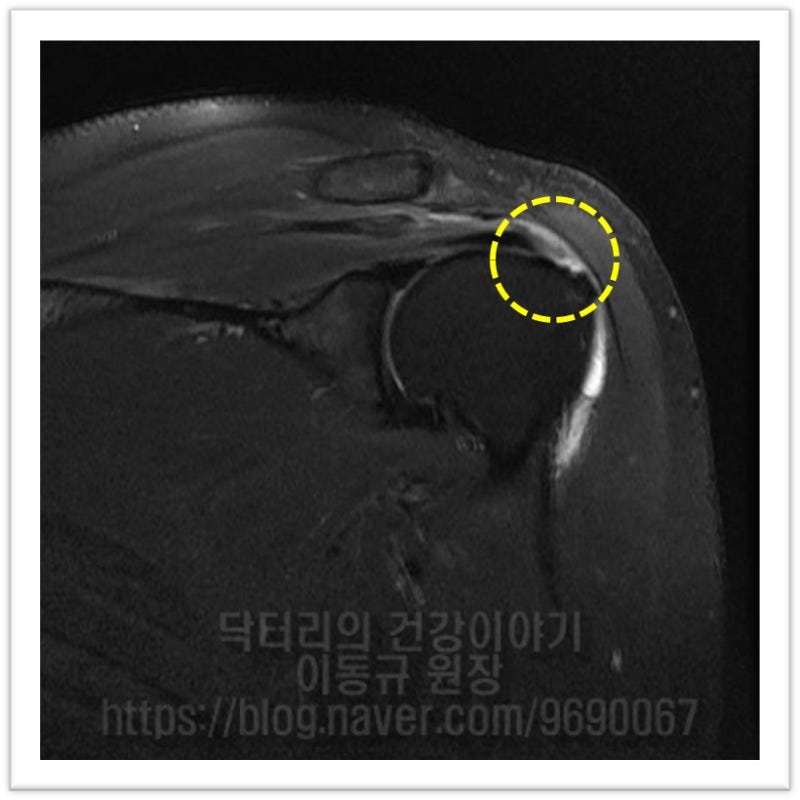
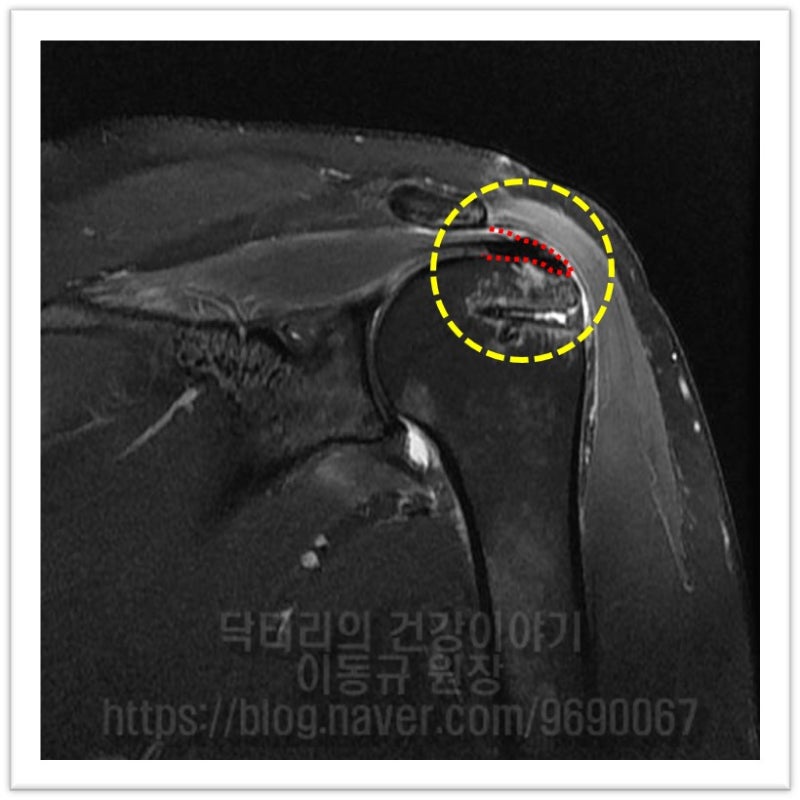
A torn supraspinatus is visible within the yellow circle. On MRI, the tendon should appear dark, but it appears slightly white.

On MRI, the tear size isn't very large and the tendon condition doesn't look too bad. Arthroscopic repair was planned.
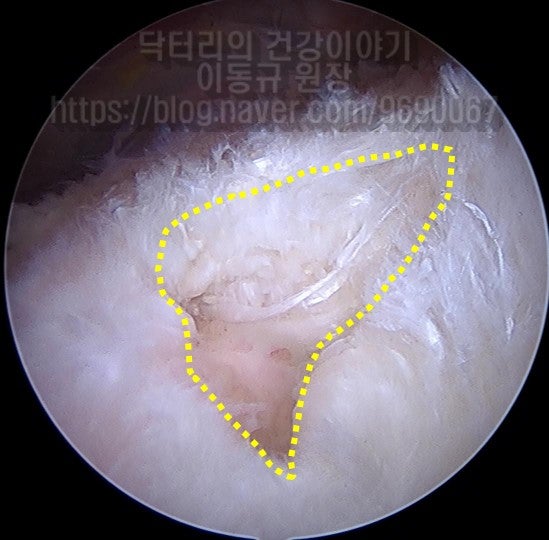
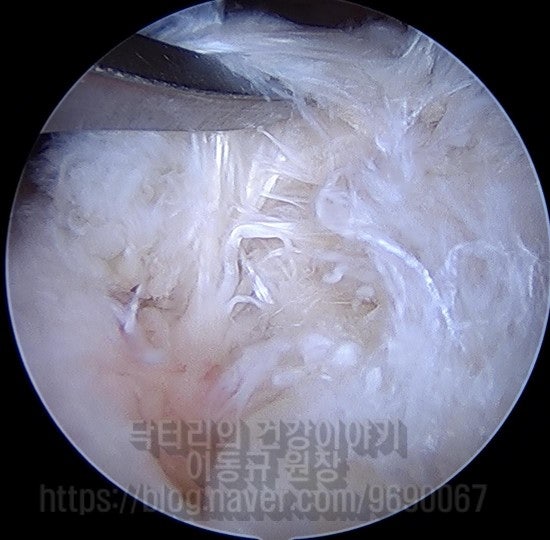
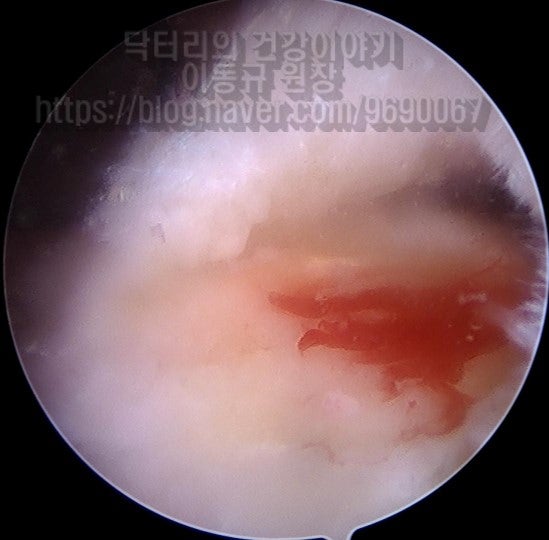
The tendon should normally appear smooth but shows tattered and frayed tearing.
Upon examining the inner tendon, it was completely tattered and non-functional.
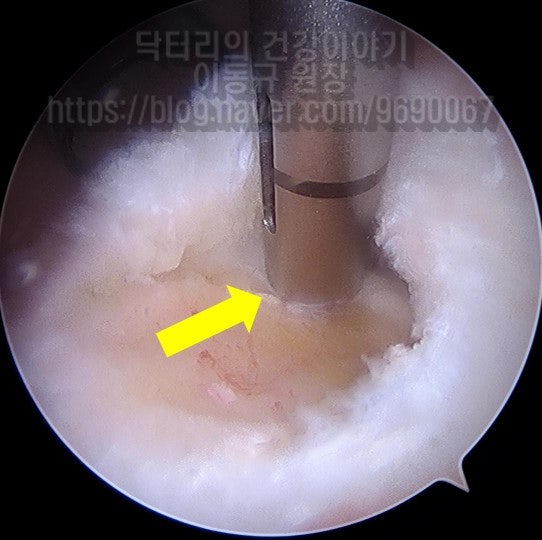
Microfracture is created on the greater tuberosity to promote tissue healing before tendon suture.
Suture anchor being inserted.
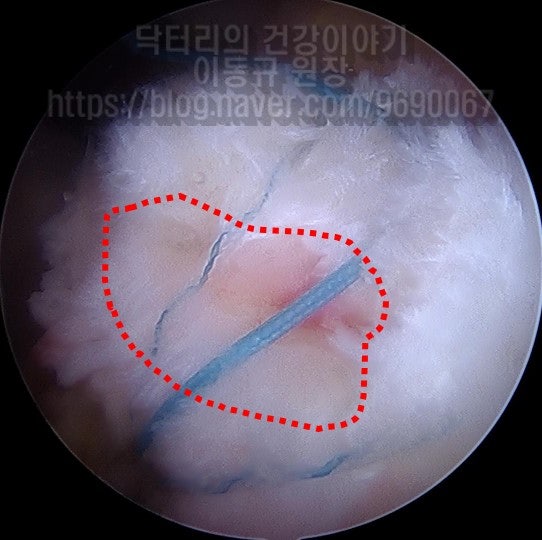
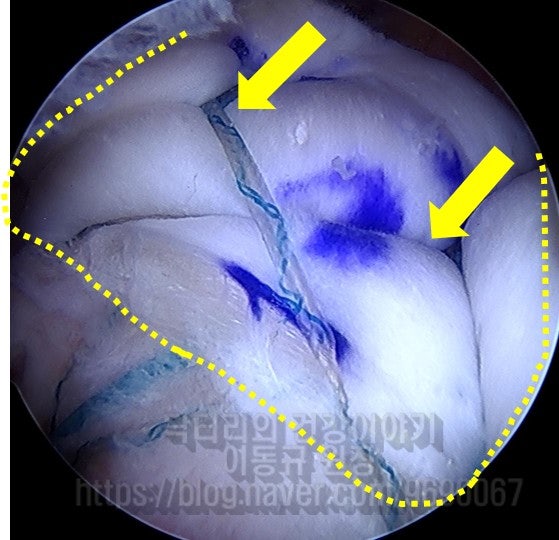
After primary repair using the double-row suture technique, the tendon condition was too poor, with a residual defect shown by the red dotted line. An artificial tendon augmentation was decided.
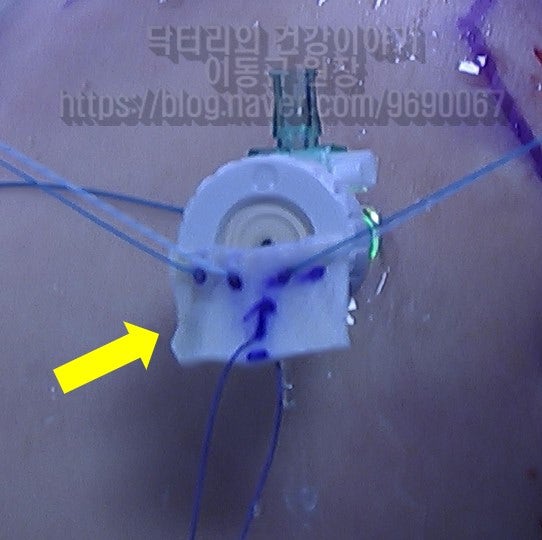
Measuring the defect size to prepare the artificial tendon.
The artificial tendon has been firmly secured over the defect using the double-row suture technique.

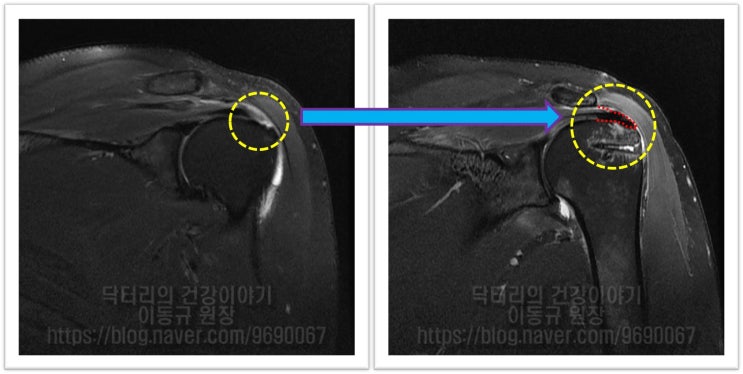
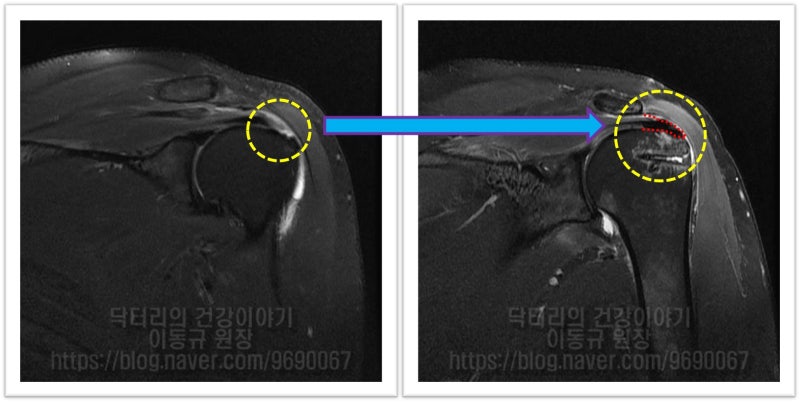
Despite the patient's relatively young age, the tendon condition was very poor. Likely, years of pain injections (presumably steroids) while continuing to use the arm accelerated rotator cuff degeneration. MRI was performed 6 weeks post-surgery.
The area outlined by the red dotted line was the surgical defect. The original tendon and artificial tendon have completely integrated and become one.

Shoulder rotator cuff tears are progressive conditions. As with any condition, early treatment yields the fastest recovery and best results. Once the disease progresses, treatment becomes more extensive and complex. Outcomes may also be less favorable than with early treatment. Even if the condition has progressed, treatment options like the one above exist, so there's no need to worry even with advanced disease. But early treatment is still the most important thing.
Dr. Dongkyu Lee

Dr. Dongkyu Lee

Orthopedic Specialist · Platinum Clinic

Shoulder surgical & non-surgical treatment

Platinum Clinic Orthopedics

Gangnam, Seoul · Dr. Dongkyu Lee

Book a Consultation →
KakaoTalk24/7 AI Chat