When there is a partial rotator cuff tear, conservative treatment is typically pursued. While the approach may vary depending on the size and pattern of the partial tear, conservative treatment can yield excellent results when the tear is small and involves the articular side. Conservative treatment options include medications and injections to reduce inflammation and pain, as well as ligament-strengthening injections and prolotherapy that directly stimulate the ligament for healing. Additionally, extracorporeal shockwave therapy can indirectly increase blood flow around the rotator cuff tear and stimulate tissue healing. Beyond these, rehabilitation to reduce the load on the torn ligament while strengthening surrounding muscles and ligaments and restoring function is also very important. Patients often ask, "If there is a tear, can't conservative treatment really heal it?" Of course, depending on the size and pattern of the tear, surgical treatment may be needed right away. However, there are cases where conservative treatment is fully effective, and properly distinguishing between cases that need conservative versus surgical treatment saves both time and effort for the patient and doctor. The case I will show you today involves a patient who developed pain 4 months ago while working out at the gym. Initially, the patient rested, but the pain progressively worsened. After visiting another hospital, the patient was diagnosed with a supraspinatus tear and told that surgery was necessary. The patient then came to our clinic for a second opinion. First, physical examination confirmed a problem with the supraspinatus (positive empty can test), so X-rays were taken for detailed diagnosis, and no significant problems were found.
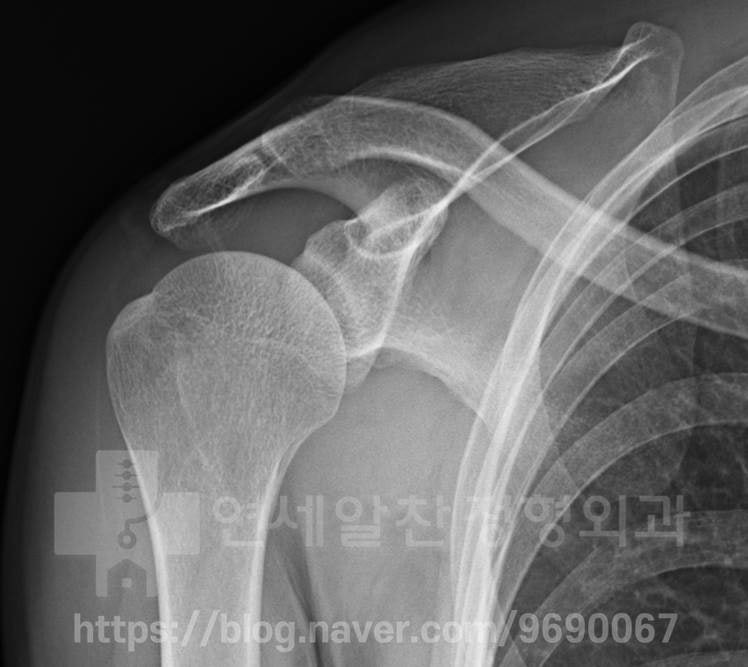
The X-ray shows normal findings. Next, we examined the issue through ultrasound.
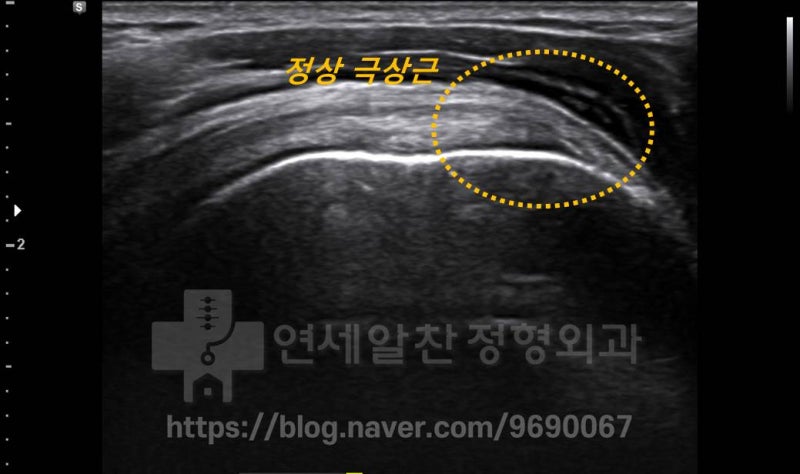
On ultrasound, the normal supraspinatus area was observed. The normal shape of the supraspinatus can be seen within the rounded dotted circle.
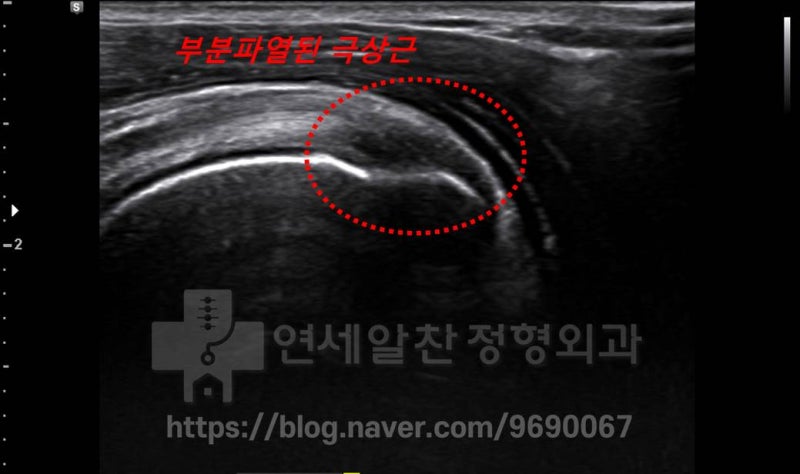
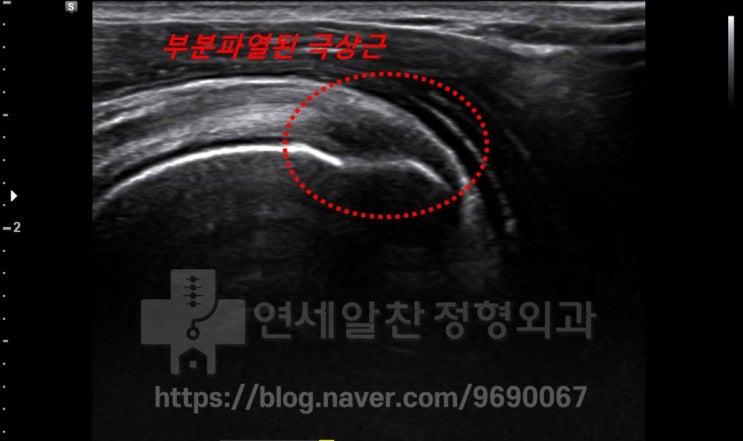
Upon closer examination of the supraspinatus area, we were able to identify a partial rotator cuff tear. The overall shape of the ligament is maintained, indicating an articular-side or intratendinous partial tear. We examined the cross-section of the supraspinatus again with ultrasound.
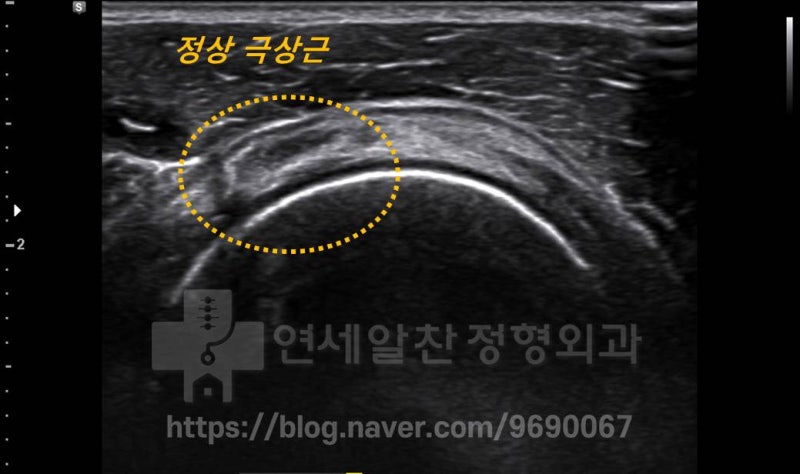
The area marked with a yellow dotted circle shows where the rotator cuff tear occurred. While slight inflammation is visible, overall findings appear normal.
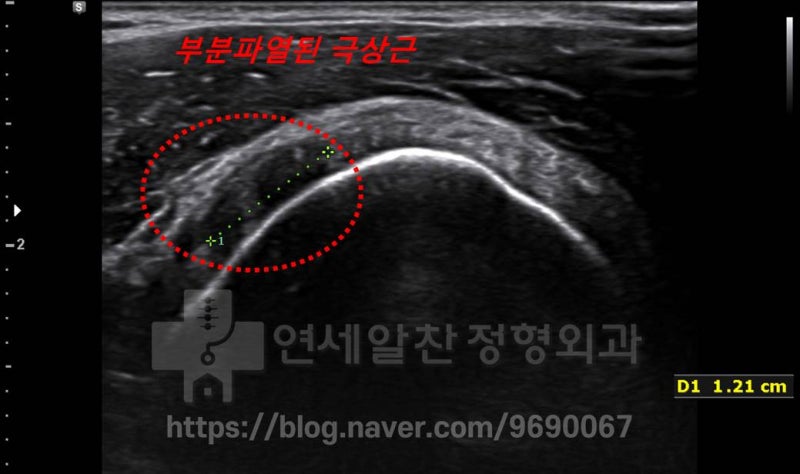
When moving the ultrasound to the distal portion of the supraspinatus, a partial tear measuring approximately 1.21 cm is observed. Based on a comprehensive assessment of the above findings, although the tear measures 1.21 cm, it is an articular-side tear and the overall ligament condition appears good, so we determined that conservative treatment rather than surgical treatment could effectively heal this rotator cuff tear.
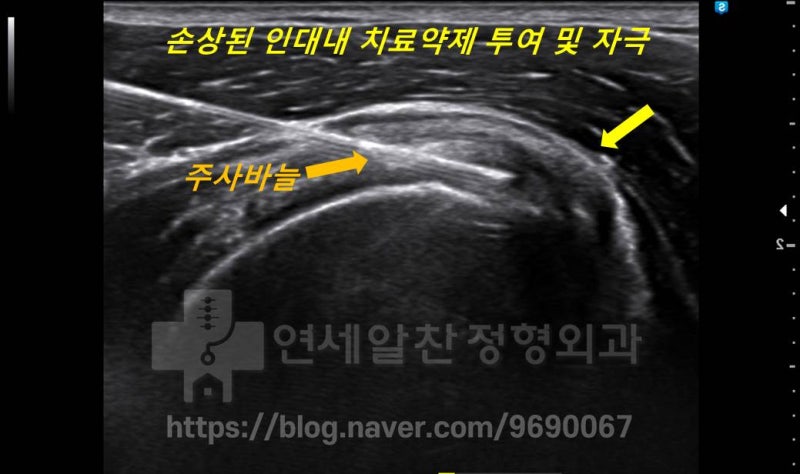
Ligament-strengthening injections were administered using PDRN and collagen-based agents for a total of 5 treatments. As shown on the ultrasound above, the treatment agent was injected precisely into the ligament with appropriate needle stimulation to promote tissue healing.
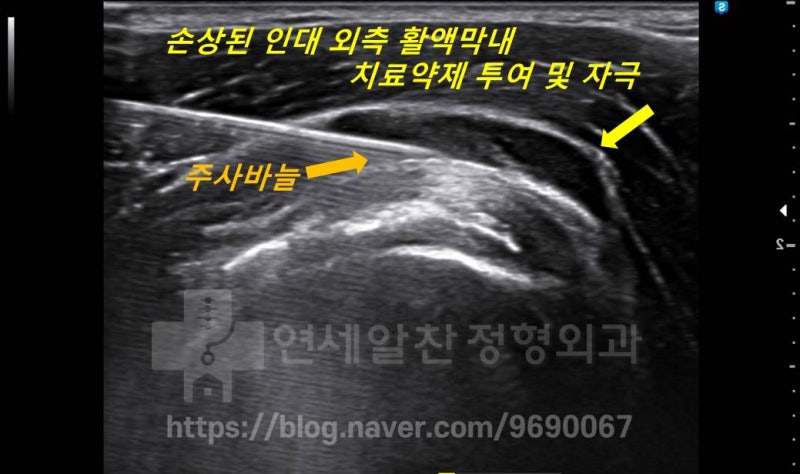
In addition to treating within the ligament, we also administered the agent to the tendon sheath and synovial membrane outside the ligament to promote healing and strengthening of surrounding tissues. Combined with shockwave therapy, the patient's rotator cuff tear showed rapid improvement. Let's look at the ultrasound taken after treatment.
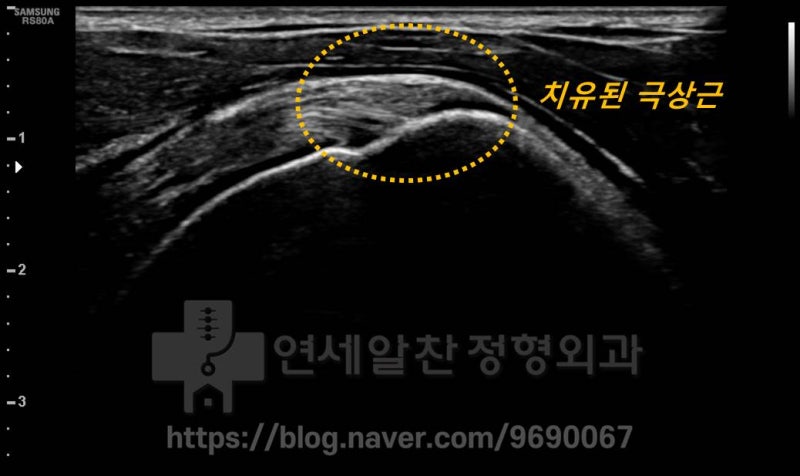
Looking at the supraspinatus within the dotted yellow circle, we can confirm that the rotator cuff tear has been sufficiently healed. The patient was also pain-free and able to perform all activities, so treatment was concluded. Both conservative and surgical treatment are available for rotator cuff tears. What is important here is accurately distinguishing which cases should be treated conservatively and which require surgical treatment. If surgery is needed but conservative treatment is pursued, it can waste time and money. Conversely, if conservative treatment would be sufficient but surgery is performed, it may leave unnecessary scars on the body.