
Hello. I am Dr. Dongkyu Lee, an orthopedic specialist. Calcific tendinitis causes extreme shoulder pain. For patients, it is an incredibly painful condition. When pain strikes suddenly and severely, it can be so debilitating that patients end up in the emergency room. Some patients cannot move their arms at all. When the pain is this severe, even pain injections may not provide relief. Today's case was exactly this situation. The patient had been diagnosed with calcific tendinitis and received shockwave therapy for several years. However, starting one week before visiting our clinic, the pain became so extreme that they went to their regular hospital for a shoulder injection and shockwave treatment, which only made the pain worse. They said they nearly died from the pain. The hospital told them the calcium deposit was too large and recommended going to a university hospital. When they tried to book an appointment at a university hospital, they were told the wait was 6 months to a year... They came to me and begged me to take away their pain. Let's look at the case.
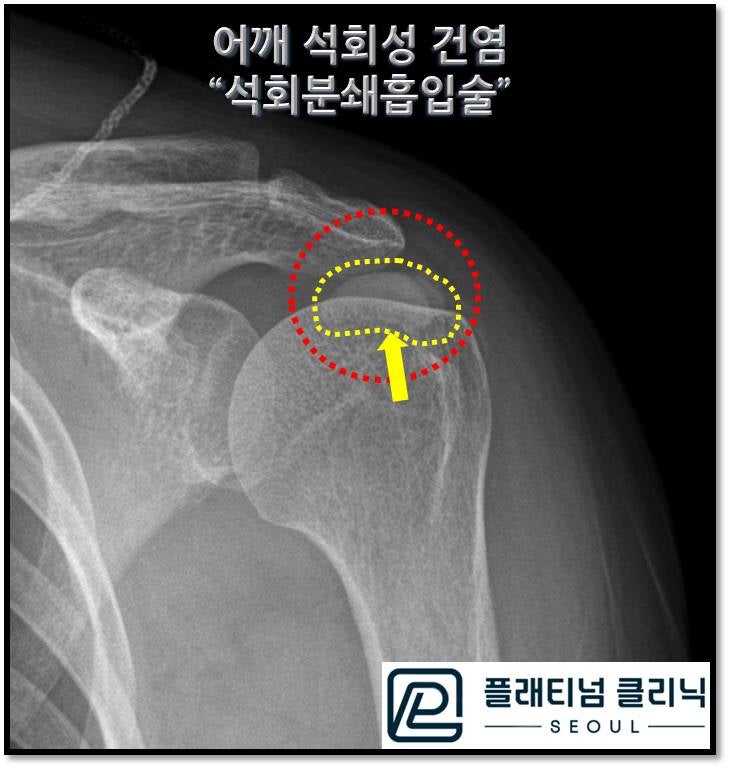
The X-ray shows an enormous amount of calcium deposits marked by the yellow dotted line.
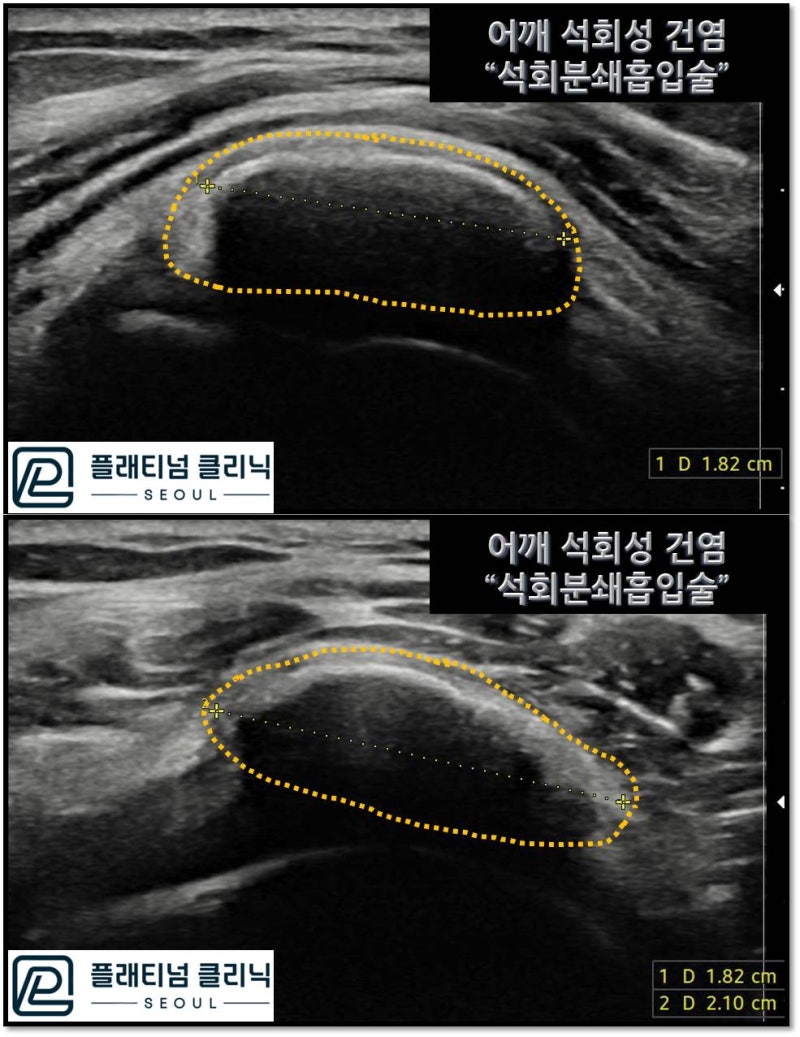
Ultrasound examination revealed a calcium deposit measuring 1.8cm in length and 2.1cm in width. Considering that the supraspinatus tendon width in Asian patients is typically 2.4-3.0cm, the calcium deposit spanned nearly the entire supraspinatus. This massive calcific tendinitis was treated with percutaneous calcium deposit aspiration. For more details about the procedure, please refer to the link below. https://blog.naver.com/9690067/222772754214
🔗 https://blog.naver.com/9690067/222772754214A brachial plexus block was performed to anesthetize the shoulder area. The patient was amazed to feel the extreme pain disappear as the anesthesia took effect. The procedure then began to remove the calcium deposits.
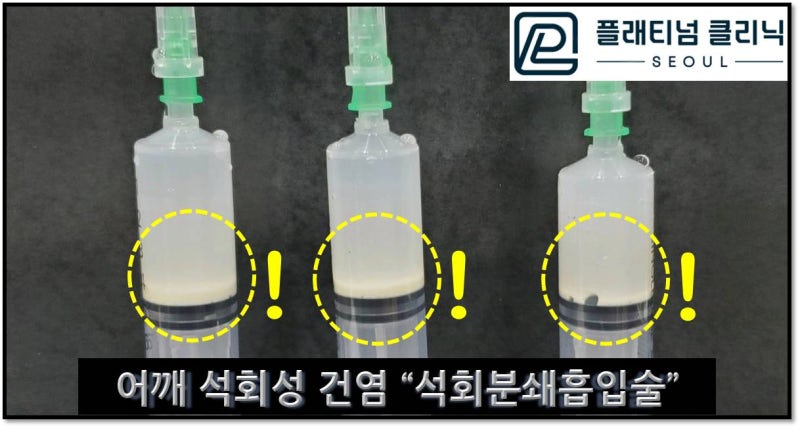
The post-procedure syringe photo shows the white material inside the yellow circle, which is the aspirated calcium. Approximately 3-4cc of calcium was removed.
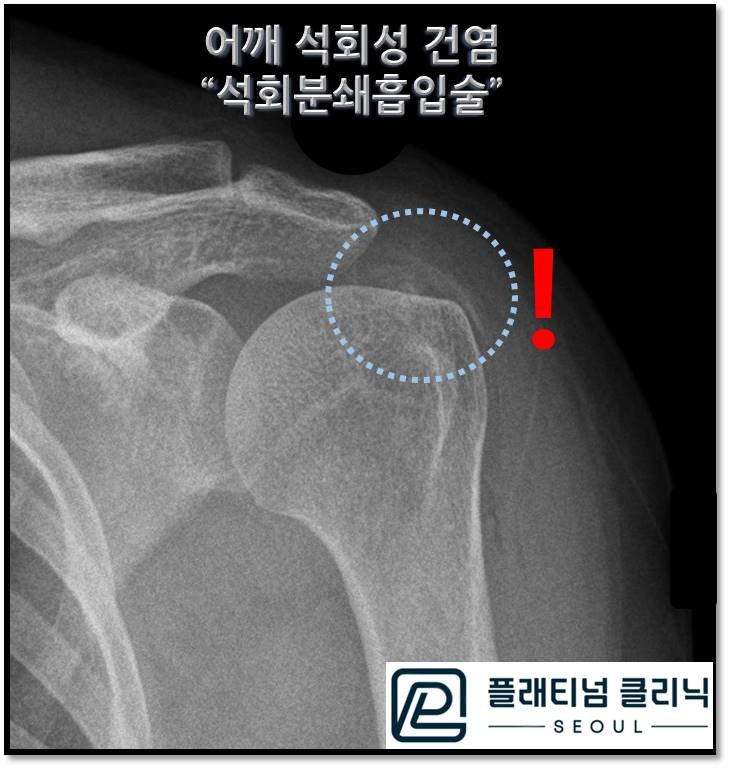
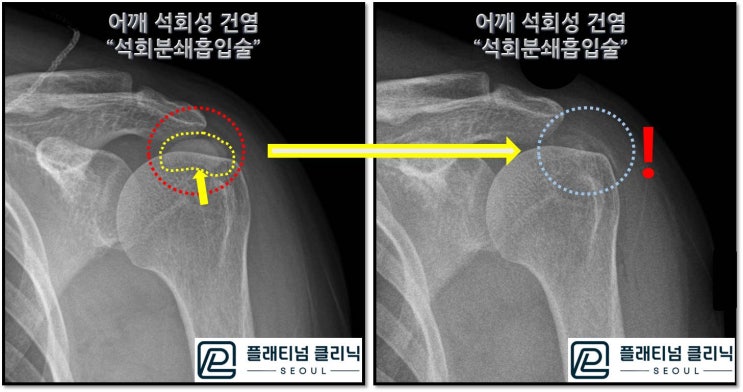
The X-ray taken immediately after the procedure shows that the previously white, clearly visible calcium deposit has almost completely disappeared.
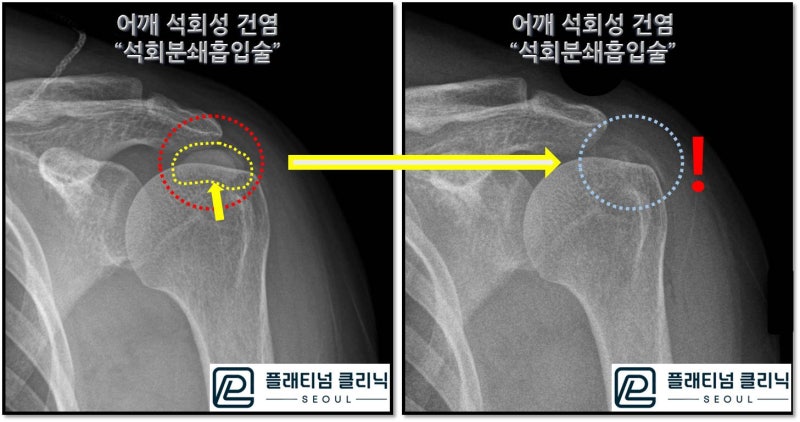
Comparing the before and after X-rays, the calcium deposit marked by the yellow dotted line is nearly invisible after the procedure. Any small remaining calcium may be naturally absorbed, and additional shockwave therapy can help accelerate absorption. Also, after the calcium is removed, the rotator cuff becomes like a deflated balloon with empty space inside. To promote regeneration of tendon tissue in this area, prolotherapy was additionally performed. The patient said the pain disappeared as if by magic after the procedure and was extremely happy. The fundamental treatment for calcific tendinitis is removing the calcium. Long-term shockwave therapy is one approach. However, depending on the nature of the calcium, shockwave therapy may not be effective. Knowing how severe the pain of calcific tendinitis can be, I believe the best approach is to treat it as quickly and efficiently as possible.
Calcific tendinitis can be treated with a single percutaneous calcium deposit aspiration procedure.