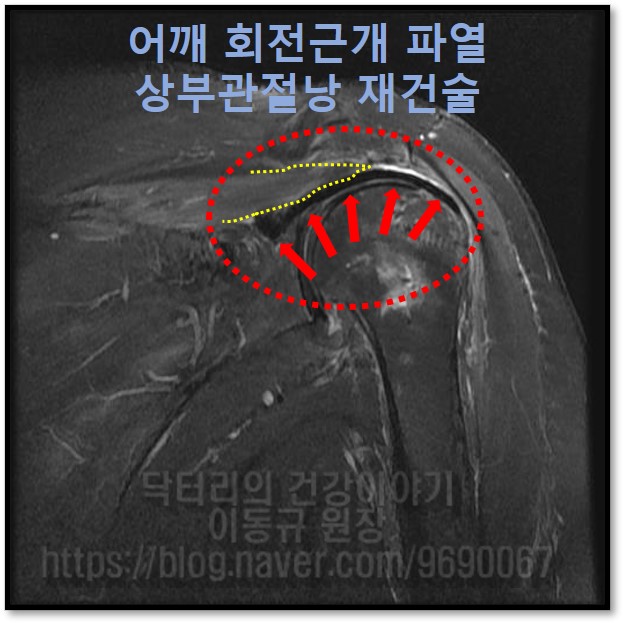
Hello. I'm Dr. Dongkyu Lee, an orthopedic specialist. I hope that in 2022, those suffering from shoulder conditions will find relief and healing. Today, I'd like to discuss the treatment of complete rotator cuff tears. Once a complete tear occurs, it's classified by size as small, medium, or large. Even if the tear has progressed to a large size, if muscle atrophy hasn't advanced, the rotator cuff can be firmly sutured to the greater tuberosity (foot print, where the rotator cuff attaches) of the humerus. However, when a long time has passed since the tear, muscle atrophy progresses to the point where the rotator cuff can no longer reach the greater tuberosity, making suture repair impossible. When arthritis also develops in the shoulder joint, this is called "rotator cuff arthropathy." Since the rotator cuff cannot be repaired, reverse total shoulder replacement is performed in such cases. Sounds complicated, right? Essentially, because the rotator cuff cannot be restored, an artificial joint is implanted and the surrounding muscles like the deltoid are used to enable shoulder joint function. However, I always believe that preserving one's own joint, ligaments, and tendons as long as possible is the best and ideal outcome. That's why for irreparable rotator cuff tears, "superior capsular reconstruction" is performed — a surgery that maximally preserves the remaining tendons and cartilage while only reconstructing the damaged area. It's a technically demanding, high-difficulty surgery that is very challenging to perform arthroscopically, which is why it's not commonly offered. Let me show you a patient case. A 68-year-old female patient had been receiving only injection treatments at another hospital for years of shoulder pain. When injections no longer relieved the pain, she came to me. She couldn't properly raise her arm and was struggling with daily activities.
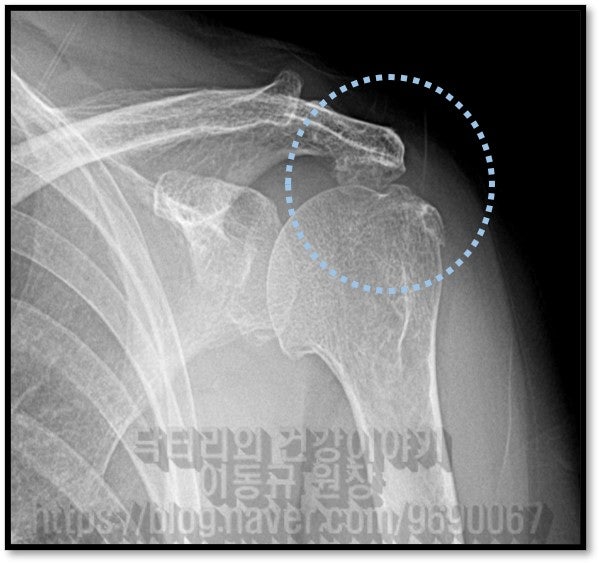
Cases like this are frustrating. If the rotator cuff tear had been diagnosed early, a simple rotator cuff repair could have resolved everything. But the patient came too late, and repair was no longer possible. Since the remaining tendons and cartilage were relatively well preserved, superior capsular reconstruction was performed.
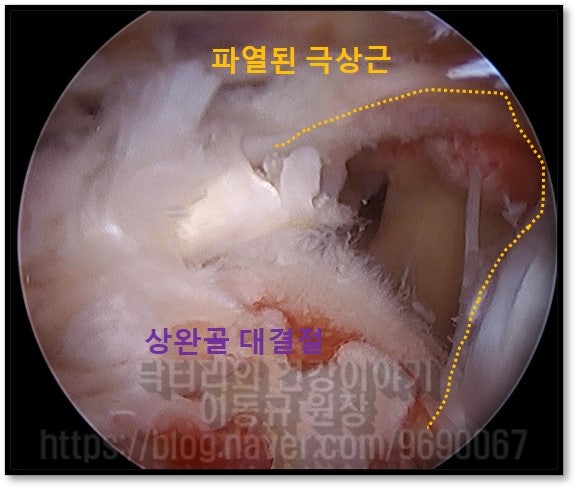
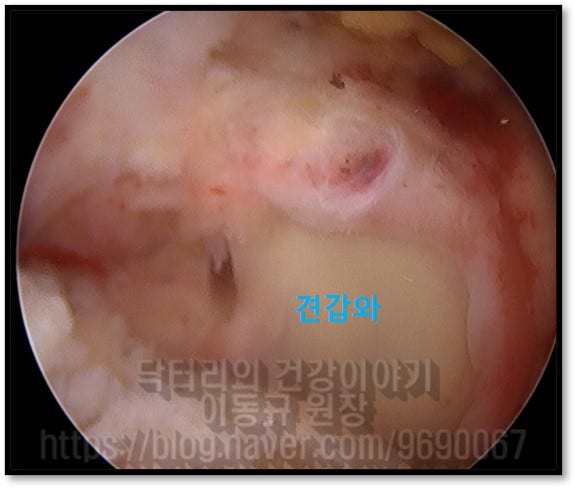
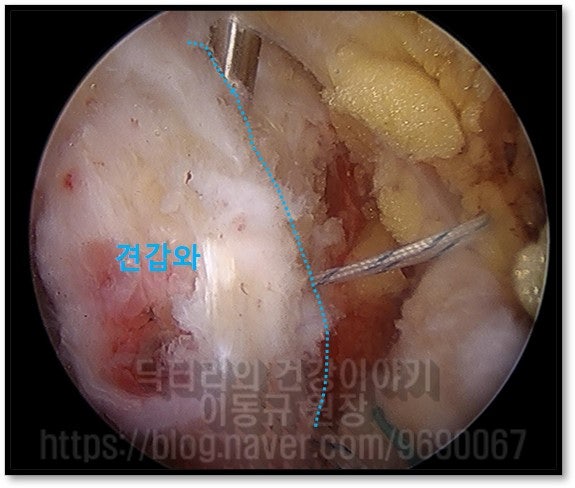
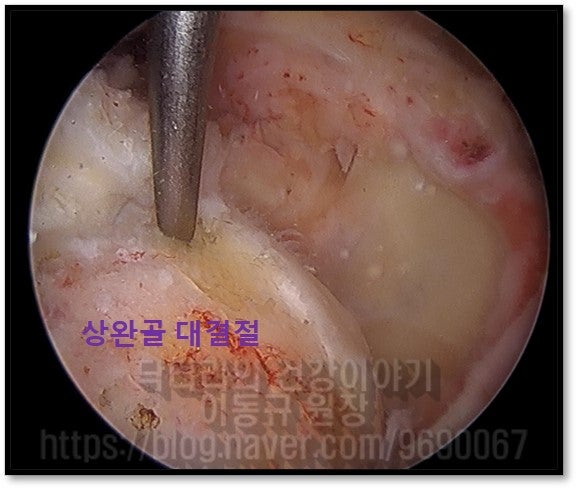
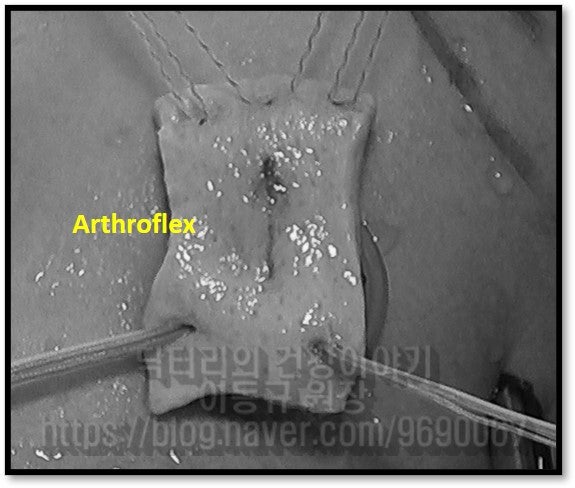
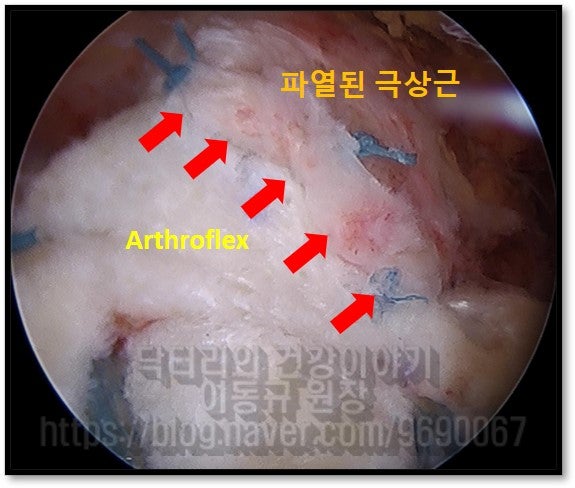
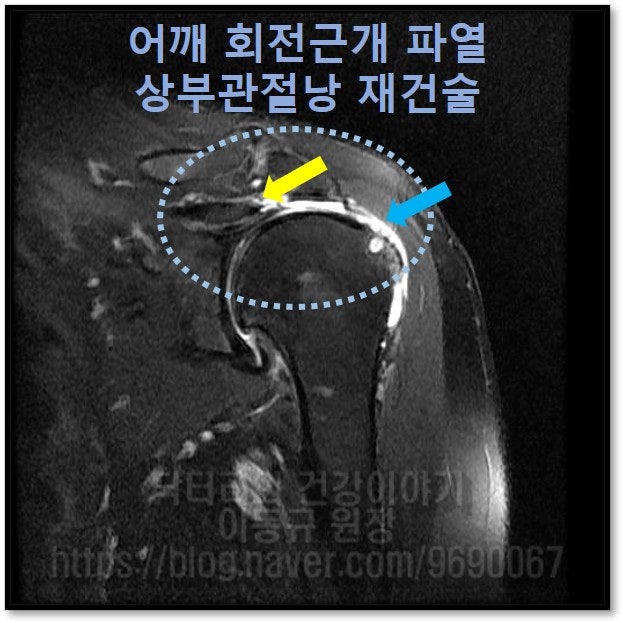
What were the surgical results? MRI was taken 3 months after surgery.
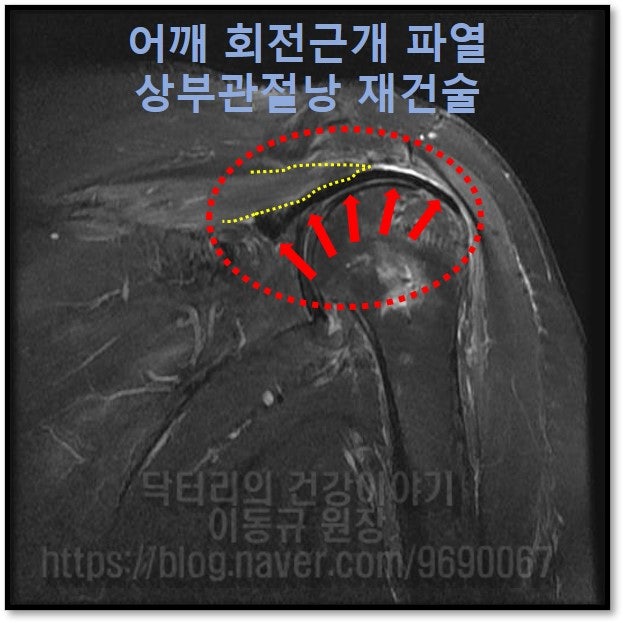
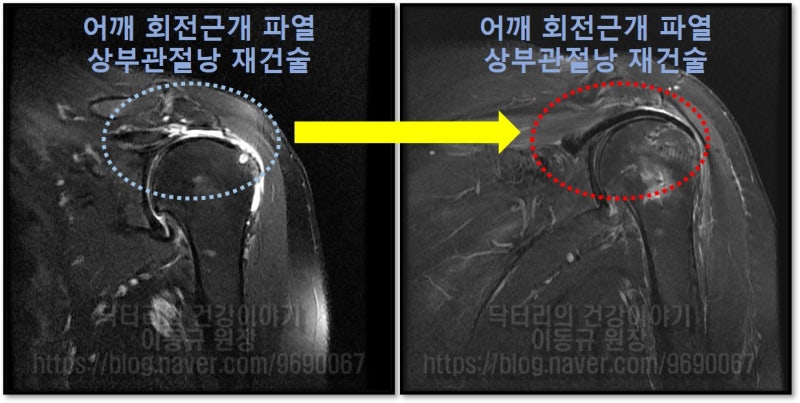
This patient has recovered to near-normal function and is living very healthily. Something to reflect on here is:
First, accurate and timely diagnosis with proper treatment is essential.
Had the rotator cuff tear been diagnosed just a little earlier, a standard rotator cuff repair would have been sufficient. As the saying goes, a stitch in time saves nine.
Second, even with an irreparable rotator cuff tear, surgery can restore proper shoulder joint function.
An irreparable rotator cuff doesn't automatically mean artificial joint replacement. Superior capsular reconstruction, which maximally preserves the patient's own joint, ligaments, and tendons, is also an excellent treatment option. Of course, being a highly advanced surgery, it requires extensive experience.