
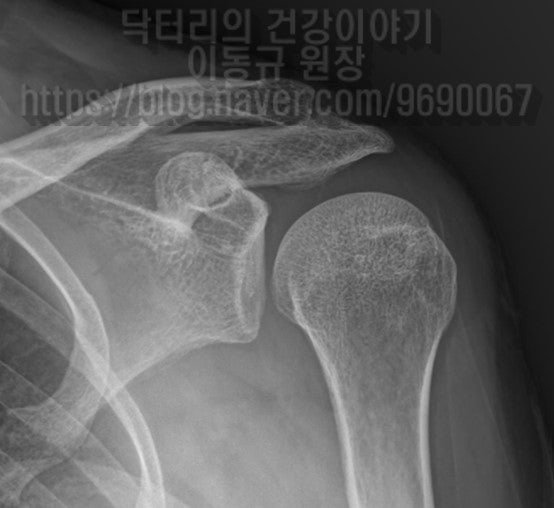
Hello. I'm Dr. Dongkyu Lee, an orthopedic specialist. Today, I'd like to introduce a patient who suffered from a misdiagnosis and received wrong treatment before coming to me. A 48-year-old female patient came in 2 months after falling and injuring her left shoulder, with pain and restricted movement. The patient had even gotten an MRI at another hospital and was diagnosed with a sprain and contusion, receiving only medication, physical therapy, and manual therapy. Despite this, the pain continued and symptoms worsened, prompting her to come to me. Physical examination showed positive impingement sign, apprehension test, and relocation test. This means shoulder dislocation was suspected. Let's review the imaging the patient brought. X-ray shows:
Let's examine the MRI.
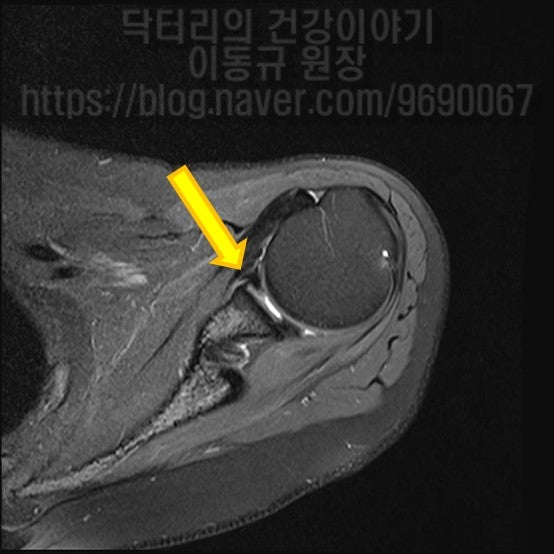
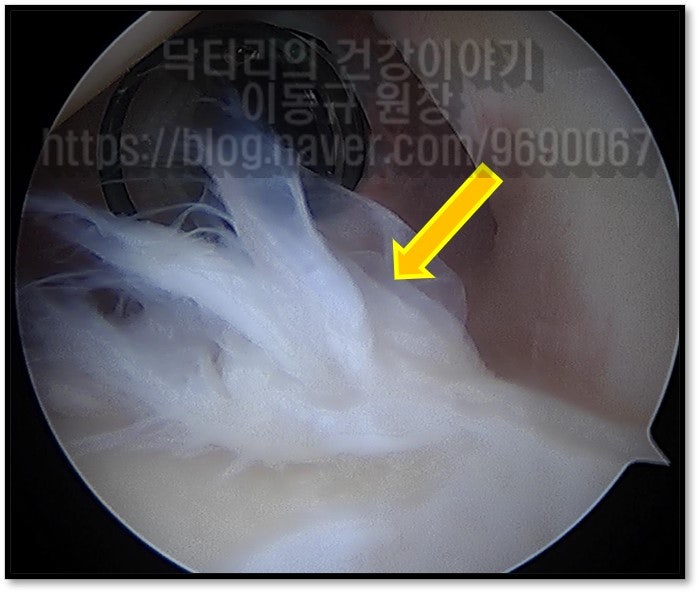
On MRI, the area indicated by the yellow arrows shows the anterior labrum — the left MRI shows periosteal detachment, and the right MRI shows labral tearing.
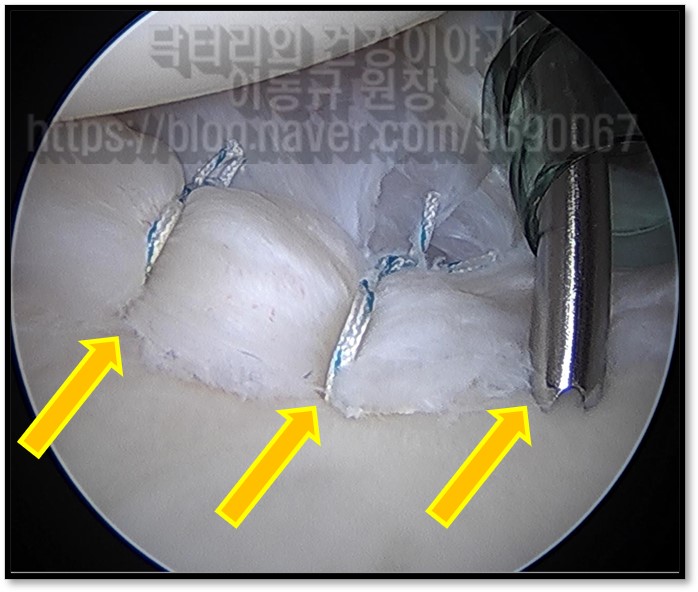
Overall assessment: physical examination shows anterior instability, and MRI confirms anterior labral tear. The diagnosis is anterior labral tear due to shoulder dislocation, for which surgical treatment was performed.
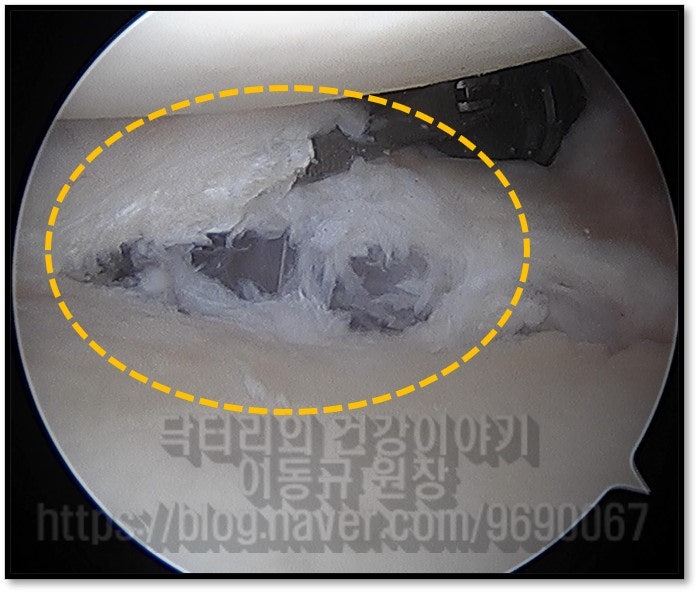
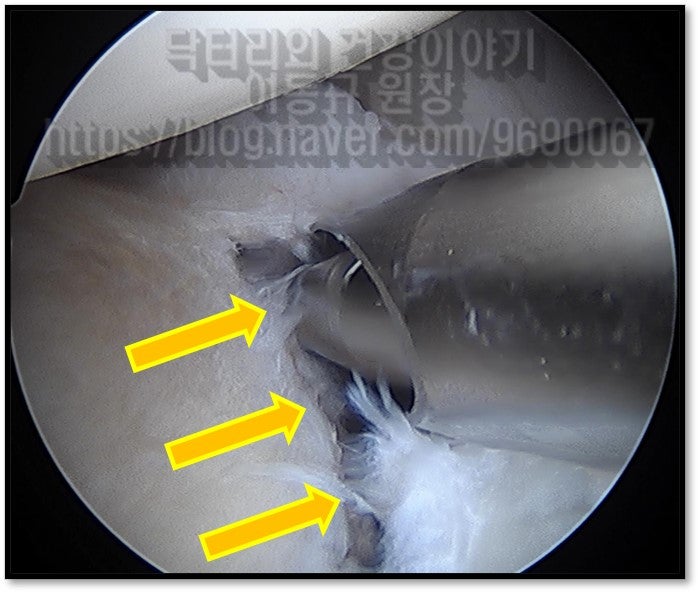
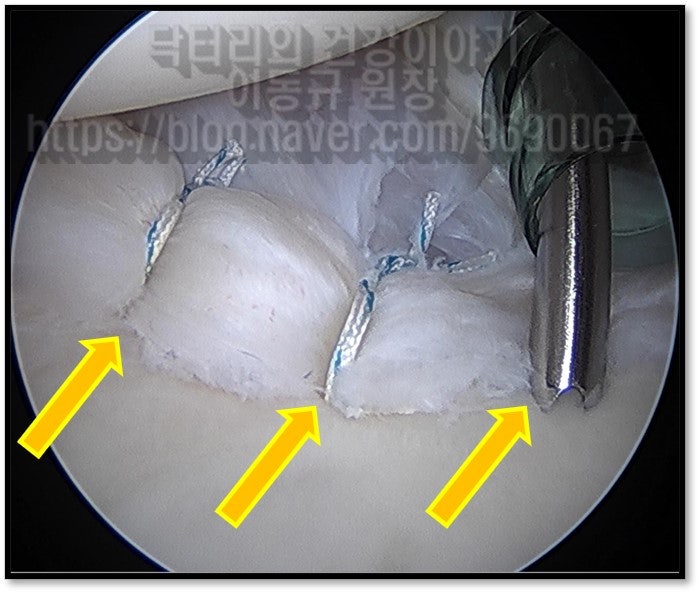
What went wrong with this patient? First, a proper physical examination alone would have identified what condition or injury was suspected. Second, simply reviewing the MRI more carefully would have caught the pathology. (Sometimes, doctors only read the radiology report without actually viewing the MRI...) Performing only manual therapy on a patient with anterior labral tear and instability... No wonder the symptoms worsened. For any condition, accurate diagnosis must come first before proper treatment can follow. When treatment is ongoing but symptoms worsen or fail to improve, it's worth questioning whether the diagnosis itself was correct.